
 Donate Now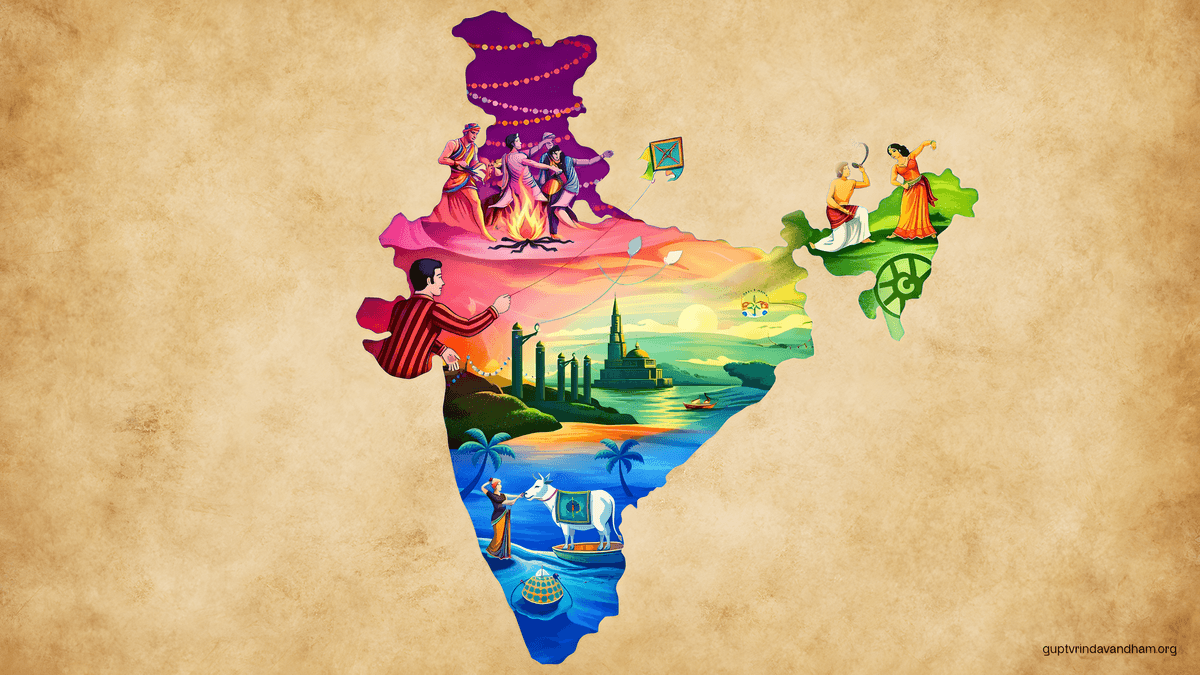
Makar Sankranti is a festival of celebrating the harvest in India. During this sacred time, the Sun transitions into Makara Rashi (Capricorn), making the days longer and brighter than before. People across the country celebrate Makar Sankranti as a symbol of new beginnings, prosperity, and gratitude toward nature.
Unlike other festivals that follow the lunar cycle, Makar Sankranti follows the solar cycle, which is why it is celebrated on January 14 every year. This marks the end of the winter season and the arrival of longer days as a symbol of joy and togetherness.
Explore with us the spiritual significance, traditionally followed rituals, celebrations, famous festival food items, and some additional modern ways that explain how to celebrate Makar Sankranti across different regions in India.
Significance of Makar Sankranti Celebration
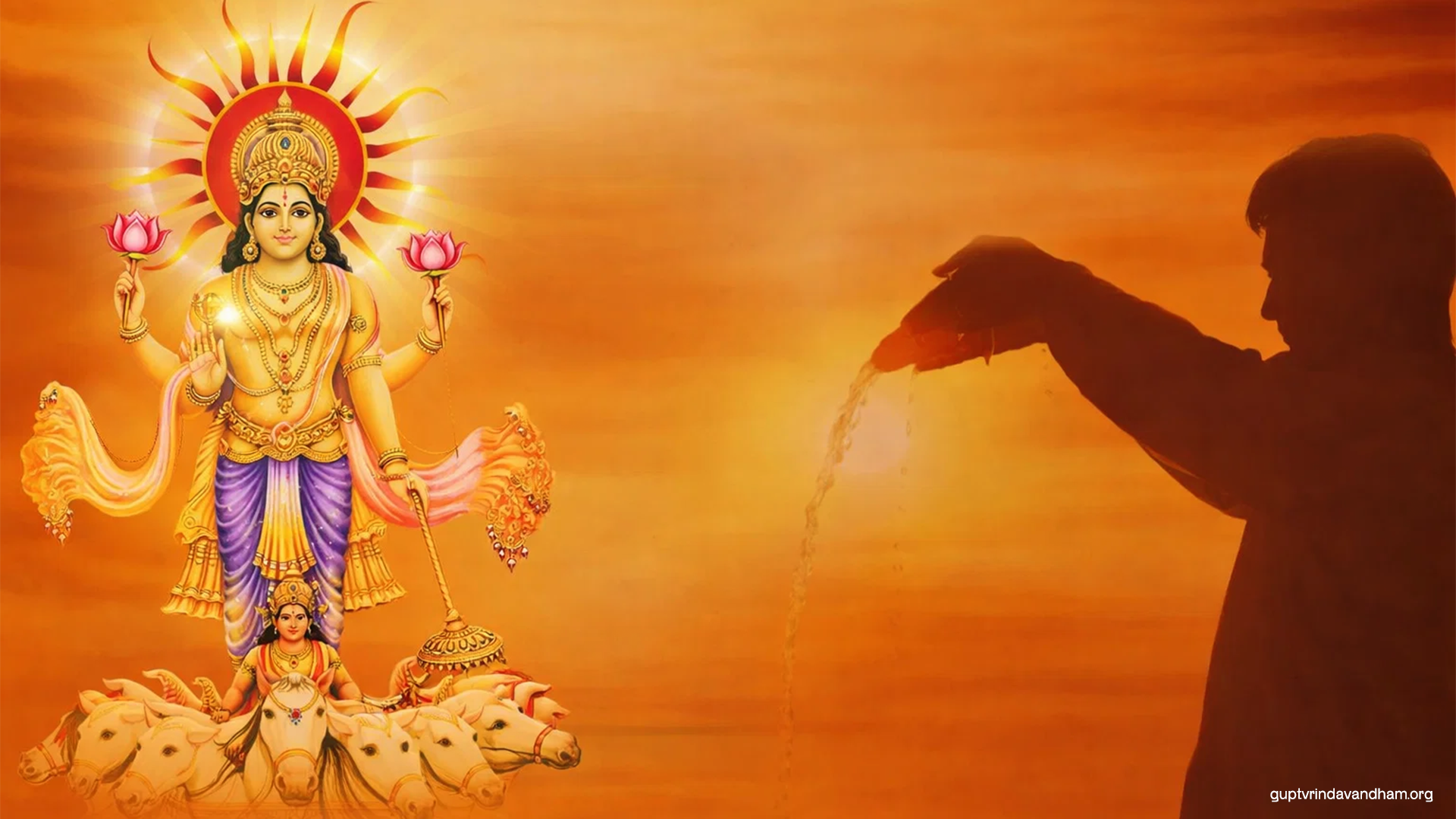
Makar Sankranti is a powerful cosmic event due to the northward movement of the Sun, also known as Uttarayan. In the scriptures, this is considered very sacred, as it reflects the light over darkness.
The positive energy of the Sun during this phase helps in spiritual growth and thought purification.
Scriptures claim that the charity, prayers, fasting, and devotional practices performed on this day bring multiple benefits in one's life.
From an agricultural point of view, Makar Sankranti is observed as a harvesting season. People celebrate it to glorify nature, cows, farmers, and the earth for nourishing the cycle of life.
This beautiful combination of spiritual awareness and gratitude for the agricultural land makes this festival one with deep meaning rather than a mere celebration.
Traditional Rituals of Makar Sankranti Celebration
This festival is widely celebrated across different regions in India. People celebrate Makar Sankranti through several unique rituals that have been preserved for generations to keep its spiritual essence alive.
There are some rituals that are commonly celebrated on this day:
i) Sacred bath: It is suggested to take a holy bath on this day. Many devotees gather around the holy rivers like Ganga, Yamuna, Kaveri, and Godavari. The holy waters are spiritually potent on such days. Taking a holy bath in it helps one to purify their thoughts and body.
ii) Worship of the Sun: On this day, in the early morning hours, devotees offer water to the rising sun and chant Hare Krishna Mahamantra. It is the way to show gratitude to the sun for supporting health by providing energy to live.
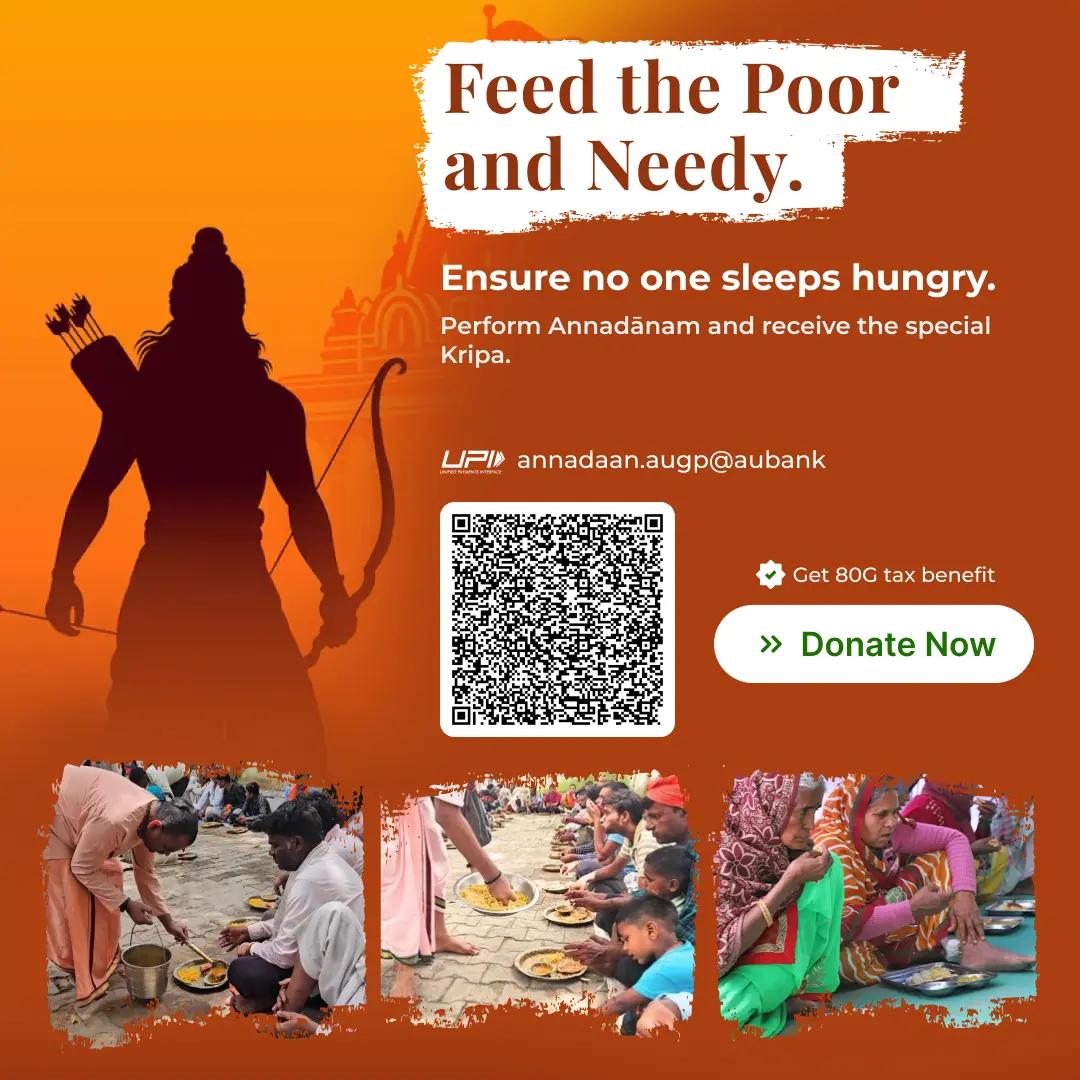
iii) Charity and Offerings: Makar Sankranti is especially known for providing selfless charity. People often donate grains, cooked food items, clothes, sesame seeds, jaggery, and money to support the life of the poor people and animals.
Providing such support on Makar Sankranti is highly auspicious. Visit our temple, Gupt Vrindavan Dham, and donate to any seva—Anna Daan, Gau Seva, Mandir Nirman Seva, Book Distribution Seva, and other temple sevas.
Regional Celebrations of Makar Sankranti in India
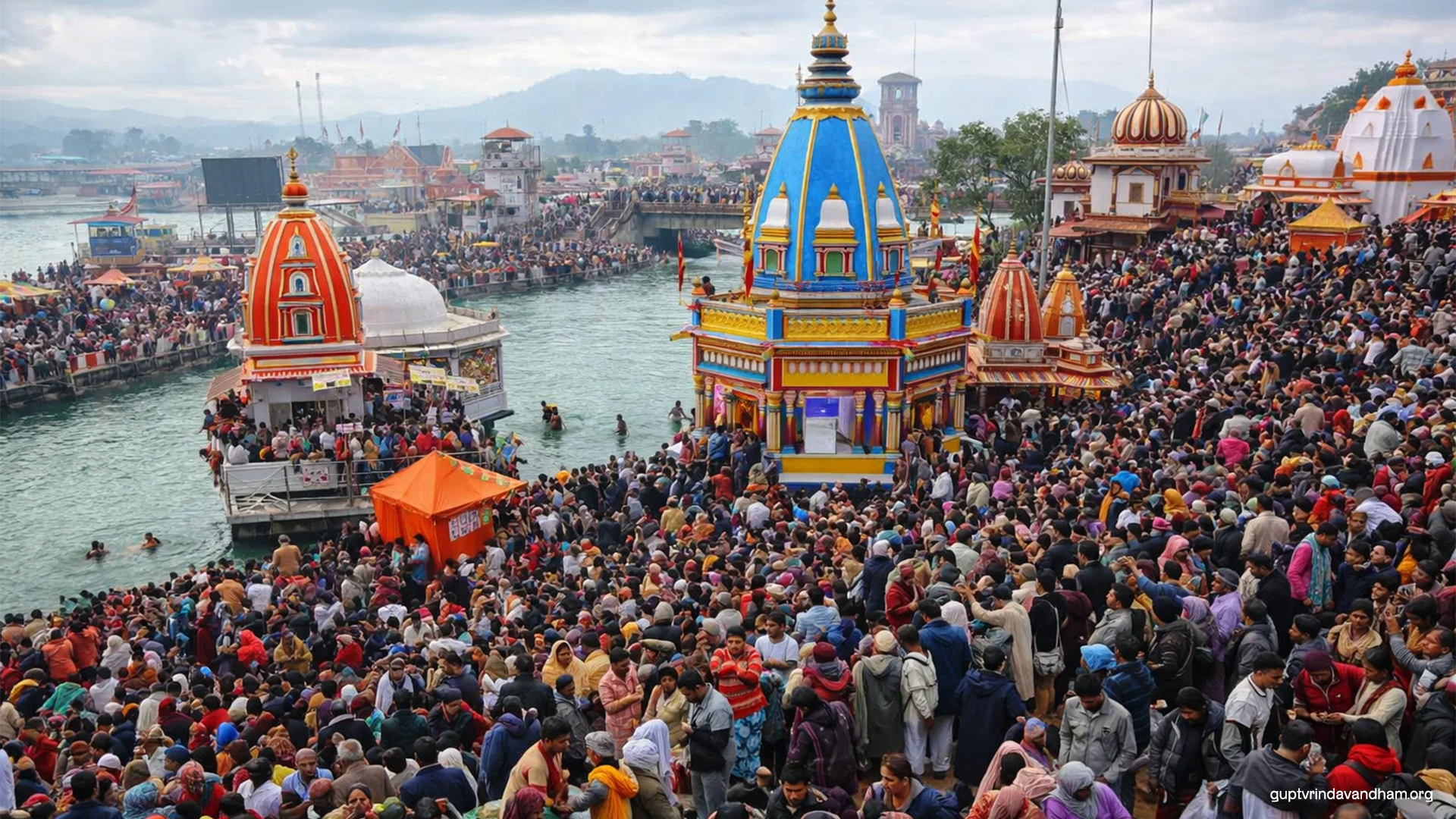
Makar Sankranti is regionally expressed in very diversified ways. Each culture reflects a unique and locally followed tradition to observe this day.
i) Punjab and Haryana: In the northern part of India, it is celebrated as Lohri. It is locally observed a day before the day of Makar Sankranti. People gather together around a bonfire, sing different folk songs, and dance happily. During the celebration, they offer sesame seeds, jaggery, and popcorn as an expression of gratitude for the harvest.
ii) Gujarat and Rajasthan: In Gujarat and Rajasthan, it is celebrated as the sky filled with colorful kites. It is a beautiful family gathering event and a funny kite-flying competition between cousins and neighbors.
iii) Uttar Pradesh and Bihar: In Uttar Pradesh and Bihar, it is known as Khichdi Pav. People celebrate this day by making khichdi using the freshly harvested grain and offering it to the Lord. Family and neighbors gather together near a holy river and temples to celebrate this festival.
iv) West Bengal: In the eastern part of India, people celebrate this day as Poush Sankranti. This festival is celebrated by making a traditional rice dish called pithas. On this day, people gather together near the point where Ganga water meets the pilgrims to perform the ritual bath.
v) Tamil Nadu: In the southern part of India, it is celebrated as Pongal. This is a four-day festival when people cook fresh rice with milk and jaggery. The cooked food is first offered to the Sun God. The homes are decorated, and cattle are worshiped during the complete celebration.
vi) Maharashtra and Karnataka: In Maharashtra and Karnataka, people celebrate this festival by exchanging sweets, sesame seeds, and jaggery with each other.
Special Foods Prepared on Makar Sankranti
1) Til and Jaggery Sweets: Laddos and chikki, made from jaggery and sesame seeds. It helps the body to remain warm during the winter season.
2) Khichdi: This dish represents the unity and simplicity across different regions.
3) Pongal: It is made from freshly harvested rice, in both sweet and savory forms.
4) Rice and Coconut Sweets: It is popular in the eastern and southern parts of India.
5) Undhiyu: It is a traditional vegetable dish prepared in Gujarat.
What People Do on Makar Sankranti Today
In today's generation, people are so busy with their lifestyle. Families do not gather to pry, eat meals, or perform cultural activities.
The family celebrations are changed to digital distractions. Everyone must understand the value of gathering, sharing meals together, and praying together by making little efforts.
Conclusion
Celebrate this Makar Sankranti by reminding yourself of the value of family connections, spiritual rituals, and the beauty of worshipping nature and animals as an act of gratitude.
May this festival inspire you to find your peace in real family gatherings, devotional activities, and traditionally followed rituals.
Other Articles: Makar Sankranti 2026 | Makar Sankranti Importance | Makar Sankranti Different Names in India