
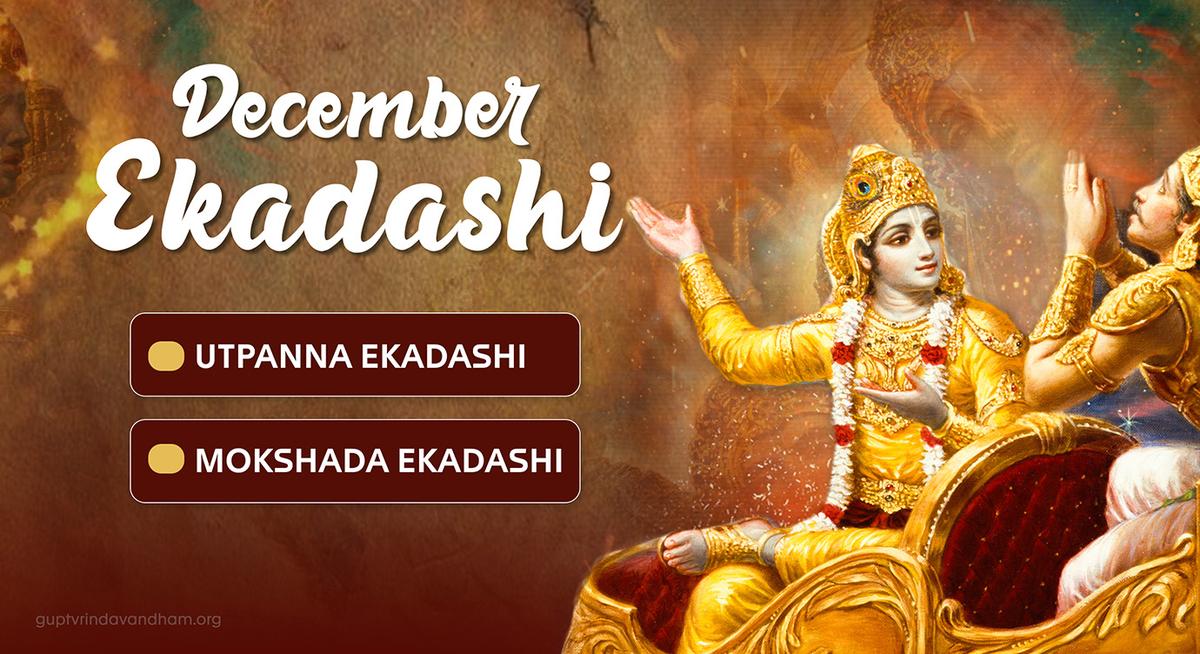
Utpanna Ekadashi and Mokshada Ekadashi are observed in December 2026 according to the Vaishnava calendar. One recalls the appearance of Ekadashi Devi, while the other carries the theme of liberation and coincides with Gita Jayanti.
The month’s fasting dates are included in the complete Ekadashi list for 2026. Here is what distinguishes these two observances.
Why Utpanna Ekadashi Marks a Beginning
Utpanna Ekadashi commemorates the appearance of Ekadashi Devi from Lord Vishnu. Its narration describes how she manifested from the Lord and defeated the demon Mura. This connection with her appearance gives the observance its particular significance in the Ekadashi tradition.
For someone learning about Ekadashi, this occasion provides a starting point for understanding the sacred vow. It draws attention to the Lord’s protective mercy and the spiritual purpose behind observing His holy day.
The account of Ekadashi Devi’s appearance explains the origin of this observance. Hearing it can help devotees approach their practice with a clearer understanding of whom they honour.
Mokshada Ekadashi and the Hope of Liberation
Mokshada Ekadashi is associated with freedom from sinful reactions and the attainment of liberation. Its narration in the Brahmanda Purana identifies Lord Damodara as the worshipable Lord and describes offerings of incense, lamps, flowers and Tulasi.
The account also connects the observance with concern for departed ancestors, giving it a significance that extends beyond personal spiritual welfare.
These themes make Mokshada Ekadashi an occasion to reflect on the goal of spiritual life: seeking the Lord’s shelter while remembering the well-being of others.