
What is a Tilak?
Tilak is a sacred mark applied to the forehead and other parts of the body by followers of Hindu traditions as a symbol of faith, devotion, and spiritual identity. Tilak can be made using sandalwood paste, sacred ash, kumkum, and clay from holy places (gopi chandan).
Vaishnavas apply a tilak made from gopi chandan or sandalwood paste because it has a connection with Lord Krishna and Vrindavan. Applying a tilak is very important because it reminds us of the Lord and our relation with Him as servitors.
What does a tilak symbolize?
Tilak serves as a symbol of a devotee's spiritual lineage (sampradāya) and philosophical tradition.
From the Vedic scriptures, there are four authorized sampradāyas:
- Brahma Sampradāya
- Sri Sampradāya
- Rudra Sampradāya
- Kumara Sampradāya
By seeing a person's tilak, one can often identify the disciplic succession and devotional path that he follows, their worshipable deities, and the line of spiritual teachers.
Tilak is more than an external mark; it is a declaration of one's spiritual identity. It signifies that the wearer has dedicated his life to the service of the Supreme Lord and follows the instructions of the previous ācāryas.
It reminds both the devotee and those who see him that genuine spiritual knowledge is received through an authorized disciplic succession. It connects the devotee to a timeless lineage of ācāryas who have preserved the teachings of the Vedic scriptures for thousands of years.
Importance of the Tilak in Vaishnavism
In Vaishnavism, devotees apply Urdhva Pundra (Urdhva - upward or vertical, Puṇḍra - sacred mark or tilaka), a vertical tilaka mark worn by devotees of Lord Vishnu. These two vertical lines represent the lotus feet of Lord Vishnu or Lord Krishna, which one applies to his head. This shows our actual position as a servant of the Lord.
You may have often seen devotees of ISKCON wearing this tilaka, with a tulasi leaf-shaped mark at the base. The two lines symbolize Lord Krishna’s lotus feet, while the tulasi leaf represents Tulasi Devi, the Lord's most beloved devotee, who is always engaged in His service.
According to Śrī Caitanya Mahāprabhu, the topmost Vaiṣṇava is one whose presence inspires others to remember and chant the holy names of Lord Kṛṣṇa. One should always apply a tilak on their head and other parts of the body, then the Lord will not only be pleased with that person but also give them protection.
Prabhupada teaches us that if the situation forbids, then a devotee should at least put "water tilaka" on his body in the morning and consecrate his body with the names of Vishnu. But if the paraphernalia is permitted, then a devotee should not unnecessarily do away with the dress or beads of a Vaishnava.
It is stated in Skanda Purāṇa, 'Persons who are decorated with tilaka or gopī-candana (a kind of clay resembling fuller's earth which is produced in certain quarters of Vṛndāvana), and who mark their bodies all over with the holy names of the Lord, and on whose neck there are tulasī beads, are never approached by the Yamadūtas.'
Therefore, devotees should not neglect this sacred practice. As emphasized by Śrīla Prabhupāda, the markings of a Vaiṣṇava help one remain conscious of Krishna and one's spiritual duties.
Types of Tilak
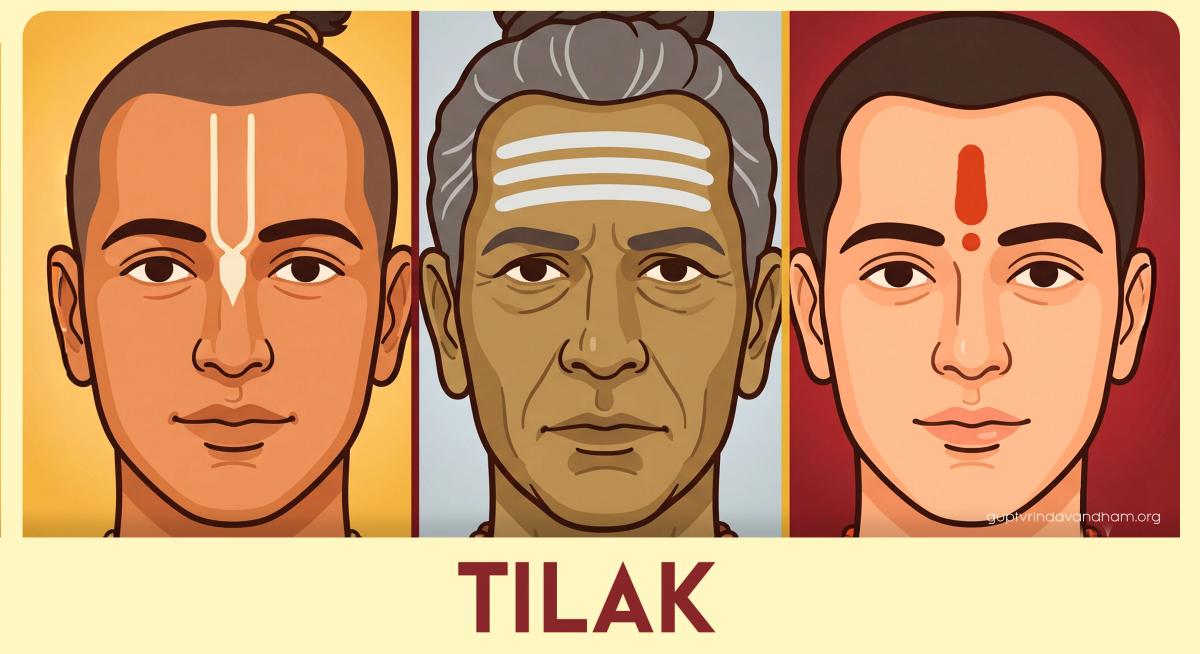
There are different types of tilak according to the faith and devotion to a particular deity and lineage of devotees, but mainly, there are 3 categories of tilak people apply on their head.
Vaishnava Tilak
The Vaishnava Tilak, also known as Urdhva Pundra, is worn by devotees of Lord Vishnu or Lord Krishna. It generally consists of two vertical lines running upward on the forehead, often with a tulasi leaf-shaped mark at the base. The two lines symbolize the lotus feet of the Lord, while the central mark represents Tulasi Devi. This tilak reminds devotees of their eternal identity as servants of the Supreme Lord.
These two verticals always give us the remembrance of the lotus feet of the Lord. As Krishna told Arjuna in the Bhagavad Geeta (18.65), “Always think of Me, become My devotee, worship Me and offer your homage unto Me,” and by applying a tilak, one automatically follows Lord Krishna’s instructions.
Shaiva Tilak
The Shaiva Tilak, commonly known as Tripundra, is worn by devotees of Lord Shiva. It consists of three horizontal lines made with sacred ash (vibhūti) across the forehead, often accompanied by a dot or symbol in the center.
The sacred ash signifies detachment from material life and reminds devotees that the material body is temporary. The three lines are also said to represent the destruction of ignorance, ego, and attachment through the mercy of Lord Shiva.
Shakta Tilak
The Shakta Tilak is worn by devotees of the Divine Mother (Shakti), such as Goddess Durga or Kali. Unlike the Vaiṣṇava and Śaiva tilaks, there is no single standardized form.
It commonly appears as a red dot (kumkum), a red vertical mark, or a combination of red and yellow markings on the forehead. The red color symbolizes divine energy, power, and auspiciousness. This tilak serves as a reminder of the devotee's devotion to the Supreme Goddess and her divine potency.
How to Apply a Tilak?
In ISKCON, devotees apply a tilak using gopī-candana clay. While preparing the tilak, one should remember Lord Vishnu or Lord Krishna. As the tilak is applied to the forehead, the mantra "Om Keśavāya Namaḥ" is chanted. This sacred practice reminds devotees that the body is a temple of the Lord and should be engaged in His service.
- Mix a small amount of gopī-candana with a few drops of water to make a smooth paste.
- Take the paste on your ring finger and place it between your eyebrows.
- Draw the finger upward to the hairline, creating two vertical lines on the forehead.
- Apply a small amount of paste at the base of the tilak and form a tulasi leaf-shaped mark on the bridge of the nose.
Benefits of Applying a Tilak
Applying a tilak is not only beneficial to one who applies it but also to those who observe it, as it reminds them of the Lord. It has spiritual as well as physical benefits.
Spiritual Benefit
- Strengthens one's connection with the Lord.
- Practice encourages humility, devotion, and a sense of responsibility towards one's spiritual duties.
- Inspires a lifestyle based on purity, discipline, and service.
- Gives remembrance of the Lord to others as well.
Physical Benefit
- Supports concentration, mental clarity, and self-discipline.
- The cooling effect of tilak also helps soothe the forehead.
- Helps to begin the day with a calm and focused mind.
- Applied near the Ajna Chakra, it helps relieve stress.
Conclusion
Tilak may appear to be a simple mark on the forehead, but its significance goes much deeper. It reminds us of Lord Krishna, our spiritual identity, and the teachings passed down through the disciplic succession. For a devotee, applying a tilak is a small daily practice that helps keep Krishna at the center of life.
Whether one is at home, at work, or engaged in daily activities, a tilak serves as a gentle reminder to act with devotion and remain connected to the Lord. As emphasized by the scriptures and great ācāryas, devotees should not neglect this sacred practice. By applying the tilak with faith and understanding, one can gradually develop a deeper remembrance of Krishna and progress steadily on the path of bhakti.