
 Donate Now
Saraswati Puja is one of the most important Hindu festivals dedicated to Goddess Saraswati, the goddess of wisdom, knowledge, and the arts.
Celebrated on Vasant Panchami, this day marks the arrival of spring and is a time for devotees to honor learning, creativity, and spiritual growth. People across India worship the goddess by offering flowers, fruits, and sweets, while chanting mantras and hymns to seek her blessings.
The festival highlights the importance of knowledge, purity, and devotion in daily life. Schools, communities, and families often organize prayers, cultural events, and rituals to celebrate this auspicious day.
In 2026, Saraswati Puja falls on Friday, 23 January, making it an ideal occasion for devotees to come together in reverence and gratitude.
The festival reminds everyone that true learning is a combination of intellect, moral values, and spiritual wisdom.
Saraswati Puja 2026 Date & Muhurat
In 2026, Saraswati Puja will be observed on Friday, 23 January. The Panchami Tithi begins at 2:28 AM and ends at 1:46 AM on 24 January according to the Hindu lunar calendar.
On this day, devotees perform rituals, offer prayers, and celebrate the goddess’s blessings with family and community gatherings.
Auspicious Muhurat for Puja
The ideal time for performing Saraswati Puja is generally between 07:13 AM and 12:33 PM. Some regional variations may suggest 06:18 AM to 11:48 AM.
Devotees can follow local Panchang or priest guidance to ensure rituals are performed at the most auspicious hours.
Spiritual Significance of Saraswati Puja
Goddess Saraswati is revered as the embodiment of wisdom, knowledge, and artistic excellence. Saraswati Puja is celebrated not just as a cultural festival, but as a spiritual occasion to seek guidance, clarity, and inspiration in life.
Devotees believe that by offering prayers, flowers, and fruits, they invite the goddess’s blessings for intellectual growth, moral wisdom, and inner peace.
The festival highlights that true knowledge extends beyond academics, encompassing spiritual understanding, ethical conduct, and devotion.
Chanting Saraswati mantras and hymns during the puja helps devotees connect with higher consciousness, bringing focus, creativity, and harmony into their lives.
Across India, Saraswati Puja is a reminder that learning and devotion are deeply connected, and seeking the goddess’s blessings fosters a life of wisdom, clarity, and spiritual fulfillment.
Communities and families gather to celebrate, reinforcing shared devotion and respect for knowledge in all its forms.
Rituals of Saraswati Puja
Essential Puja Samagri
To perform Saraswati Puja, devotees typically prepare simple yet meaningful offerings. These include flowers, fruits, incense, lamps, sweets, and sacred books.
Musical instruments, pens, or other items representing learning and creativity are also placed before the goddess as a mark of devotion.
These offerings create a spiritual atmosphere and symbolize respect for knowledge, wisdom, and the arts.
Step-by-Step Puja Vidhi
While regional customs may vary, the general steps followed during Saraswati Puja are:
- Clean the puja area and decorate it with flowers and sacred cloth.
- Place the idol or image of Goddess Saraswati on a clean platform.
- Offer flowers, fruits, sweets, and sacred items before the goddess.
- Recite Saraswati mantras and hymns to invoke her blessings.
- Distribute prasadam (offered fruits or sweets) among family or devotees.
These rituals are performed with devotion and focus, allowing devotees to connect with the goddess spiritually and invite wisdom, clarity, and creativity into their lives.
Regional Celebrations of Saraswati Puja
Celebrations in East India
In East India, especially in West Bengal, Odisha, and Assam, Saraswati Puja is celebrated with vibrant cultural programs and devotional gatherings.
People decorate their homes and community spaces with yellow and white flowers, and organize prayers, music, and poetry recitals to honor the goddess.
Celebrations in North & South India
In North India, devotees offer flowers, fruits, and sacred books, and recite Saraswati mantras at homes and community spaces. Families gather for prayers and small cultural programs, creating a festive and devotional atmosphere.
In South India, the festival often coincides with Navratri or Vijayadashami traditions, and people worship books, musical instruments, and art supplies, honoring the goddess as the source of learning and creativity.
Role of Goddess Saraswati
Goddess Saraswati is worshipped as the divine embodiment of wisdom, knowledge, and the arts. She guides devotees toward intellectual and spiritual growth, inspiring creativity, moral understanding, and clarity of thought.
She is often depicted holding books, a rosary, a veena, and a pot of water, each symbolizing key aspects of learning and spiritual development. The swan and peacock associated with her represent discernment, beauty, and grace.
By offering prayers and participating in Saraswati Puja, devotees seek her blessings for wisdom, focus, and spiritual insight, reinforcing the message that knowledge and devotion are inseparable.
The festival celebrates the timeless role of Goddess Saraswati in uplifting human intellect, creativity, and morality.
Story of Goddess Saraswati Surrendering to Chaitanya Mahaprabhu
One of the remarkable pastimes from the life of Sri Chaitanya Mahaprabhu, who is Lord Krishna Himself, highlights the supreme power of devotion and the goddess of learning.
A great Kashmiri sage, Keshav Kashmiri, renowned for his mastery of scriptures and learning centers across India, came to Navadvipa to study further under divine guidance.
While roaming near the Ganga, Nimai (Chaitanya Mahaprabhu in His youth) encountered Sage Keshav Kashmiri and challenged him to compose Sanskrit verses in praise of the holy river.
The sage composed 100 verses in a short time, but Nimai immediately memorized all of them and even pointed out errors in the scriptures and literary expressions in the verses. The sage was astonished that a mere student, still a child, could identify such mistakes.
Ultimately, Goddess Saraswati herself appeared in the sage’s dream, instructing him to surrender to Chaitanya Mahaprabhu. Following this divine command, Sage Keshav Kashmiri became a devoted follower of the Lord.
This episode beautifully illustrates that Goddess Saraswati serves the Lord and supports His devotees, guiding them toward true knowledge and spiritual wisdom.
On Saraswati Puja, this story reminds devotees that the goddess’s blessings are a pathway to devotion, learning, and spiritual insight.
Saraswati Puja at Gupt Vrindavan Dham
Gupt Vrindavan Dham, dedicated to Lord Krishna and Balaram, celebrates Saraswati Puja with great devotion and cultural fervor.
Devotees from nearby regions visit the temple to participate in rituals, chanting of mantras, and offerings of flowers and fruits to Goddess Saraswati.
The temple premises are decorated beautifully with yellow and white flowers, lamps, and sacred cloth, creating a serene and spiritually uplifting environment.
Special arrangements include devotional singing, recitation of hymns, and community gatherings, allowing devotees to immerse themselves in the divine atmosphere.
The celebrations at Gupt Vrindavan Dham not only honor the goddess of knowledge but also strengthen the spiritual bond among devotees, promoting a sense of devotion, learning, and harmony.
Seva Opportunities on Saraswati Puja
Puja Seva Options
During Saraswati Puja, devotees can actively participate in puja seva, contributing to the smooth conduct of rituals and assisting in devotional programs.
Participating in such seva is considered highly meritorious, as it combines service with devotion, offering opportunities to engage directly in spiritual practices and temple activities.
Donation & Annadan Opportunities
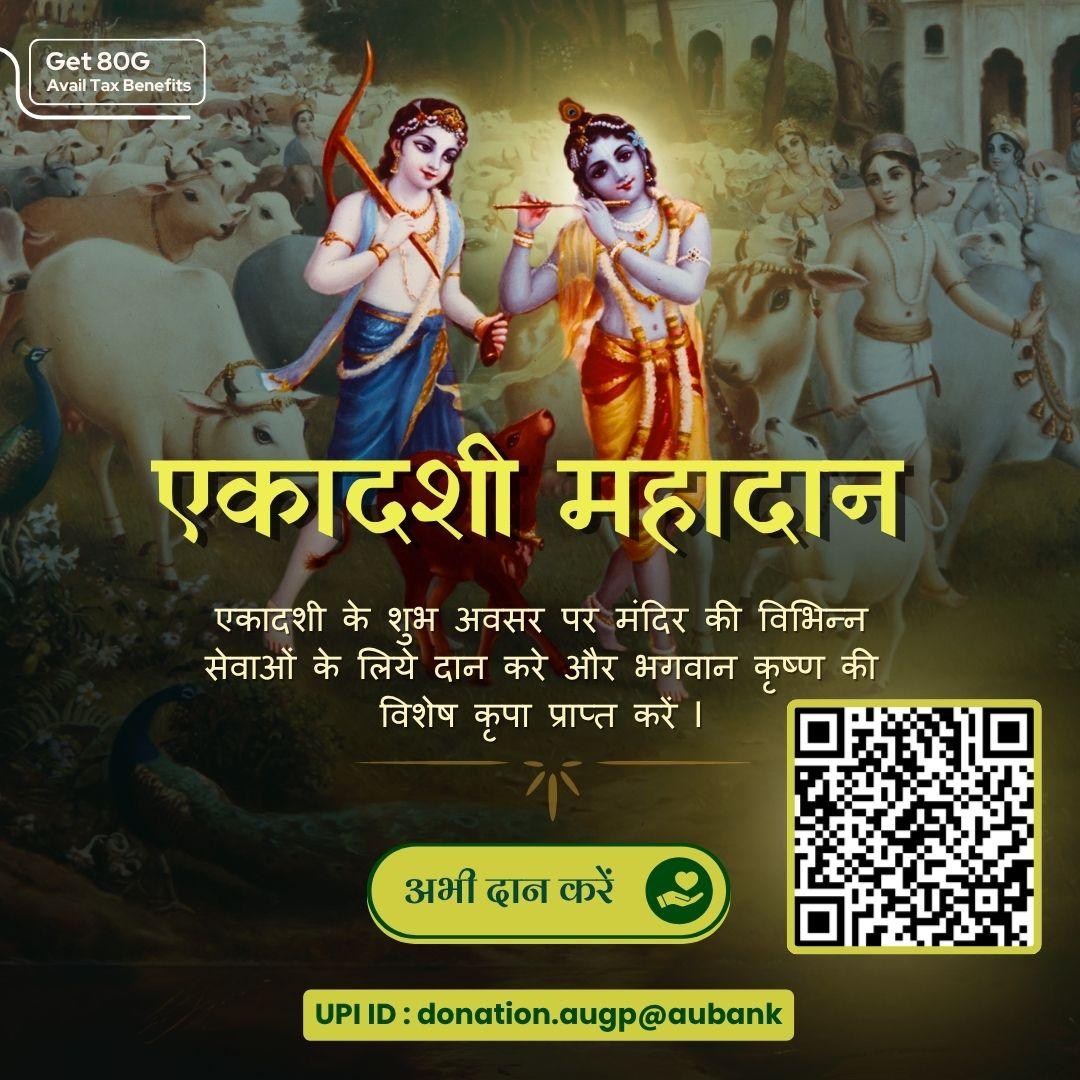
Devotees can also contribute through donations and annadan (food offerings), supporting temple activities and feeding the needy. These acts of charity during Saraswati Puja are believed to attract divine blessings, enhance spiritual growth, and strengthen the sense of community and shared devotion.
Conclusion
Saraswati Puja, celebrated on 23 January 2026, is a sacred festival honoring Goddess Saraswati, the embodiment of wisdom, knowledge, and arts.
Through prayers, rituals, and acts of devotion, people seek the goddess’s guidance for wisdom and clarity in life.
The festival emphasizes the timeless connection between learning, devotion, and moral values.
By participating in rituals, community gatherings, and acts of charity, devotees cultivate wisdom, harmony, and devotion in their lives.
Saraswati Puja continues to inspire people to pursue knowledge with humility and dedication.