
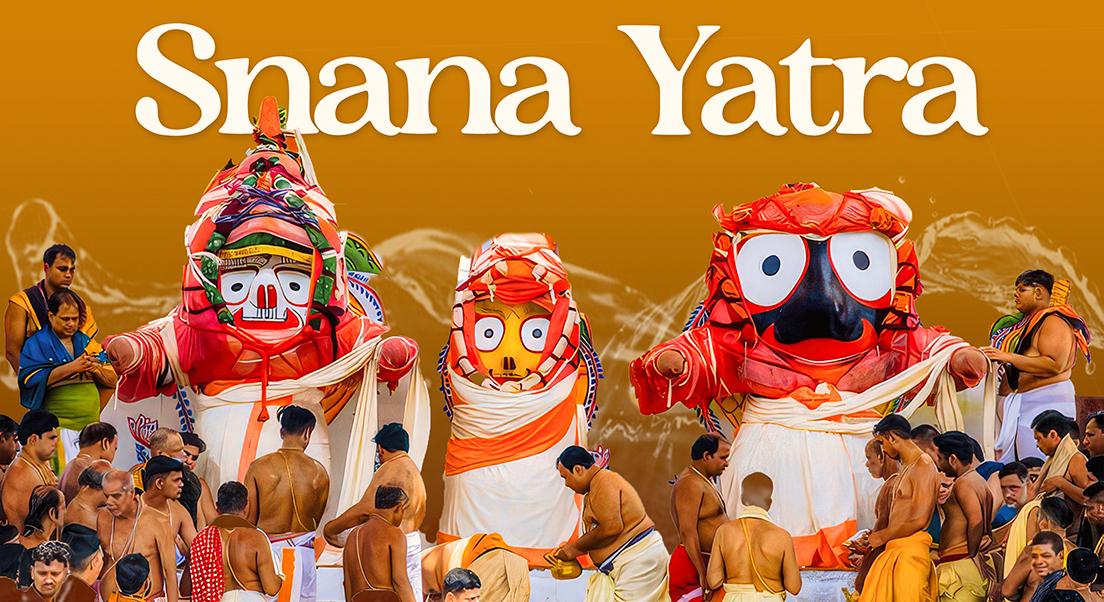
Every year on the full moon day (Poornima) of the Jyeshtha month, between May and June, devotees across the globe come together to witness one of the most sacred bathing (Snana) rituals in Hinduism, also known as the Jagannath Snana Yatra, Snana Purnima, Dev Snan Purnima or Jyeshtha Purnima.
Moreover, this year, Snana Yatra will be celebrated on 29 June 2026, and the preparations for the grand festival have already begun in the holy city of Puri. This festival includes a grand abhishekam (bathing) of Lord Jagannath, Baladeva, and Devi Subhadra with 108 pots of purified water.
This sacred festival of Jagannath Snana Yatra 2026 invites every devotee to surrender in deep love, devotion, and spiritual liberation of Sanatan Dharma.
History and Origin of Snana Yatra
The tradition of Jagannath Snana Yatra has its roots deeply described in the Skanda Purana, one of the eighteen Mahapuranas. Long ago, King Indradyumna of Puri, who established the grand Jagannath Temple, also commissioned the first abhishekam ceremony during the installation of the deities in the temple.
Moreover, the true significance of Snana Yatra goes beyond a mere ritual. According to traditional beliefs, a single darshan of Lord Jagannath on this sacred bathing day is believed to possess immense spiritual potency and can help devotees attain freedom from past sinful reactions.
How Snana Yatra is Celebrated in Puri
The celebration of Snana Yatra in Puri starts with grand preparations and decorations at the sacred Jagannath Temple. One night before Dev Snan Purnima, 108 purified pots of water are collected from the sacred well known as Snana Kua.
The water is sanctified with sandalwood, turmeric, fragrant flowers, and medicinal herbs before being offered in the ceremonial bathing of the Lord, creating a spiritually uplifting atmosphere for thousands of devotees.
- 01
Pahandi Bije
The first major ritual is Pahandi, which means "taking a step," and Bije means "honouring the King." In this devoted act, the deities are brought out from the Garbha Gruha in a royal procession to the Snana Mandap, the bathing complex within the temple premises. This is one of the greatest moments to witness the divine darshan of Lord Jagannath. - 02
Snana Ritual
After coming to the Snana Mandap, the actual bathing festival of Lord Jagannath, Baladeva, and Devi Subhadra begins with 108 pots of purified water. The entire atmosphere around the Jagannath Puri temple is filled with the chanting of Vedic mantras and devotional songs, and thousands of devotees are deeply immersed in this divine leela. - 03
Beginning of the Grand Ratha Yatra Cycle
This sacred bathing ceremony of the Jagannath Snana Yatra concludes every year only once, on the full moon day, approximately 18 days before the Ratha Yatra festival, making this celebration the beginning of the grand festival cycle.
Spiritual Significance of Snana Yatra
The significance of Lord Jagannath Snana Yatra in Puri is not merely a formal, ritualistic bathing ceremony. Its core meaning goes beyond the simple bathing process, as it is a sacred moment that connects the Supreme Lord with His devotees.
It embodies the core doctrine of Bhakti, or devotional surrender, as the Supreme Lord of the universe, Lord Jagannath, humbly accepts the service of His devotees on Jagannath Snana Purnima.
This also signifies that the divine is not unreachable and always responds to all devotees who approach Him with sincere faith and surrender.
Additionally, Snana Yatra Puri is one of the extremely rare occasions when the deities are taken out of the temple and made accessible to all, including devotees who are normally restricted from entering the temple’s core sanctum, known as the Garbha Gruha.
Ancient scriptures say that Dev Snan Purnima can free devotees from karmic sins and the burdens they carry from past lives.
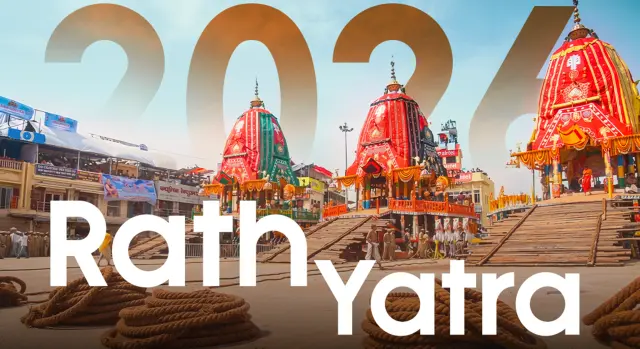
Also, Jagannath Snana Yatra marks the beginning of the year’s most sacred spiritual season, leading into the 15-day Anasara period and the beginning of the world-famous Rath Yatra, the Chariot Festival.
Moreover, the full cycle from the Bath Festival to the Chariot Festival connects devotees with the Lord, reflects their faith in Him, and culminates in their reunion outside the temple's inner sanctum.
This shared devotional atmosphere, fostered by collective chanting, elevates a person’s inner consciousness, and for centuries, saints and acharyas have acknowledged this celebration as a transformative spiritual experience.
What Happens After Snana Yatra? - Anasara, Hati Vesha & Netrotsava
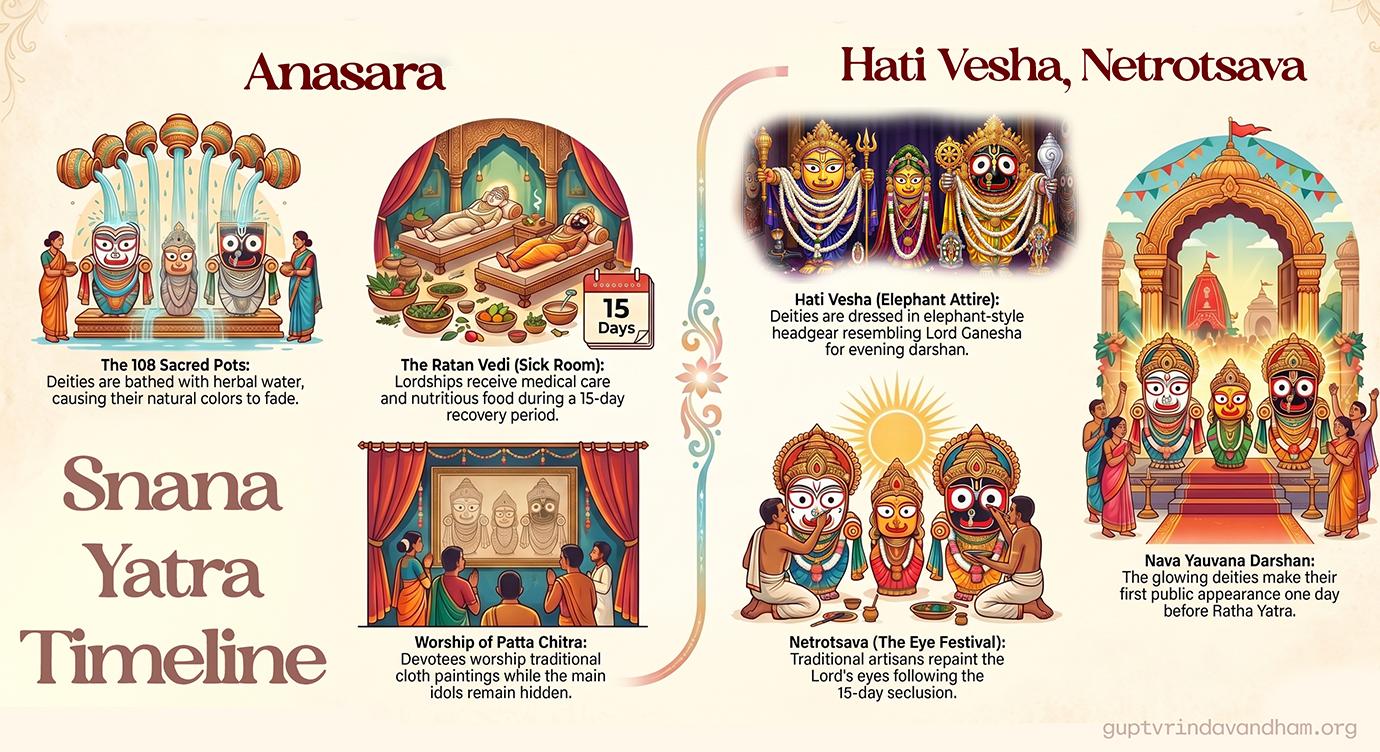
After the Snana Yatra, the deities of Lord Jagannath, Lord Baladeva, and Devi Subhadra are believed to fall ill after the grand bath.
Soon after the festival, a 15-day retreat called Anasara, also known as Anavasara, is observed, during which the temple is closed to public darshan.
- 01
Anasara
As the deities are bathed with 108 pots of purified water containing several herbs, their natural colour fades, and traditionally, it is believed that the deities catch a fever and are moved to a sick room called Ratan Vedi. Moreover, the temple's main Vaidya (physician) provides the Lordships with medical care and nutritious food. Also, as the main idols are hidden, devotees worship and offer prayers to Patta Chitra (traditional cloth paintings) of the Lordships within the temple. However, some devotees also travel to the Alarnath Temple, 25 km away from Puri, during this 15-day sacred period as it was here that Chaitanya Mahaprabhu himself came during the Anasara period, overwhelmed by the unbearable pain of separation from the Lord. - 02
Hati Vesha
On the evening of Dev Snana Purnima, the deities are dressed in an elephant-style dress, primarily called Hati Vesha. Lord Jagannath and Lord Baladeva are adorned with elephant headgear, resembling Lord Ganesha, while Devi Subhadra is dressed in lotus-flower attire. This divine ritual allows devotees to attain exceptional darshan of the Lord on the night of Snana Yatra. - 03
Netrotsava
After 15 days in the Anasara room, the deities are fully recovered and freshly painted by traditional artisans known as Banaka Lagi. On the 16th day, just one day before the Ratha Yatra celebration, the temple doors are again opened for the public. The reappearance is called Nava Yauvana Darshan. This is the moment when the glowing deities make their first public appearance, with joyous restoration of the Lord’s painted eyes.
Why Does Lord Jagannath Wear Hati Vesha After Snana Yatra?
Lord Jagannath wears the Hati Vesha attire, also known as elephant attire, after the Snana Yatra in Puri to signify that all divine forms are ultimately one divine reality. This Gaja Besha form of the Lord honours Lord Ganesha because of the sincere devotion of a devotee named Ganapati Bhatta.
The story behind this divine tradition is as follows:
A long time ago, there was a great devout scholar named Ganapati Bhatta who visited the Jagannath Temple during the Snana Yatra but was disappointed to find no deity of Lord Ganesha in the temple. Moved by his pure and sincere devotion, Lord Jagannath miraculously appeared in a Ganesha-like form.
Also, as Lord Ganesha is considered the Lord of prosperity and auspicious beginnings in Hinduism, every sacred celebration begins with his worship. Thus, after Snana Yatra, this divine dressing of Lord Jagannath serves as the prelude to the annual Ratha Yatra festival.
Lastly, this appearance also represents that all deities and divine paths ultimately lead to the Supreme Lord.
How Jagannath Snana Yatra is Celebrated in ISKCON Temples Around the World
Although the grand Snana Yatra in Puri holds special significance, the glory of Jagannath Snana Yatra has now spread globally, largely due to the tireless efforts of His Divine Grace A.C. Bhaktivedanta Swami Prabhupada, the founder-acharya of the Hare Krishna Movement (ISKCON).
ISKCON temples worldwide celebrate Jagannath Snana Purnima with the same devotion and authenticity as in Puri. The deities of Lord Jagannath, Lord Baladeva, and Devi Subhadra are ceremonially bathed in pure water, accompanied by the chanting of Vedic mantras, devotional kirtans, and the distribution of sacred prasadam.
From New York to Nairobi, London to Sydney, and Mayapur to Moscow, devotees worldwide participate in this sacred Dev Snan Purnima celebration every year.
Also, at Gupt Vrindavan Dham, Jaipur, the festival of Jagannath Snana Yatra is celebrated in the same original Puri style, including bathing, chanting, and distribution of prasadam to all devotees.
So, the significance of Snana Yatra is no longer limited to Odisha; it is a globally observed event that unites millions of devotees under the shelter of Lord Jagannath.
How to Observe Snana Yatra at Home
Celebrating Snana Yatra at home includes a simplified, faithful, and reverent version of the grand bathing festival celebrated in Puri. At home, you can perform the sacred Abhishekam of the Lordships by using Panchamrita, followed by traditional bhog offerings and Aarti.
Start the day by waking up early, cleaning the altar, and taking a holy bath before beginning the sacred Jagannath Snana Purnima ceremony.
Prepare holy water by adding rose water, a few drops of Ganga water, and a few drops of sandalwood paste. After the holy bath, clean the deities, dress them in fresh clothes, and adorn them with Hati Vesha attire and new ornaments.
After performing all the Snana rituals, offer bhog of fresh fruits, sweets, and savoury items.
Conclude the pooja by performing aarti, lighting a ghee diya and incense sticks, and seeking Lord Jagannath's blessings on this auspicious Snana Purnima.
FAQs
Conclusion
The Jagannath Snana Yatra, one of the most sacred and cherished festivals celebrated on the holy streets of Puri, India, has today become a global devotional celebration observed by devotees of Lord Jagannath and Lord Krishna across the world.
This divine festival follows a complete spiritual timeline, beginning with the sacred bathing ceremony of Snana Purnima, continuing through the 15-day Anasara period, and culminating in the auspicious Netrotsava and the world-famous Rath Yatra festival.
Beyond its rituals and traditions, Snana Yatra beautifully reflects the loving relationship between the Lord and His devotees, reminding us of the power of devotion, surrender, and divine mercy.
Whether witnessed in Puri, celebrated in ISKCON temples, or observed at home, this sacred occasion offers every devotee an opportunity to deepen their spiritual connection and receive the blessings of Lord Jagannath, Lord Baladeva, and Devi Subhadra.