

Dussehra may be one festival, but India does not celebrate it in just one way. In one city, people gather for Ramlila and Ravana Dahan; in another, decorated chariots, local deities, royal processions or Durga Visarjan become the heart of the occasion.
That diversity makes the Dussehra celebration in India worth exploring beyond the familiar image of burning Ravana effigies. From North India's Ramlila grounds to Mysuru's grand Dasara, Kullu's devta traditions and Maharashtra's Simollanghan, every region gives Vijayadashami its own character.
Here is a simple region-by-region guide to how Dussehra is celebrated across India.
Looking for the festival date? See our Dussehra 2026 date and Vijay Muhurat guide.
How Is Dussehra Celebrated Across India?
Dussehra and Vijayadashami celebrations differ according to local traditions. Ramlila and Ravana Dahan are prominent across many parts of North India, while other regions mark the occasion through processions, goddess worship, local deity traditions, Ayudha Puja and community fairs.
| Place or Region | Distinctive Celebration |
|---|---|
| North India | Ramlila and Ravana Dahan |
| Delhi | Large public Ramlila events and effigy burning |
| Uttar Pradesh | Traditional Ramayana-based Ramlila |
| Mysuru, Karnataka | Royal Dasara and Jumbo Savari |
| Kullu, Himachal Pradesh | Lord Raghunathji and gathering of local deities |
| Bastar, Chhattisgarh | Maa Danteshwari-centred tribal traditions |
| West Bengal | Vijayadashami and Durga Visarjan |
| Maharashtra | Shami worship, Simollanghan and Shastra Puja |
| Rajasthan | Dussehra fairs and Ravana Dahan |
| South India | Ayudha Puja, Saraswati Puja and learning traditions |
Ramlila and Ravana Dahan in North India
Across many parts of North India, Dussehra is closely connected with Ramlila, where episodes from the Ramayana are performed during the festive period.
The performances traditionally conclude around Vijayadashami with the defeat of Ravana. Large effigies of Ravana, and often Kumbhakarna and Meghnad, are then burnt before public gatherings. Fairs, food stalls and community events often develop around the Ramlila grounds.
This combination of Ramlila followed by Ravana Dahan is one of the most widely recognised forms of Dussehra celebration in India.
Dussehra Celebrations in Delhi
Delhi's Dussehra stands out for the scale of its public celebrations.
Large Ramlila committees organise performances at grounds across the city, attracting crowds over several evenings. On Vijayadashami, the focus shifts to large Ravana effigies, fireworks and public gatherings.
Delhi Tourism highlights major Ramlila celebrations and Ravana Dahan as central features of the city's Dussehra festivities.
What distinguishes Delhi is therefore not a different ritual, but the size and public nature of the celebration, with Ramlila grounds becoming major festive spaces.
Ramlila Traditions in Uttar Pradesh
In Uttar Pradesh, the strongest Dussehra identity comes from the region's long tradition of Ramayana-based Ramlila.
Different towns stage episodes from Lord Rama's life over several days, leading towards Vijayadashami. The performances often feel more devotional and narrative-driven than a single-day public event.
Processions, local fairs and Ravana Dahan may accompany these performances, but the distinctive element is the continued importance of Ram Katha and staged Ramlila traditions.
This gives Uttar Pradesh a different emphasis from Delhi's larger event-style celebrations.
Mysuru Dasara in Karnataka
Mysuru Dasara is known for combining devotion, royal heritage and public spectacle.
The Mysuru Palace and surrounding city become major centres of celebration during the festival period. Cultural performances, illuminated heritage spaces and ceremonial events build towards Vijayadashami.
The best-known event is the Jumbo Savari, the traditional procession associated with Goddess Chamundeshwari. The procession includes decorated elephants, tableaux, musicians and performers.
Unlike North India's Ravana Dahan-centred celebrations, Mysuru Dasara is defined more by its royal procession and Karnataka's distinctive cultural traditions.
Kullu Dussehra in Himachal Pradesh
Kullu Dussehra begins where many Dussehra celebrations elsewhere are ending.
Hundreds of local gods and goddesses traditionally arrive at Dhalpur ground with their attendants and musicians for the week-long gathering. The celebration centres on Lord Raghunathji and the coming together of Kullu's devta traditions.
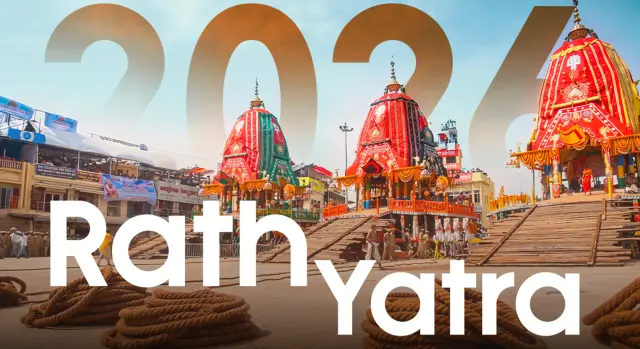
One of its defining events is the Rath procession of Lord Raghunathji. The decorated wooden chariot is pulled across Dhalpur while participating deities, priests, musicians and devotees gather around it.
This focus on local deities and the Rath procession makes Kullu Dussehra very different from Ravana Dahan celebrations elsewhere.
Bastar Dussehra in Chhattisgarh
Bastar Dussehra has one of the most distinctive identities among India's Dussehra traditions.
Instead of centring its celebration on Ramlila or Ravana Dahan, the Bastar tradition is closely connected with Maa Danteshwari, local deities and the tribal communities of the region.
Different ceremonies, processions and community rituals unfold as part of a much longer festival tradition. Local participation and indigenous customs play a central role throughout the celebration.
Because of this, Bastar is an important example of how Dussehra in India can carry a regional meaning very different from the familiar Ramayana-based celebration.
Vijayadashami in West Bengal
In West Bengal, Vijayadashami marks the conclusion of Durga Puja.
After several days of worship and community celebration, idols of Goddess Durga are taken out in processions for Durga Visarjan. The mood combines celebration with an emotional farewell to the Goddess.
Families and communities meet, exchange greetings and take part in the final rituals of the Durga Puja period.
Here, Vijayadashami is therefore experienced mainly through the culmination of Goddess Durga's worship rather than through Ramlila or Ravana Dahan.
To understand how Durga Puja and Dussehra connect, read Dussehra and Navratri: connection and difference.
Dussehra Traditions in Maharashtra
Maharashtra gives Dussehra a distinctive identity through customs connected with Shami worship, Simollanghan and Shastra Puja.
People traditionally worship the Shami or Apta tree, and Apta leaves may be exchanged among family and friends. Maharashtra Tourism also records the custom of Simollanghan, in which people symbolically cross the boundaries of their village or town and visit temples.
Tools and weapons may also be worshipped during Shastra Puja, while Ravana Dahan is organised in several places.
These customs make Maharashtrian Dussehra much broader than an effigy-burning celebration alone.
Dussehra Celebrations in Rajasthan
In Rajasthan, Dussehra is commonly associated with Ravana Dahan, large fairs and public gatherings.
Cities and towns organise tall Ravana effigies, cultural programmes and mela-style events around Vijayadashami. Families gather at open grounds to watch the effigies being burnt as part of the evening celebration.
Local fairs add another layer to the festival through food stalls, rides, performances and community activities.
Rajasthan's Dussehra experience is therefore shaped by the combination of the traditional Ravana Dahan ceremony and the state's strong public fair culture.
Vijayadashami Traditions in South India
Across several South Indian communities, Vijayadashami is closely linked with learning, work and worship of tools.
During Ayudha Puja, people traditionally clean and worship tools, instruments, machinery, books or objects connected with their profession and learning. Saraswati worship also forms an important part of the Navratri period in many communities.
Vijayadashami is widely considered an auspicious occasion for beginning education, music or another new skill.
This gives many South Indian celebrations a learning- and work-centred character rather than the Ravana Dahan focus commonly seen in the north.
FAQs
Conclusion
Dussehra shows how a shared festival can become deeply connected with the traditions of different regions across India. Whether celebrated through Ramlila, processions, local customs or community gatherings, each tradition carries its own cultural identity.
Together, these celebrations make Vijayadashami one of India's most diverse and widely observed festivals.
To understand the story and meaning behind the festival, read the significance of Dussehra.