
 Donate Now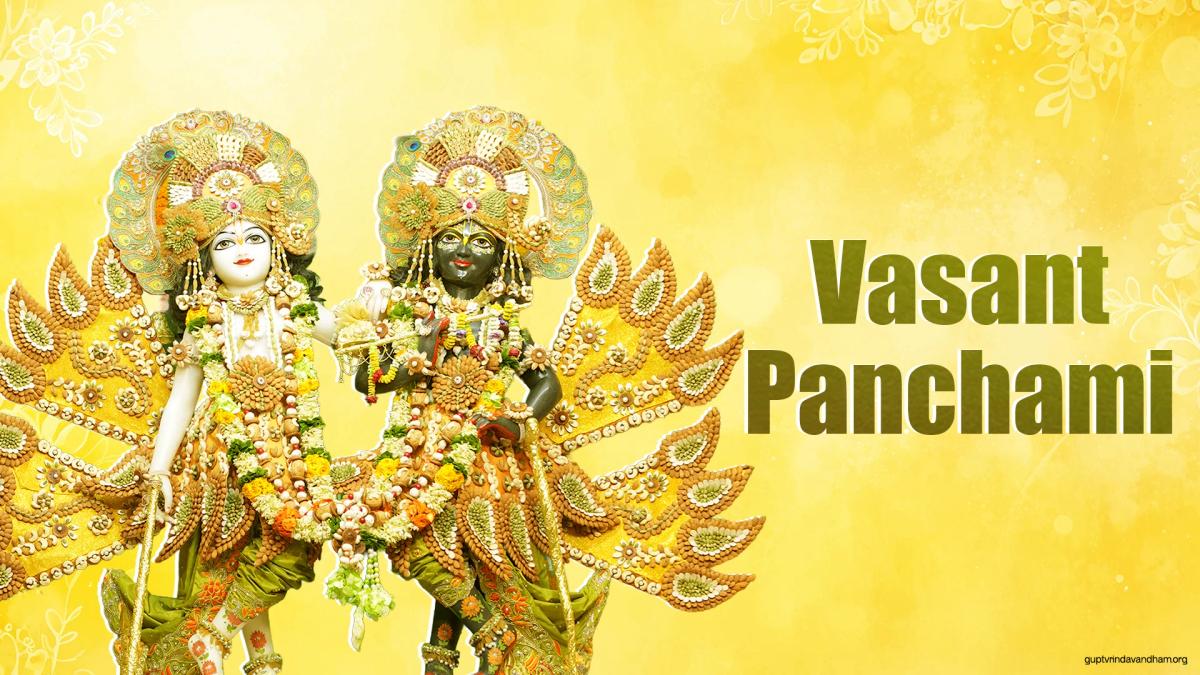
Vasant Panchami, also known as Basant Panchami or Saraswati Puja is the arrival of the spring and the celebration of a new beginning, knowledge, music, and creativity.
The word Vasant means spring and Panchami refers to the fifth day of the bright lunar fortnight, symbolizing nature’s renewal.
Scriptures also describe this day as the first touch of the spring in Vrindavan. There, we can offer fresh leaves, flowers, and sprouting grasses to Lord Krishna during a special arati. Thus, this festival beautifully blends the joy of the spring with the devotion and wisdom.
Vasant Panchami 2026 Date and Time
Panchami Tithi Timings
Basant Panchami 2026 falls on 23 January (Shukla-Panchami of Magha).
According to a common reference panchang, the tithi begins in early morning hours — for example one panchang lists start at 02:28 AM on 23 Jan, continuing until 01:46 AM on 24 Jan (timings may slightly vary by region).
Saraswati Puja Muhurat
For 2026 in many places, a widely accepted muhurat for Saraswati Puja lies approximately between 07:14 AM – 12:50 PM.
However — and this is important — muhurat may vary depending on local sunrise, longitude, and regional panchang calculations.
Many sources advise verifying with local panchang before doing the puja.
Auspicious Activities
On this day, many people perform:
-
Worship (puja) of Saraswati — especially books, instruments, tools of learning or art.
-
Vidyarambha (first-letter / first-writing initiation) for children — beginning their educational journey under divine blessing.
-
Cultural/arts events, music, painting, and reading — embracing creativity and learning.
-
Dressing in yellow, offering yellow flowers or mustard-related offerings, symbolizing spring and prosperity.
How to Celebrate Vasant Panchami
Saraswati Puja Steps
A typical puja at home or school/institution involves:
-
Cleaning and preparing the altar — place a picture or idol of Saraswati, with her symbolic items (veena, book/manuscript, rosary), and arrange a seat (preferably white and clean).
-
Devotees wear clean clothes, often with yellow or white tones (yellow being symbolic of spring).
-
Offerings (puja samagri): yellow flowers (mustard or marigold), fruits, sweets (like kesar halwa or yellow rice/food), incense, lamps, writing instruments (books, pens), musical instruments (if any), etc.
-
Mantra / prayers / aarti / stotra chanting: Recite Saraswati Vandana, other prayers or hymns seeking knowledge, wisdom, arts-skills.
-
Vidyarambha (if applicable): For children or beginners in learning — perform first-letter writing, place pen/pencil and book near goddess for blessings.
Foods, Colors & Offerings
Yellow is the dominant theme — symbolizing spring, energy, knowledge, prosperity. Many devotees wear yellow attire and use yellow flowers (mustard, marigold) or decorations.
Traditional offerings often include yellow or saffron-tinged foods: for example, kesar (saffron) halwa, yellow rice, sweets, fruits. Books, pens, musical instruments are also offered — especially by students, artists and learners.
Do’s and Don’ts
Do’s:
-
Perform puja during muhurat (morning to midday) as per your local panchang.
-
Decorate altar cleanly; wear yellow or white; use fresh flowers/offerings.
-
Use the day to initiate learning, arts, or creative endeavours — a symbolic fresh start.
-
Offer books, pens, instruments, and pray for knowledge, wisdom, and creativity.
Be careful / Don’ts:
-
Avoid doing major worldly deals (like signing contracts, heavy financial matters) during tithi if panchang marks it inauspicious — better to focus on spiritual or educational beginnings.
-
Since regional calendars vary, always consult local panchang for correct tithi and muhurat.
History of Vasant Panchami Festival
Ancient References
In Hindu tradition, this day is directly linked to the appearance of Goddess Saraswati. She is the Goddess of knowledge, music, art, and wisdom.
The oldest Vedic scriptures, Saraswati River is celebrated as one of the “sapta sindhu” (seven rivers), revered for its sanctity and life-giving presence.
Over time, as religious thought evolved, Saraswati was recognized as the goddess of speech, learning, arts, and knowledge.
This transformation reflects a shift: from worshipping nature (rivers, water) to celebrating spiritual values (knowledge, speech, wisdom). It shows how Vedic cultural elements gradually merged with religious symbolism.
Saraswati Puja Origins
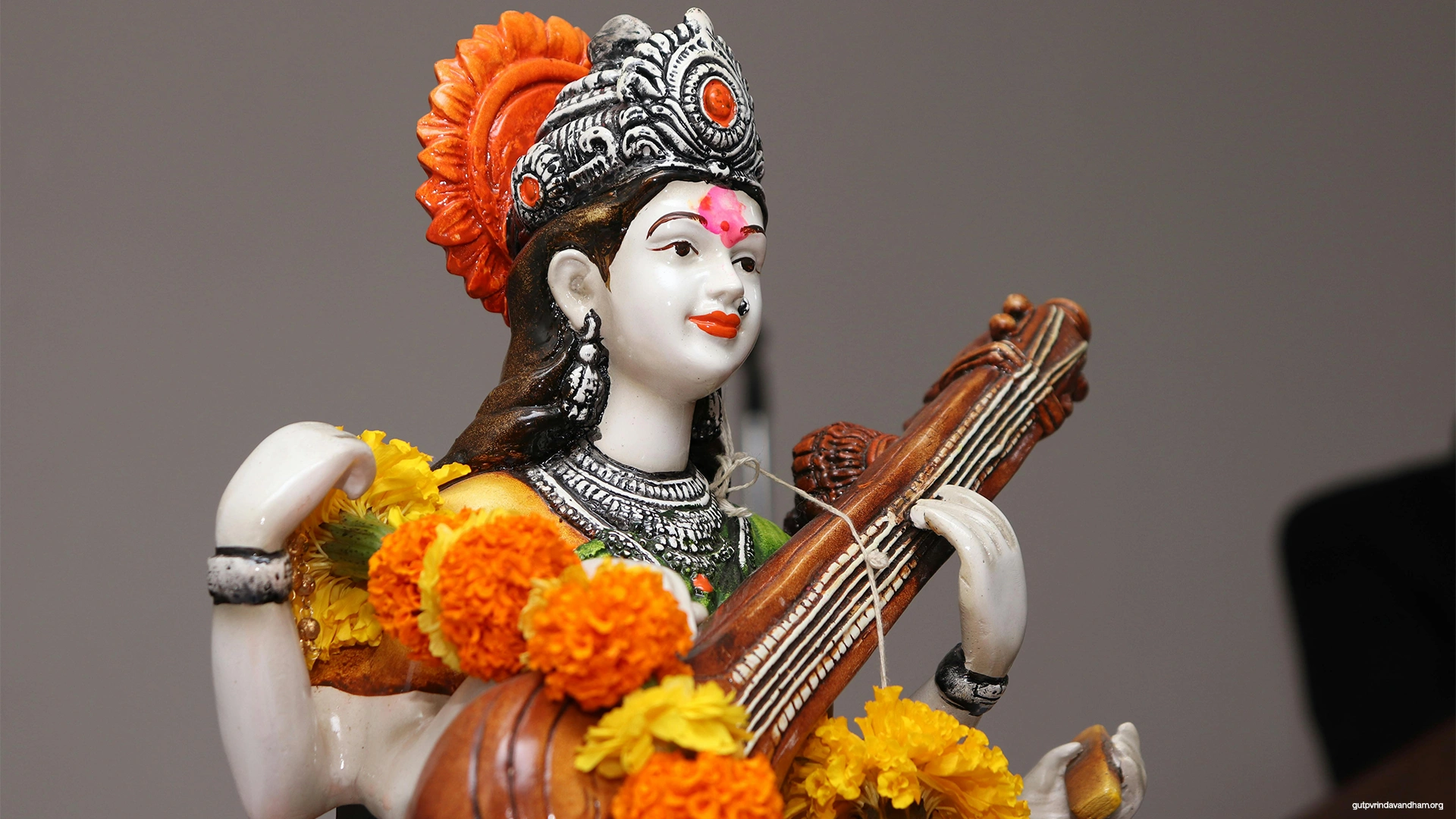
As the worship of deities in temples became common in later centuries, Goddess Saraswati’s identity shifted from a natural river-goddess to a divine patron of learning and arts.
Eventually, the fifth day of the waxing half moon of the lunar month Magha. It came to be associated with honoring Saraswati — giving rise to Vasant Panchami as the festival of knowledge and art.
Evolution Over Time
Over centuries, Vasant Panchami’s observance has diversified across regions. In many parts of India, this festival became a day for Saraswati worship, education-initiation rites (for children’s first writing), and cultural events.
In some regions, Vasant Panchami merged with local seasonal and agricultural cycles — celebrating the blooming of mustard fields and arrival of spring, blending the spiritual and agrarian-cultural significance.
Meaning & Significance of Vasant Panchami
Meaning of the Festival
The very name — “Vasant” (spring) + “Panchami” (fifth lunar day) — signals the union of seasonal growth and spirituality. Vasant Panchami is celebrated as a sign of spring: the cold of winter, blossoms begin to appear, fields come alive.
This festival thus becomes a cultural marker: not only for nature’s awakening, but also for restoring enthusiasm in learning, creativity, and inner growth.
Spiritual Importance
At the heart of Vasant Panchami lies in the worship of Goddess Saraswati. For students, teachers, writers, artists and all seekers of knowledge, this day is considered auspicious to seek blessings for success in education, creativity and learning.
Many families and institutions also use this day to commence new journeys of learning — children’s “first letter writing” (Vidyarambha), beginning of studies, art-classes, etc.
Connection to Spring Season
Vasant Panchami merges spiritual significance with seasonal rhythm. The festival often coincides with mustard fields blooming in northern India, yellow flowers, clear skies and the onset of vibrant spring — naturally inspiring yellow attire, flower offerings, and a sense of redevelopment.
Thus, beyond spiritual meaning, the festival becomes a celebration of nature’s cycles — life, growth, fertility, and the rekindling of hope after winter’s dormancy.
Deities Associated With Vasant Panchami
Goddess Saraswati
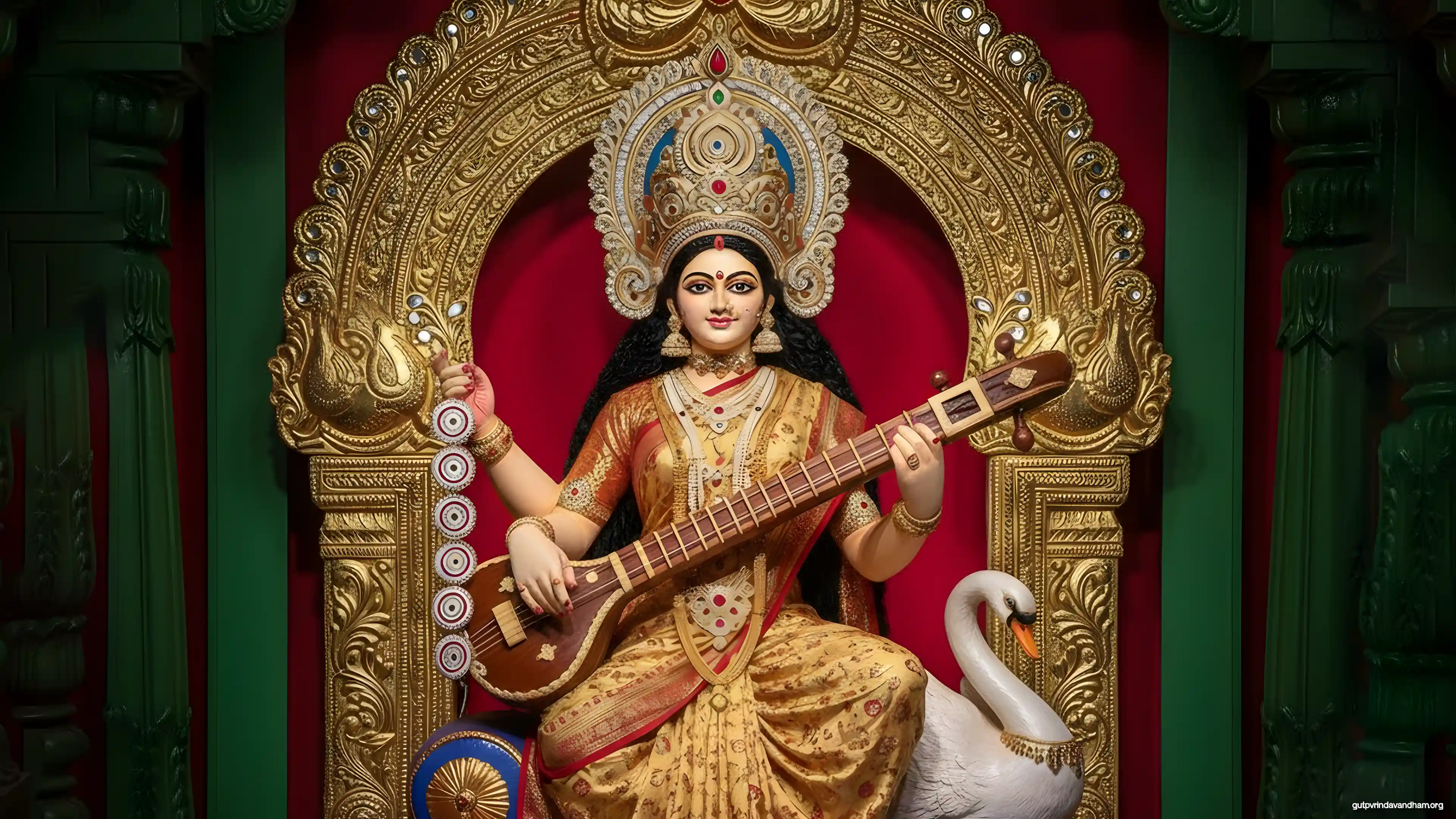
The principal deity of Vasant Panchami is Goddess Saraswati — revered as goddess of learning, arts, speech, wisdom, and music. In traditional imagery, she is portrayed as holding a veena (string instrument), a manuscript, and accompanied by a swan (or goose), .It symbolizes purity and discrimination (between good and evil, truth and untruth).
Her worship on Vasant Panchami emphasizes seeking knowledge — academic, artistic, spiritual — and acknowledging the importance of speech, music, wisdom and learning as divine gifts.
Lord Krishna and Basant Rasa
Many devotees and Vaishnava traditions associate the onset of spring with the joyous spring-time lilas (pastimes) of Krishna — often referred to as “Basant Rasa.” For followers connected to Krishna-Balaram traditions (like your temple), Vasant likewise becomes a day to recall and celebrate Krishna’s playful, loving moods in spring.
This linkage adds a devotional flavor: besides the worship of Saraswati for knowledge, the festival becomes a celebration of divine love, beauty and nature — themes dear in Krishna bhakti culture.
Kamadeva & Spring
In some older folk and Puranic tales, spring (Vasant) is also connected to the god of love, Kamadeva. According to lore, Kamadeva was burnt (Kama Dahan) by Lord Shiva, but his eventual rebirth and the revival of desire and life’s creative energy become symbolically linked to the arrival of spring.
Over time, some regional traditions remember this aspect around Vasant / Madan (another name for Kamadeva) Panchami — intertwining nature’s bloom, love, and renewal.
Thus Vasant Panchami can also embody broader themes: love, fertility, creation — not just knowledge or seasonal change.

Stories Associated With Vasant Panchami
Saraswati Appearance Story
The ancient deity Saraswati began as a river revered in Vedic times; as spiritual thought evolved, she came to represent knowledge, learning, and speech. Over time, Puranic texts described her as the mind-born daughter (manasaputri) of creator god Brahma or as the consort of creator-principle, symbolizing wisdom and the flow of knowledge.
Thus Vasant Panchami is often regarded as a celebration of her manifestation in divine form — a transformation from a sacred river to the goddess of arts/learning; symbolically recognizing the importance of knowledge in human life as spring renews nature.
Kamadeva & Rati Story (Spring, Love & Renewal)
In certain folk and Puranic traditions, the arrival of spring (Vasanta) and the festival of Vasant Panchami also link with the legend of Kamadeva — the god of love. According to lore, his act of disturbing the meditation (tapas) of Shiva led to his being burnt (Kama-Dahan), but his eventual rebirth or symbolic revival is celebrated as a return of creative energy, love, desire and life’s bloom. Over generations this myth became associated with spring festivals like Vasant/Madan Panchami.
Hence, besides knowledge and arts, Vasant Panchami at times carries undertones of love, fertility, beauty, and the awakening of nature — adding more layers to its significance.
Krishna’s Basant Celebration (Basant Rasa)
For devotees of Krishna (and his brother Balarama), the spring season and its festival echo the joyous spring-time pastimes (rasas, lilas) of Krishna — known as “Basant Rasa.” Many Vaishnava communities observe Vasant with devotional fervour, celebrating spring, divine love, and Krishna’s lilas through music, bhajans, kirtans, and cultural programmes.
Thus for such devotees, Vasant Panchami is not only about knowledge or seasonal renewal, but also about divine love, devotion, and the spiritual mood of spring.
Concluding Thoughts
Vasant Panchami weaves together multiple strands of Indian spiritual and cultural life: ancient Vedic traditions, reverence for nature, celebration of learning and wisdom, the vibrancy of spring, and devotional love.
On this day, people step into a fresh beginning — be it studies, arts, music or spiritual life — under the blessings of Saraswati, in the bloom of spring, with hope and renewal in their hearts.
Especially for temples, schools, families — it’s a perfect time to hold Saraswati Puja, encourage children’s first writing, start classes, or host music/arts events.
Given your temple’s dedication to Krishna and Balaram, Vasant Panchami can also be a beautiful occasion to blend devotion (Krishna’s Basant Rasa) with worship of Saraswati — honoring both knowledge and bhakti.
Related Articles: Saraswati Puja 2026 | Basant Panchami Significance | Donate on Vasant Panchami