
Pitru Paksha 2026 begins on Saturday, 26 September with Purnima Shradh and ends on Saturday, 10 October with Sarvapitri Amavasya. The waning fortnight (Krishna Paksha) starts a day later, and Pratipada Shradh falls on Sunday, 27 September.
This guide gives the complete Pitru Paksha 2026 calendar with the Shradh tithi list, explains why two start dates appear online, and covers the rules, daan, Tarpan and Pind Daan method for home. Exact tithi timings and Shradh muhurats change from one city to another, so please confirm them from a Panchang for your city before performing any ritual.
Pitru Paksha 2026 Dates (Start and End Date)
| Observance | Date | Day |
|---|---|---|
| Pitru Paksha begins with Purnima Shradh | 26 September | Saturday |
| Pratipada Shradh (Krishna Paksha begins) | 27 September | Sunday |
| Sarvapitri Amavasya (Pitru Paksha ends) | 10 October | Saturday |
Does Pitru Paksha 2026 start on 26 or 27 September?
Pitru Paksha is counted from 26 September, the day of Purnima Shradh. Pratipada Shradh, the first Shradh of the Krishna Paksha, falls on 27 September.
- 26 September is Purnima Shradh. The Bhadrapada Purnima tithi runs from about 11:06 pm on 25 September to 10:18 pm on 26 September, and these timings can vary slightly by city.
- 27 September is Pratipada Shradh. The Krishna Paksha begins only after Purnima ends late on the night of 26 September. Because Shradh is performed in the afternoon, the Pratipada Shradh is done on 27 September.
If your ancestor's tithi is Pratipada, perform the Shradh on 27 September. If your ancestor passed away on Purnima, perform it on 26 September.
Is Pitru Paksha 15 days or 16 days?
Counted from 26 September, Pitru Paksha has sixteen Shradhas: Purnima Shradh plus the 15 tithis of the Krishna Paksha. In 2026 the period spans 15 calendar dates because Chaturthi and Panchami are listed together on 30 September in most calendars. Some families count only the 15 tithis from 27 September, so follow your family tradition.
Pitru Paksha 2026 Calendar: Shradh Tithi List
| Date | Day | Shradh Tithi |
|---|---|---|
| 26 September | Saturday | Purnima Shradh |
| 27 September | Sunday | Pratipada Shradh |
| 28 September | Monday | Dwitiya Shradh |
| 29 September | Tuesday | Tritiya Shradh |
| 30 September | Wednesday | Chaturthi and Panchami Shradh |
| 1 October | Thursday | Shashthi Shradh |
| 2 October | Friday | Saptami Shradh |
| 3 October | Saturday | Ashtami Shradh |
| 4 October | Sunday | Navami Shradh |
| 5 October | Monday | Dashami Shradh |
| 6 October | Tuesday | Ekadashi Shradh |
| 7 October | Wednesday | Dwadashi and Magha Shradh |
| 8 October | Thursday | Trayodashi Shradh |
| 9 October | Friday | Chaturdashi Shradh |
| 10 October | Saturday | Sarvapitri Amavasya (Mahalaya Amavasya) |
Two entries need care this year. Panchami is a short tithi, so most calendars list it with Chaturthi on 30 September, but some local Panchangs place Panchami Shradh on 1 October. If your family observes Chaturthi or Panchami, check with your family priest or your local Panchang.
Which Shradh tithi should you choose for an ancestor?
Shradh is performed on the Hindu lunar tithi of the ancestor's death, not on the English calendar date. Some commonly followed traditions also assign special days, though practice varies between families and regions.
- Any known tithi: Perform Shradh on that tithi in the list above.
- Chaturthi and Panchami: Traditionally associated with those who passed away in the previous year.
- Navami: Traditionally observed for married women who died before their husbands.
- Dwadashi: Traditionally observed for children and for renunciates (sannyasis).
- Chaturdashi: Traditionally observed for those who died in an accident, in war or by violence.
- Sarvapitri Amavasya: For all ancestors, especially when the tithi is unknown or a Shradh was missed.
Best time for Shradh and Tarpan
Shradh is traditionally performed in the afternoon. Panchangs mention three windows for this, called Kutup, Rohina and Aparahna Kaal. The exact minutes differ from city to city, so use a Panchang for your own city instead of a general time.
Calendar Information vs Religious Belief
To keep this guide clear, here is how it separates the two:
- Calendar information: the dates, tithis and days in the tables above. These come from Panchang calculations and can vary slightly by location.
- Religious belief and tradition: the rules, the meaning of the rituals and the idea that offerings reach ancestors. These are matters of faith and family custom. They differ between communities, so follow your own family tradition and the guidance of your priest.
Pitru Paksha Rules (Do's and Don'ts)
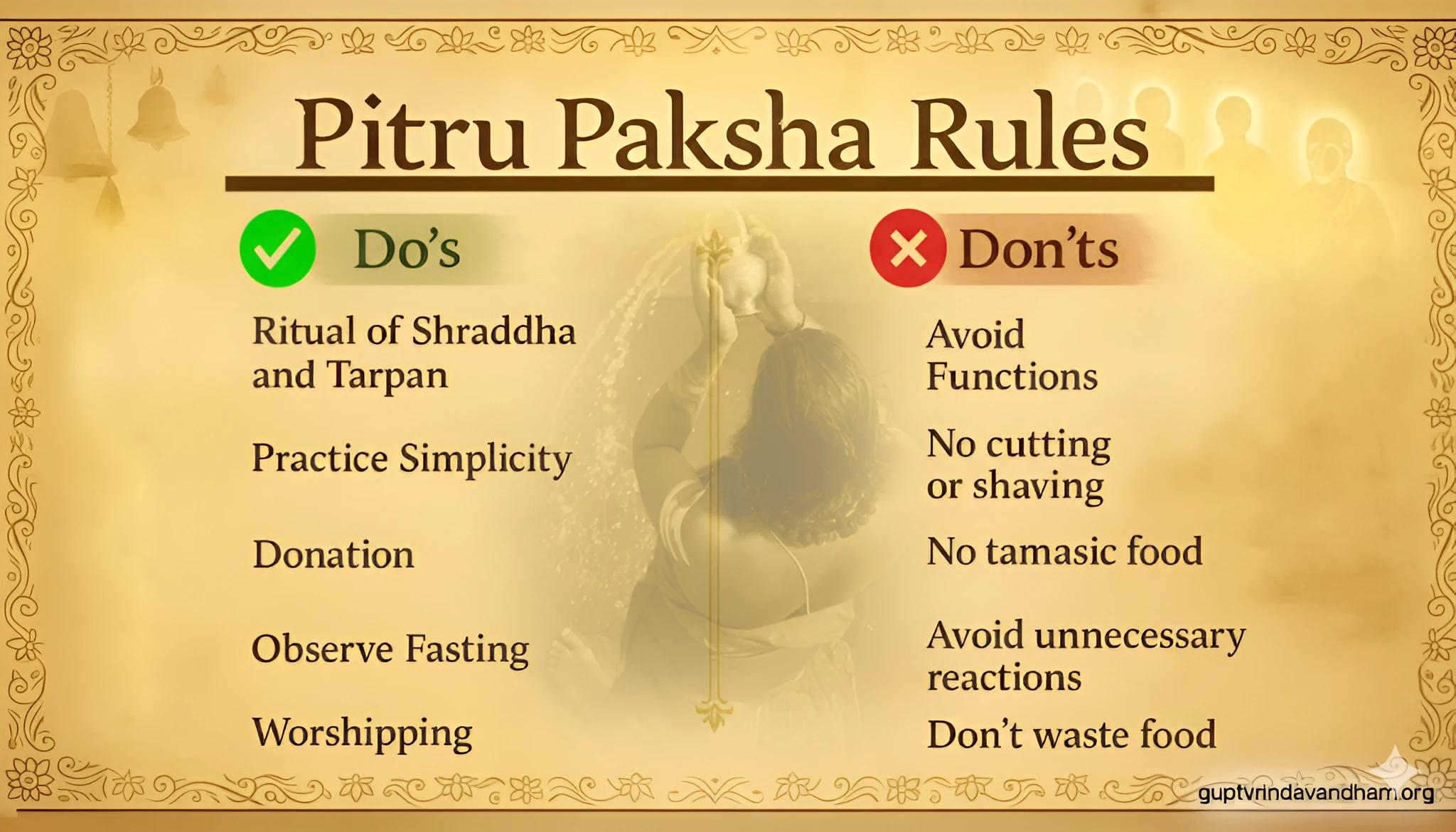
Pitru Paksha is a time of simplicity, remembrance and self-discipline. The points below are traditional practices, and families follow them in different ways.
Do's
i) Perform Shradh and Tarpan
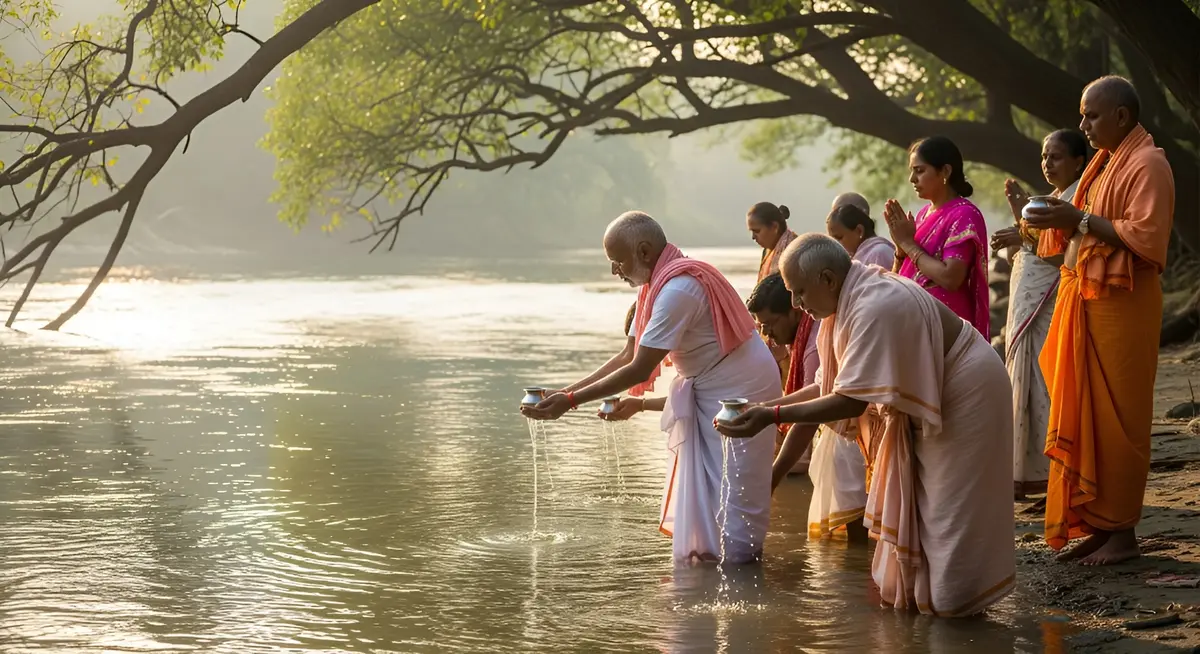
Shradh means offering food with faith and gratitude to departed family members. Tarpan means offering water, often with sesame seeds, in their memory. Many families also offer flowers and freshly prepared home-cooked food.
ii) Keep life simple
Follow a simple, sattvic routine during these days. Basic, clean, home-cooked meals and a calm daily schedule are enough.
iii) Give daan
Traditionally, food or help given to sadhus, people in need, cows and other animals is considered pleasing to the Lord and is offered in the ancestors' name. What matters most is sincerity.
iv) Fast as per your health
Many devotees stay without a full meal until the Shradh is complete on their ancestor's tithi. Some take fruit or milk, while others observe a stricter fast. Choose what suits your health, since nobody is expected to harm their body.
v) Remember your ancestors daily
Strict fasting is linked mainly to the Shradh day, but prayer and remembrance can continue through the whole fortnight. Lighting a lamp, chanting the holy name or reading scripture in their memory are simple ways to do this.
Don'ts
i) Avoid celebrations
Weddings, engagements, housewarmings and similar celebrations are traditionally avoided during Pitru Paksha, as the fortnight is meant for remembrance. If you are invited to one, follow your family's custom.
ii) Haircuts and shaving
Many families avoid cutting hair or shaving during these days, especially the person performing the Shradh. It is a traditional practice for discipline and not a rule followed by everyone.
iii) Avoid tamasic food
Onion, garlic and non-vegetarian food are avoided in the food offered for Shradh, and many families avoid them throughout the fortnight. A pure diet is traditionally believed to help the mind stay focused on prayer.
iv) Avoid anger and harsh speech
Try to speak gently and stay patient with family members. Remembering ancestors is meant to be done with a calm and grateful mind.
v) Do not waste food
The food prepared for Shradh is first offered to the Lord and then to the ancestors, and it is later shared as prasadam. Prepare only what you can offer with care, and do not throw it away.
How to Perform Shradh and Tarpan at Home (Pitru Paksha Puja Vidhi)
Many families travel to places such as Haridwar, Prayagraj, Varanasi or Gaya for Shradh. It can also be done at home with devotion. Traditionally, the eldest son or another male family member performs the Shradh, but practice varies, so follow your family tradition. The steps below are a simple outline, and the detailed procedure differs between families. For elaborate rituals such as Pind Daan, please take guidance from a priest.
1) Preparation
i) Clean the house and set up a clean space for the ritual.
ii) Place a photograph of your ancestor on a clean cloth in that space.
iii) Choose the correct tithi from the list above and plan the ritual for the afternoon.
2) Invocation
i) Light a ghee lamp and incense.
ii) Remember your ancestors with prayer and mantras. Many families face south while offering Tarpan.
3) Offerings
i) Prepare simple, freshly cooked vegetarian food and offer it to the Lord first.
ii) Offer Tarpan, which is water mixed with black sesame seeds, in the name of your ancestors.
iii) Offer Pind Daan, which means small balls made of cooked rice or barley flour, traditionally offered to three generations of ancestors.
iv) Many families also set aside a portion of food for a cow, a dog, a crow and ants before serving guests.
4) Feeding and Donation
i) Feed brahmins or, if that is not possible, offer food at a temple.
ii) Give daan to people in need.
iii) Feed a cow.
5) Closing
i) Read scripture in your ancestors' memory, such as the Bhagavad Gita or the Srimad Bhagavatam, as many families do.
ii) End with gratitude, and sing devotional bhajans or chant the holy names.
Food commonly prepared for Shradh
The menu differs from region to region, but many families prepare kheer, rice, dal, puri and seasonal vegetables such as pumpkin and cluster beans. All of it is cooked fresh, without onion and garlic, and offered before the family eats.
Daan (Donation) in Pitru Paksha
Daan is one of the most common practices during Pitru Paksha. According to tradition, what is given to sadhus, people in need and animals in the name of ancestors becomes a blessing for the family. This is a matter of faith, and the daan itself helps someone in real need.
What you can offer:
i) Food
Cooked food or fruits for brahmins, people in need and cows.
ii) Clothes
Simple clothes for sadhus at nearby temples or for people who need them.
iii) Gau seva
Fodder and care for cows. You can help abandoned cows in your area or support a gaushala.
If you have less time, you can take part in gau seva at Gupt Vrindavan Dham or support anna daan in your ancestors' memory. The temple looks after many cows, calves and bulls, and offers seva for shelter, food and medical care.
A small offering made with a sincere heart is as meaningful as a large one.
Significance of Pitru Paksha
Pitru Paksha reflects the Hindu belief that our ancestors remain connected to their descendants. It is a time to honour parents and grandparents, and traditionally three generations of forefathers are remembered by name.
The rituals are believed to be a bridge between the living and the departed, a way to express love, duty and gratitude. Families also use these days to remember shared values and to keep their lineage alive for the next generation.
A popular legend from the Mahabharata links this fortnight to Karna, who is said to have returned for these days to offer food and water to his ancestors. Whatever the tradition, the message is the same: we should not forget those who came before us.
Ancestors are remembered with peace, gratitude and good deeds. The intention is not to create fear, and the practice is understood in different ways by different communities.
Pitru Paksha in Different Regions of India
1) North India: Families perform Shradh and Tarpan on the banks of holy rivers like the Ganga and Yamuna, especially at Prayagraj and Varanasi.
2) South India: In many parts of the South, the period is called Mahalaya Paksha. Families perform Shradh at temples and on riverbanks.
3) East India: In Bihar, Gaya is the best known Pitru Paksha pilgrimage centre. Pilgrims gather at the Vishnupad Temple and the Falgu river to offer Pind Daan. In Bengal, Mahalaya Amavasya marks the start of the Durga Puja season.
4) West India: In Maharashtra and nearby regions, families offer food and clothes to people in need and remember their ancestors through Shradh.
Conclusion
Pitru Paksha is a fortnight to remember, thank and serve. Whether you perform a full Shradh or a simple prayer at home, sincerity matters more than scale. Note the 2026 dates carefully, choose the correct tithi for your family, and confirm exact timings in a Panchang for your city.