
Dhanurmasa
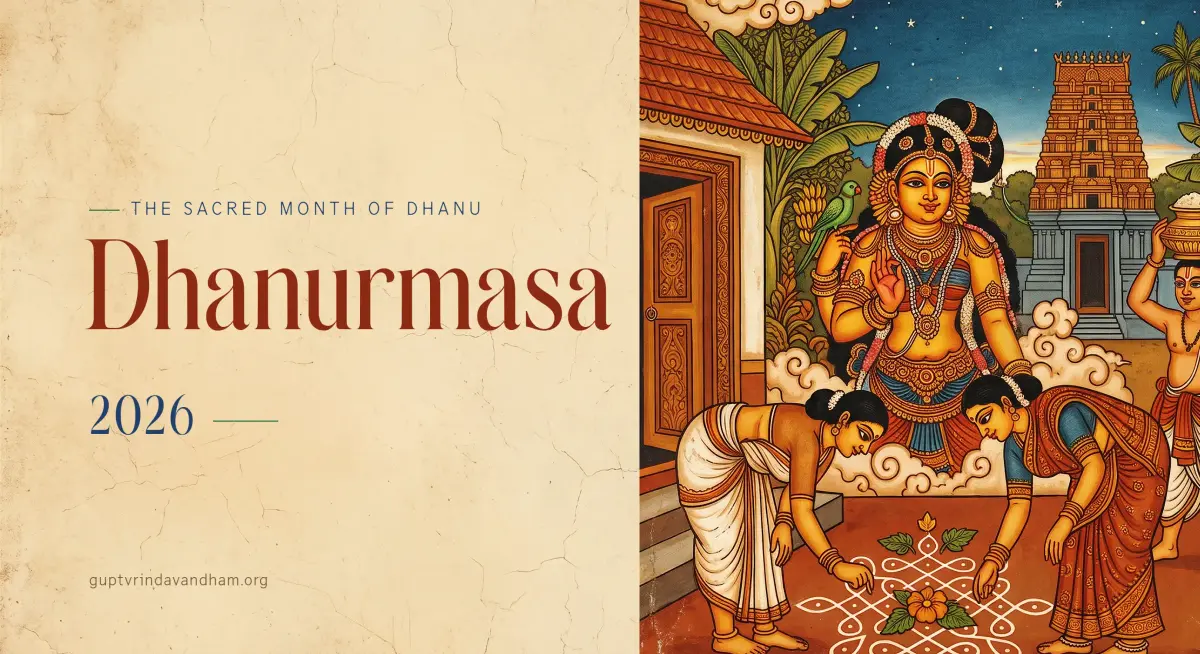
Dhanurmasa is a widely observed month in the southern part of India, often related to Lord Vishnu and Goddess Andal, an incarnation of Goddess Lakshmi. Her compositions, named Tiruppavai (thirty Tamil devotional songs), are sung by the devotees during this month to please the Lord.
This guide will help you understand the meaning, significance, and rituals to follow during Dhanurmasa.
What Is Dhanurmasa?
Dhanurmasa (also called Dhanurmasam) is a sacred month dedicated to the worship of Lord Vishnu that begins when the Sun enters Dhanu Rashi (Sagittarius) and ends when it enters Makar Rashi (Capricorn). The word Dhanu means “bow,” referring here to Sagittarius, and masa means “month.” Together, Dhanurmasa refers to the month when the Sun is in Sagittarius. It lasts from mid-December to mid-January, till Makar Sankranti.
Dhanurmasa 2026–27 Dates
Dhanurmasa 2026-27 period lasts from December 16, 2026, to January 14, 2027. Dhanurmasa follows the solar calendar, whereas Margashirsha follows the lunar calendar. Although both months overlap, their dates are not the same because they are calculated using different calendar systems. Dhanurmasa extends across parts of Margashirsha and Pausha (December and January in the Gregorian calendar).
Why Devotees Value This Month
Dhanurmasa holds special significance for devotees of Lord Vishnu. It is considered an auspicious period for devotional activities such as early morning worship, chanting the Lord's names, offering prayers, and reading sacred scriptures like the Bhagavad Gita or Srimad Bhagavatam. Devotees observe this month with increased spiritual discipline and dedicate time to worship and devotional service.
Dhanurmasa in Vaishnava Traditions
Vaishnavas around the globe celebrate this month with great awe and reverence. In the Sri Vaishnava tradition, the recitation of Andal's Tiruppavai, a collection of 30 devotional verses sung in glorification of Lord Vishnu. Devotees recite one verse each day throughout the month. Many Vaishnava temples also arrange special prayers and worship during the early morning hours.
At the Sri Venkateswara Temple in Tirumala, the regular Suprabhatam recitation is replaced by Tiruppavai during Dhanurmasa. Devotees also follow Dhanurmasa Vrata by waking up early, offering prayers, chanting the Lord's names, and engaging in devotional service. These observances provide an opportunity to remember the Lord more attentively, strengthen one's devotion, and seek His mercy.
How to Observe Dhanurmasa at Home
Follow these rituals and devotional practices during Dhanurmasa at home.
- 01
Wake Up During Brahma Muhurta
Brahma Muhurta is the 48 minutes before sunrise, generally around 4:30–5:00 AM. Try to wake up during this time throughout Dhanurmasa. - 02
Bathe and Wear Clean Clothes
Bathe and wear clean clothes before the pooja. - 03
Worship Lord Vishnu or Krishna
Worship the Lord, offer flowers, incense, a ghee diya, and pray for His mercy and spiritual strength. - 04
Chant the Holy Names
Chant the Hare Krishna Mahamantra or other names of the Lord to remember Him and engage your mind in devotional activities. - 05
Read Sacred Scriptures
Spend maximum time reading the Bhagavad Gita, Srimad Bhagavatam, or other Vaishnava scriptures to develop attachment to Him. - 06
Offer Bhoga to the Lord
Prepare sattvic food and offer it with tulsi leaves to the Lord before accepting it as prasadam. - 07
Sing Lord’s Glorification
Engage your tongue in singing bhajans, reciting prayers, engaging in other forms of devotional service throughout the month, and your ears in hearing spiritual discourses from devotees. - 08
Perform Charity
Offer Pushp Alankar seva, Annadan seva, Gau seva, and Abhishekam seva to the nearby Krishna or Vishnu Temple.
FAQs
Conclusion
Dhanurmasa is a special period for devotees to increase their devotion to the Lord through daily worship, chanting, prayers, and devotional service. Simple devotional practices performed sincerely at home can help you remember the Lord and seek His mercy. Let this Dhanurmasa 2026- 27 become a reason for your spiritual advancement and strengthen your relationship with the Supreme Lord.