

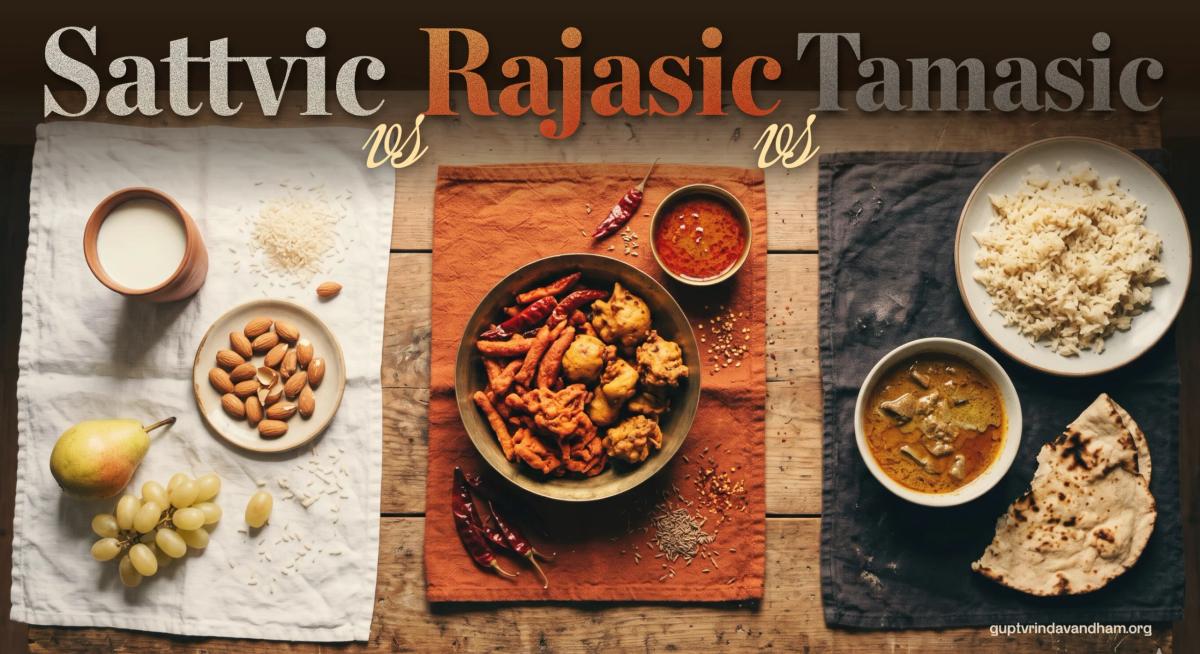
Have you ever wondered why certain foods bring a sense of satisfaction, while others leave us feeling restless or dull? According to the Bhagavad Gita, the food we eat is associated with the three modes of material nature, which influence our thoughts, desires, behaviour and consciousness.
But what is the difference between sattvic, rajasic and tamasic food? Can the same food fall under different categories depending on how it is prepared? And why do devotees prefer Krishna prasadam over ordinary sattvic food?
Let us understand these three types of food through the teachings of Lord Krishna in the Bhagavad Gita.
Quick Summary: Sattvic vs Rajasic vs Tamasic Food
In Bhagavad Gita 17.7–17.10, Lord Krishna divides food into three kinds: sattvic food (goodness, BG 17.8) is nourishing and pleasing, like fruits, grains, dal and milk; rajasic food (passion, BG 17.9) is excessively bitter, sour, salty, hot or pungent and brings distress and disease; and tamasic food (ignorance, BG 17.10) is stale, rotten or impure, including meat, fish, eggs and alcohol. The same food can change category depending on how and when it is prepared, and food offered to Krishna as prasadam (BG 9.26, 3.13) is higher than sattvic food because it is transcendental to all three modes.
Three Types of Food According to the Bhagavad Gita
In Bhagavad Gita 17.7, Lord Krishna explains that the food preferred by a person is of three kinds, according to the three modes of material nature.
- Sattvic food (mode of goodness)
- Rajasic food (mode of passion)
- Tamasic food (mode of ignorance)
In verses 17.8–17.10, Lord Krishna further explains the qualities of food preferred by people influenced by these three modes.
1. What Is Sattvic Food?
Sattvic food is food in the mode of goodness. It is nourishing, wholesome, pleasing to the heart and favourable for maintaining physical strength and purity of mind.
In Bhagavad Gita 17.8, Lord Krishna describes sattvic food:
आयुःसत्त्वबलारोग्यसुखप्रीतिविवर्धनाः ।
रस्याः स्निग्धाः स्थिरा हृद्या आहाराः सात्त्विकप्रियाः ॥ ८ ॥
āyuḥ-sattva-balārogya-
sukha-prīti-vivardhanāḥ
rasyāḥ snigdhāḥ sthirā hṛdyā
āhārāḥ sāttvika-priyāḥ
Meaning: Food preferred by those in goodness promotes longevity, purity of existence, strength, health, happiness and satisfaction. Such food is nourishing, juicy and pleasant to eat.
Sattvic Food List
- Fresh fruits and vegetables
- Rice, wheat and other grains
- Dal, peas and beans
- Milk and fresh milk products
- Ghee, butter and paneer
- Honey and sugar
- Freshly prepared khichdi
In his purport to Bhagavad Gita 17.10, Srila Prabhupada explains that the purpose of food is to sustain life, purify the mind and strengthen the body. He also explains that nourishment, including protein and fat, can be obtained from grains, pulses and milk products without killing innocent animals.
2. What Is Rajasic Food?
Rajasic food is food in the mode of passion. Such food is generally characterised by excessively strong tastes and is preferred by those attracted to intense sensory enjoyment.
Lord Krishna describes rajasic food in Bhagavad Gita 17.9:
कट्वम्ललवणात्युष्णतीक्ष्णरूक्षविदाहिनः ।
आहारा राजसस्येष्टा दुःखशोकामयप्रदाः ॥ ९ ॥
kaṭv-amla-lavaṇāty-uṣṇa-
tīkṣṇa-rūkṣa-vidāhinaḥ
āhārā rājasasyeṣṭā
duḥkha-śokāmaya-pradāḥ
Meaning: Excessively bitter, sour, salty, hot, pungent, dry and burning foods are preferred by people in the mode of passion. Such foods bring distress, misery and disease.
Rajasic Food List
- Excessively spicy curries
- Food containing too much red chilli
- Extremely salty snacks
- Excessively sour preparations
- Very pungent and burning food
- Excessively bitter food
3. What Is Tamasic Food?
Tamasic food is food in the mode of ignorance. It includes stale, decomposed and impure food, as well as ordinary food remnants eaten by others.
Lord Krishna explains the characteristics of tamasic food in Bhagavad Gita 17.10:
यातयामं गतरसं पूति पर्युषितं च यत् ।
उच्छिष्टमपि चामेध्यं भोजनं तामसप्रियम् ॥ १० ॥
yāta-yāmaṁ gata-rasaṁ
pūti paryuṣitaṁ ca yat
ucchiṣṭam api cāmedhyaṁ
bhojanaṁ tāmasa-priyam
Meaning: Food cooked more than three hours before consumption, food that has lost its taste, rotten or foul-smelling food, ordinary remnants and impure food are preferred by those in the mode of ignorance.
Tamasic Food List
- Meat, fish and eggs
- Stale cooked food
- Rotten fruits and vegetables
- Decomposed and foul-smelling food
- Ordinary food remnants from others' meals
- Alcoholic beverages
You can also explore the detailed list of tamasic food according to Vaishnava teachings.
Sattvic vs Rajasic vs Tamasic Food: Key Differences
| Characteristics | Sattvic Food | Rajasic Food | Tamasic Food |
|---|---|---|---|
| Mode of nature | Goodness | Passion | Ignorance |
| Sanskrit term | Sattva-guna | Rajo-guna | Tamo-guna |
| Nature | Pure and nourishing | Excessively stimulating | Stale or impure |
| Taste | Pleasant and satisfying | Excessively bitter, sour, salty or pungent | Tasteless or degraded |
| Examples | Fruits, grains, dal and milk | Excessively spicy and salty dishes | Meat, alcohol and stale food |
| Bhagavad Gita reference | 17.8 | 17.9 | 17.10 |
The Srimad Bhagavatam 11.25.28 also distinguishes the three types of food. Lord Krishna explains that food in goodness is pure, beneficial and easily obtained; food in passion is particularly pleasing to the senses; and food in ignorance is impure and brings suffering.
Can Sattvic Food Become Rajasic or Tamasic?
The classification of food depends not only on its ingredients but also on how it is prepared and when it is consumed.
Let us understand this through the example of dal:
- Sattvic: Freshly prepared dal with ghee and moderate spices.
- Rajasic: Dal prepared with excessive red chilli and salt.
- Tamasic: Dal that has become stale and lost its freshness.
Although the main ingredient remains the same, the qualities of the preparation change. Therefore, simply following a vegetarian diet does not necessarily mean that all the food we consume is sattvic.
Why Is Krishna Prasadam Superior to Sattvic Food?
Although sattvic food is favourable for spiritual advancement, goodness is still one of the three modes of material nature. The aim of Krishna consciousness is to rise above all three modes through devotional service.
In Bhagavad Gita 9.26, Lord Krishna explains that He accepts a leaf, a flower, a fruit or water when offered with love and devotion.
In his purport to Bhagavad Gita 17.10, Srila Prabhupada explains that the best food is that which has been offered to the Supreme Personality of Godhead. Food prepared according to scriptural directions and offered to Krishna is transcendental. Such food is known as prasadam, the mercy of the Lord.
Furthermore, in Bhagavad Gita 3.13, Lord Krishna explains that devotees become free from sinful reactions by accepting food that has first been offered in sacrifice, whereas those who prepare food solely for their own enjoyment incur sinful reactions.
Thus, devotees not only select sattvic ingredients but also prepare food for the pleasure of Lord Krishna, offer it to Him with devotion and then honour it as prasadam.
Frequently Asked Questions
Are onion and garlic sattvic, rajasic or tamasic?
Onion and garlic are generally regarded as tamasic and are not used in preparations offered to Lord Krishna.
Is fried food always rajasic or tamasic?
No, fried food is not necessarily rajasic or tamasic. Ingredients in the mode of goodness can be fried, boiled, or baked still it remain sattvic and offered to Krishna.
Can sattvic food contain sugar and ghee?
Yes, sugar and ghee can be part of sattvic preparations. A sattvic diet does not require food to be completely free from sweetness or fat.
Does eating sattvic food alone lead to spiritual liberation?
No, sattvic food is favourable for cultivating goodness, but liberation requires transcending the three modes of material nature through devotional service to Lord Krishna.
Conclusion
Through the Bhagavad Gita, Lord Krishna teaches us to distinguish between food in goodness, passion and ignorance. By choosing sattvic food, we can cultivate habits favourable to spiritual advancement.
However, the higher purpose of preparing and eating food is to please Lord Krishna. By offering our food to Him with love and devotion and honouring it as prasadam, even the simple activity of eating becomes an opportunity to engage in devotional service.