
 Donate Now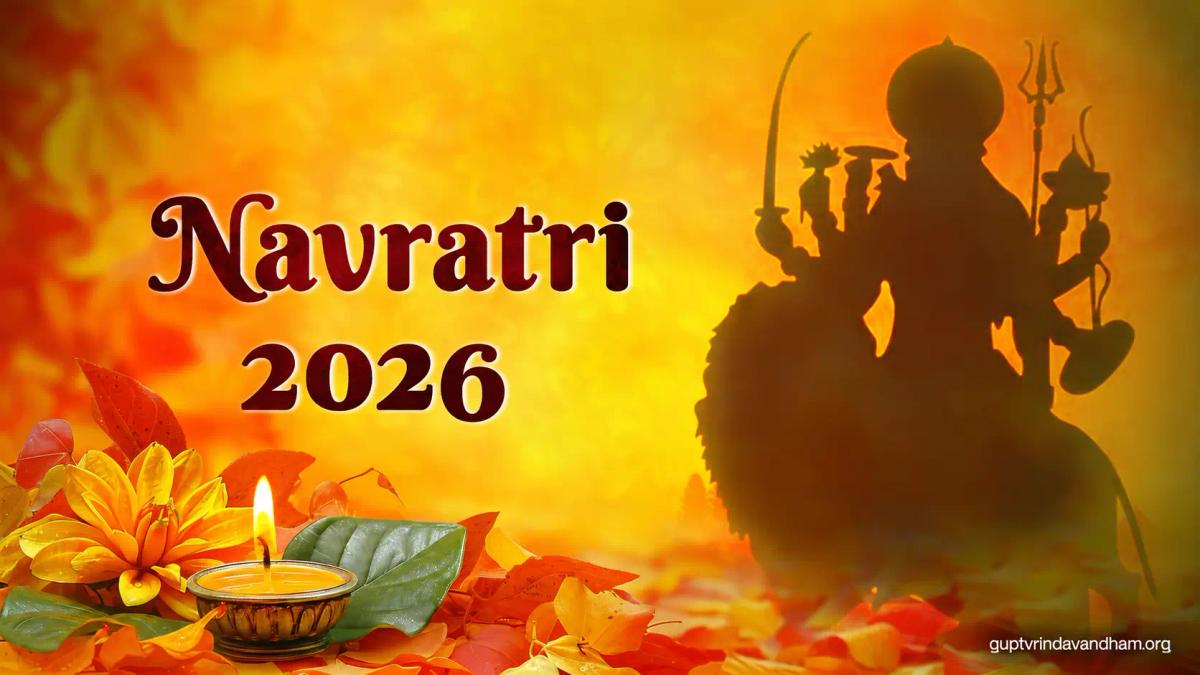
Sharad Navratri 2026 will begin on Sunday, 11 October 2026 and the nine-day worship will conclude on Tuesday, 20 October 2026. Navratri is one of the most sacred and widely celebrated Hindu festivals, dedicated to Goddess Durga and Her divine manifestations.
Although nine forms of Goddess Durga are worshipped, the festival covers ten calendar dates in 2026 because Saptami Tithi continues across two days. The nine designated worship days begin with Maa Shailputri Puja on 11 October and conclude with Maa Siddhidatri Puja on 20 October.
During Navratri, devotees observe prayer, fasting, devotional singing and spiritual discipline. The festival celebrates divine Shakti and conveys the eternal message that Dharma ultimately triumphs over Adharma, truth over falsehood and spiritual awareness over ignorance.
Navratri 2026 Start and End Date
Sharad Navratri 2026 will begin on Sunday, 11 October 2026 with Ghatasthapana and Maa Shailputri Puja. The nine-day worship of Goddess Durga will conclude with Maa Siddhidatri Puja on Tuesday, 20 October 2026.
In 2026, Saptami Tithi continues across 17 and 18 October. Therefore, the nine forms of Goddess Durga are worshipped on nine designated days between 11 and 20 October.
What Is the Meaning of Navratri?
The word “Navratri” is formed from two Sanskrit words:
- Nava, meaning nine
- Ratri, meaning night
Navratri therefore means “nine nights.”
These nine sacred nights are devoted to the worship and remembrance of the Divine Mother. They provide devotees with an opportunity to withdraw from unnecessary distractions and focus more deeply on prayer, self-control and spiritual consciousness.
The number nine also holds special importance because the festival honours nine manifestations of Goddess Durga. Each form represents particular divine qualities such as strength, purity, wisdom, courage, protection and compassion.
To learn about the individual forms, read our detailed guide to the Navratri nine days Devi names.
Why Is the Navratri Festival Celebrated?
Navratri is celebrated to honour Goddess Durga and remember the victory of divine power over destructive and unrighteous forces.
According to the traditional account associated with the festival, the powerful demon Mahishasura had become a cause of suffering and disorder. Empowered by a boon, he believed that he could not be defeated.
To restore balance and protect the world, Goddess Durga appeared with divine power. She fought Mahishasura and eventually defeated him. Her victory represents the triumph of Dharma over Adharma.
The story is not understood only as a battle between two external figures. It also carries a spiritual message. Mahishasura represents uncontrolled pride, anger, greed and ignorance, while Goddess Durga represents the divine strength required to overcome these tendencies.
Navratri reminds devotees that negative qualities may appear powerful, but they cannot remain victorious before truth, devotion and divine grace.
History and Traditional Background of Navratri
The worship of the Divine Mother has held an important place in Hindu tradition for centuries. Sacred texts and devotional traditions describe the Goddess as a divine protector who appears whenever destructive forces disturb cosmic order.
The account of Goddess Durga’s battle with Mahishasura is prominently associated with the Devi Mahatmya, a sacred section of the Markandeya Purana. The text describes the power and glory of the Goddess and narrates how she protects the world from demonic forces.
Over time, the worship of Goddess Durga became connected with seasonal Navratri observances. Different regions developed their own traditions, including temple worship, devotional recitations, sacred music, community gatherings and folk celebrations.
These varied traditions have made Navratri both a deeply spiritual observance and one of India’s most vibrant cultural festivals.
What Is the Spiritual Significance of Navratri?
The spiritual significance of Navratri lies in internal purification and the development of divine qualities.
The story of Goddess Durga teaches that the greatest battles are not always fought in the external world. Every person must face internal challenges such as pride, envy, anger, fear, selfishness and uncontrolled desire.
Navratri encourages devotees to examine these tendencies and seek divine strength to overcome them.
Victory of Dharma Over Adharma
The victory of Goddess Durga teaches that unrighteousness cannot prevail permanently. Divine power protects Dharma and restores balance.
Control of the Mind and Senses
The discipline followed during Navratri encourages devotees to regulate their food, speech, thoughts and daily habits. This creates a more peaceful state of mind for spiritual remembrance.
Respect for Divine Shakti
Navratri honours the divine feminine energy associated with protection, compassion, strength and creation. It reminds society to respect these qualities and recognise their importance in spiritual and social life.
Removal of Inner Negativity
The demons described in sacred narratives can also be understood as symbols of negative tendencies within the heart. Navratri inspires devotees to overcome these weaknesses through sincere prayer and spiritual discipline.
Renewal of Spiritual Commitment
Nine nights of regular worship help devotees restore consistency in their spiritual lives. The festival becomes an opportunity to strengthen faith and renew one’s commitment to living according to Dharma.
What Do the Nine Nights of Navratri Represent?
The nine nights of Navratri represent a gradual spiritual journey.
During this period, devotees seek strength to identify and overcome negative tendencies. They then cultivate purity, wisdom, courage, compassion and devotion.
Each day is traditionally associated with a particular manifestation of Goddess Durga. Together, these manifestations express the complete protective, nurturing and transformative power of the Divine Mother.
Main Features of the Navratri Festival
Navratri celebrations may vary according to family and regional traditions. However, several devotional activities are commonly associated with the festival.
Worship and Prayer
Devotees offer prayers, flowers, lamps and food preparations to Goddess Durga. Homes and temples are decorated to create a sacred atmosphere.
Fasting and Self-Discipline
Many devotees observe a fast or follow a simplified sattvic diet. The spiritual purpose is to regulate the senses and devote more time to prayer.
Specific food restrictions and fasting practices may vary according to family traditions, health requirements and spiritual guidance.
Reading and Chanting
Devotees read sacred texts, recite prayers, sing bhajans and remember the glories of the Divine Mother.
Temple and Community Programmes
Temples and communities organise devotional singing, worship, cultural programmes and spiritual gatherings during the nine nights.
Charity and Seva
Many devotees also perform seva by offering food, supporting spiritual activities and helping those in need. Such service allows the devotional mood of the festival to be expressed through compassion.
How Is Navratri Celebrated Across India?
Navratri brings together spiritual devotion and India’s diverse cultural traditions. Different regions celebrate the same festival in distinct ways.
Gujarat
In Gujarat, devotees gather for Garba and Dandiya. Garba is traditionally performed in a circular formation around a lamp or sacred representation of the Goddess.
The celebration combines devotional music, traditional dress and collective participation. Although Garba has become a major cultural attraction, its traditional purpose is to honour divine Shakti.
West Bengal
In West Bengal, the festival is prominently celebrated as Durga Puja. Beautifully decorated pandals, artistic Deity forms, worship, cultural programmes and community gatherings are important features of the celebration.
The festivities focus on welcoming and worshipping Goddess Durga and remembering her victory over Mahishasura.
North India
In many parts of North India, devotees observe fasting, visit temples and attend devotional programmes. Kanya Pujan is traditionally performed by many families on Ashtami or Navami.
Ramlila performances also take place during this period. Navratri is followed by Vijayadashami, which is celebrated as Dussehra.
South India
In Tamil Nadu, Karnataka and Andhra Pradesh, many families arrange decorative displays of dolls known as Golu or Bommai Golu. These displays may represent Deities, sacred stories and scenes from traditional life.
Saraswati Puja and Ayudha Puja are also important features of the festival in several southern traditions.
These regional expressions show how one sacred festival can unite devotees through different forms of worship, music, art and community participation.
Navratri and Durga Puja
Navratri and Durga Puja occur during the same sacred period, but their style and regional emphasis can differ.
Navratri commonly refers to the broader nine-night observance dedicated to Goddess Durga. Durga Puja is especially prominent in West Bengal and nearby regions, where the final days are celebrated through elaborate worship and community pandals.
Both celebrations honour divine Shakti and remember the victory of Goddess Durga over Mahishasura. Durga Puja can therefore be understood as an important regional expression of the broader Navratri festival.
Understanding Goddess Durga From a Vaishnava Perspective
In the Vaishnava understanding, Goddess Durga is respected as the divine authority who oversees material nature under the direction of the Supreme Lord.
The Bhagavad Gita explains that material nature works under the supervision of Lord Krishna. Goddess Durga administers this material energy and maintains the cosmic order according to His will.
A devotee therefore respects Goddess Durga as a powerful servant of the Supreme Lord. Rather than approaching her only for temporary material benefits, a sincere spiritual seeker prays for protection from illusion and for strength to progress in devotion.
This understanding gives Navratri a meaningful devotional direction. The festival becomes an opportunity to seek freedom from negative tendencies and strengthen one’s remembrance of the Supreme Lord.
What Is the Main Message of Navratri?
The central message of Navratri is that divine consciousness can overcome the darkness within the heart.
The victory of Goddess Durga over Mahishasura represents the defeat of pride, selfishness, anger and ignorance. Her strength reminds devotees that spiritual progress requires courage, discipline and dependence on divine grace.
Navratri also teaches that worship should influence how a person lives. Prayer becomes meaningful when it inspires truthful conduct, compassion, self-control and service to others.
The festival is therefore not limited to nine nights of external celebration. Its deeper purpose is to awaken lasting spiritual change.
Conclusion
Navratri is a sacred festival of devotion, purification and the victory of divine power over evil. For nine nights, devotees remember Goddess Durga, practise spiritual discipline and seek strength to overcome negative tendencies.
The festival is celebrated through prayer, fasting, sacred recitations, temple programmes, Garba, Durga Puja and many regional traditions. Although the outward expressions differ, they carry a shared message of faith, courage and the triumph of Dharma.
When observed with sincere devotion, Navratri becomes more than a festival. It becomes an opportunity to purify the heart, deepen spiritual consciousness and bring divine values into everyday life.