
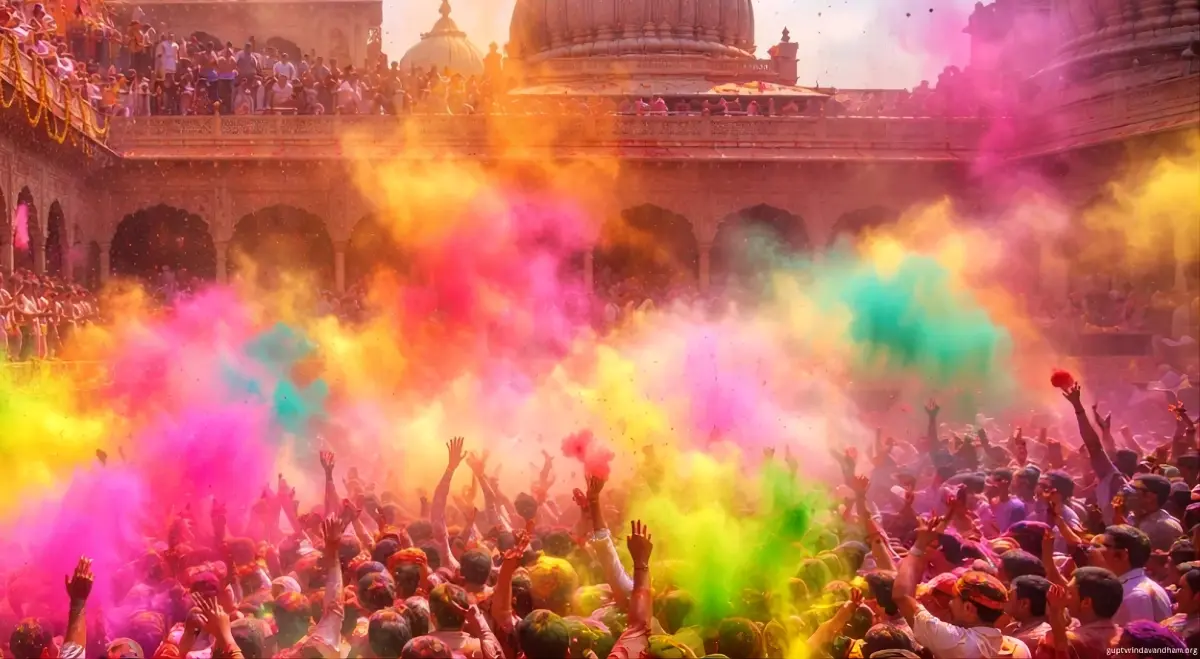
The Mathura Holi 2026 celebration is not merely a festival of colors; it is a sacred immersion into the Leelas (divine plays) of Shri Radha-Krishna. To the Brajwasi—the native residents of this holy land—Holi is a month-long devotional journey that transforms the dusty lanes of Mathura and Vrindavan into a canvas of spiritual ecstasy.
For those seeking the most authentic experience, following the Holi Schedule 2026 in Mathura and Vrindavan is essential to witnessing rituals that have remained unchanged for centuries.
The Braj Holi Calendar 2026 offers a unique multi-day itinerary that transcends commercial celebrations. From the playful duel of sticks in Barsana to the heavenly flower showers of Vrindavan, every ritual is rooted in deep theological significance.
Whether you are a pilgrim seeking the "divine colors" or a traveler documenting India’s cultural heritage, understanding the Complete Dates and ancient Rituals is the first step toward a transformative pilgrimage to the heart of Braj Bhoomi.
Complete Mathura Vrindavan Holi Dates Schedule 2026
| Date | Day | Event Name | Location |
|---|---|---|---|
| 24 Feb 2026 | Tuesday | Laddu Holi | Sriji Temple, Barsana |
| 25 Feb 2026 | Wednesday | Barsana Lathmar Holi | Barsana Village |
| 26 Feb 2026 | Thursday | Nandgaon Lathmar Holi | Nand Bhawan, Nandgaon |
| 27 Feb 2026 | Friday | Phoolon Wali Holi & Rangbharni Ekadashi | Bankey Bihari Temple, Vrindavan |
| 27 Feb 2026 | Friday | Mathura Holi Celebrations | Krishna Janmabhoomi, Mathura |
| 01 March 2026 | Sunday | Gokul Holi & Raman Reti Visit | Gokul Village |
| 03 March 2026 | Tuesday | Holika Dahan (Sacred Fire) | Various (Mathura & Vrindavan) |
| 04 March 2026 | Wednesday | Rangwali Holi (Dhulandi) | Throughout Braj Bhoomi |
Why Celebrate Holi in the Land of Krishna?
Choosing to celebrate Holi in Braj Bhoomi is a conscious choice to return to the festival's ancient roots. While Holi is celebrated with vigor across the globe, the rituals in Mathura and Vrindavan are uniquely grounded in sacred history rather than modern, commercial entertainment. In most cities, Holi has become a secular party, but in Braj, it remains a profound act of worship.
The Original Celebration of Divine Love
This is the land where Lord Krishna originally played Holi with Radha and the Gopis. Every ritual you witness today—from the playful hitting of sticks in Barsana to the fragrant showering of flower petals in Vrindavan—is a living echo of those divine pastimes.
The celebrations are conducted within the walls of centuries-old temples and rustic village squares, maintaining a purity of intent that is often lost in mass-produced festival events.
Devotion (Bhakti) Over Commercialism
In Braj, the "colors" are not just powders; they are a medium of Bhakti. The focus remains steadfast on the spiritual connection, the singing of traditional folk songs known as Hori, and the communal experience of transcendental joy.
Unlike commercial Holi parties that charge for entry and focus on loud, modern music, Braj Holi is an organic explosion of faith. It is an opportunity to witness how ancient traditions can transform an entire landscape into a canvas of brotherhood, peace, and universal love.
Detailed Rituals: From Barsana to Nandgaon (Feb 24 – Feb 26)
The first phase of the Braj Holi season takes place in the ancestral villages of Radha and Krishna. These three days are characterized by unique folk traditions that have captured the world's imagination.
Laddu Holi (Barsana) – February 24
The celebrations commence at the majestic Sriji Temple in Barsana, perched atop a hill and dedicated to Shri Radha.
Laddu Holi is a beautiful tradition where, instead of colors, thousands of sweets (Laddus) are showered upon the gathered devotees. This ritual symbolizes the sweetness of divine hospitality and the joy of receiving good news.
Legend says that when Krishna’s messenger arrived from Nandgaon to confirm that the men would be coming to play Holi, he was greeted with such joy that he was showered with sweets.
Today, temple priests recreate this by throwing "sweet blessings" from the temple heights. As the crowd catches these laddus, the air fills with the rhythm of traditional Hori songs and spontaneous dancing. It is a reminder that the path to the divine is paved with sweetness and hospitality.
Barsana Lathmar Holi – February 25
The Barsana Lathmar Holi is arguably the most iconic event of the entire season. It is based on the legend that Krishna visited Barsana to playfully tease Radha and her friends, only to be chased away by the women wielding sticks.
In the modern ritual, men from Nandgaon (representing Krishna’s friends) arrive in Barsana, where the local women (representing the Gopis) "attack" them with large bamboo sticks called Laths.
The mechanics of this ritual are fascinating: the men carry sturdy leather shields to protect themselves, while the women strike with rhythmic precision.
This is not an act of aggression but a spirited celebration of women’s empowerment and the playful, respectful bond between the two villages.
The men are not allowed to strike back; their only defense is their shield and their wit. Amidst clouds of yellow and orange Gulal, the sound of wood hitting leather creates a unique percussion that echoes through the streets of Barsana.
Nandgaon Lathmar Holi – February 26
The following day, the scene shifts to Nandgaon for what is locally seen as the "sweet revenge" of the Nandgaon women.
The men of Barsana visit the Nand Bhawan temple, hoping to drench the local women in color. However, the women of Nandgaon are ready with their own Laths.
The energy in Nandgaon is often described by pilgrims as being slightly more authentic and grounded, as the village layout allows for a more intimate experience of the duel.
The atmosphere is thick with the scent of fermented milk and saffron, and the distribution of traditional sweets continues unabated. For the men of Barsana, being hit by a stick in the land of Krishna is considered a blessing, a symbolic cleansing of the ego in the presence of divine feminine power.
Vrindavan and Mathura: Flowers, Colors, and Devotion (Feb 27)
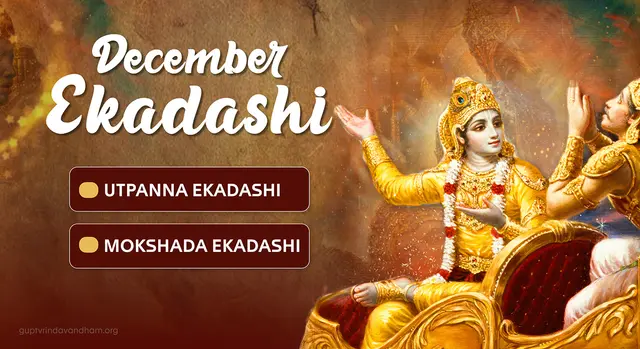
On February 27, the focus moves to the primary spiritual hubs of the region: Vrindavan and Mathura. This day marks Rangbharni Ekadashi, the day that symbolically crowns the beginning of the "Color Holi" when Lord Krishna is officially offered Gulal in the temples.
Phoolon Wali Holi (Vrindavan)
Inside the world-renowned Banke Bihari Temple, the celebration takes a fragrant and gentle turn with Phoolon Wali Holi (Holi of Flowers).
During this brief but ecstatic window—usually lasting only about 15 to 20 minutes—the temple priests shower the devotees with heaps of fresh flower petals. Marigolds, roses, and jasmines rain down from the balconies, transforming the temple interior into a heavenly garden.
This ritual symbolizes the gentleness of divine love and is a preferred event for families, the elderly, and those who wish to avoid the chaos of liquid colors.
Mathura Janmabhoomi and Dwarkadhish Celebrations
The Krishna Janmabhoomi Temple, the actual birthplace of Lord Krishna, hosts a grand cultural program. The complex is decorated with intricate flower arrangements and lights.
The celebration includes traditional Raslilas (dance dramas depicting Krishna’s life) and massive gatherings of international pilgrims.
Simultaneously, at the Dwarkadhish Temple in Mathura, a grand Dola (procession) is taken out. Here, the air is filled with a sea of orange and red as devotees use traditional Pichkaris (water guns) to spray sanctified water.
The energy here is high, with the constant chanting of "Radhe Radhe" creating a meditative drone beneath the festive cheers.
Widow Holi: Breaking Ancient Barricades
One of the most moving and socially significant events in Vrindavan is the Widow Holi. Traditionally, widows were expected to live a life of stark isolation, wearing only white and avoiding all festivities.
However, in a beautiful act of social unison and universal love, thousands of widows now gather at the Gopinath Temple to play with colors and flowers.
This event represents the breaking of ancient barricades and the triumph of the soul over social stigma. Seeing the white sarees of the mothers of Vrindavan gradually turn into a kaleidoscope of colors is a sight that brings many pilgrims to tears, proving that Krishna’s joy belongs to everyone regardless of their station in life.
Holika Dahan and Dhulandi (March 3 – March 4)
The peak of the festival occurs in early March, aligning with the national schedule of Holi but maintaining the unique intensity of Braj.
Holika Dahan – March 3
On the evening of March 3, as the sun sets and the Purnima Tithi (full moon timing) prevails, the Holika Dahan pyres are lit across Mathura and Vrindavan.
This ritual commemorates the legend of young Prahlad and his aunt Holika. Holika, who possessed a boon making her immune to fire, sat in a bonfire with Prahlad to kill him on the orders of her demon-king brother.
However, because her intent was evil, the boon failed; she was consumed by the flames while Prahlad, protected by his devotion to Lord Vishnu, emerged unscathed.
The burning of the pyre symbolizes the triumph of virtue over vice. In Mathura, a massive bonfire is lit at the Vishram Ghat, the very spot where Krishna is said to have rested after defeating the tyrant Kansa.
Families gather here to offer grains and stalks into the fire, praying for the removal of internal "demons" like ego and greed.
Rangwali Holi / Dhulandi – March 4
March 4 marks the "Big Day"—Rangwali Holi, also known as Dhulandi. This is the day of total immersion where the entire Braj region becomes a single entity united by color. People take to the streets with Abir and Gulal (fine colored powders).
In the historic Dwarkadhish Temple, a unique tradition is upheld: the use of Tesu flowers. These flame-of-the-forest flowers are boiled to create a natural, deep-orange water that is sprayed on devotees.
This traditional approach ensures that the Holi remains ecological and safe for the skin. The narrow alleys of Vrindavan become rivers of color, and the air is so thick with powder that the sky itself appears pink.
This is the day to lose oneself in the crowd, chanting the name of Radha, and experiencing the "Braj-prema" that has inspired poets for centuries.
Unique Traditions: Gokul, Falen, and Dauji
Beyond the main schedule, several nearby villages host specialized rituals that offer a deeper glimpse into local folklore and the miraculous nature of faith.
Gokul Holi (March 1): In Gokul, where Krishna spent his infancy, the celebration includes a visit to Raman Reti. Here, the sand is considered sacred as it is where Krishna played as a child. The Holi here is played with mud and sticks, but with a gentleness that reflects the "Bal-Leela" (childhood play) of the Lord.
Falen Ki Holi: Located about 40 km from Mathura, the village of Falen hosts a "mind-boggling" event that defies modern logic. A local priest, after weeks of meditation, walks barefoot and bare-bodied through a massive mound of fire. He emerges completely unharmed. Local lore states that the priest’s family was blessed by a saint centuries ago to remain unaffected by fire, just like Prahlad. This event attracts thousands who come to witness the power of absolute faith.
Dauji Huranga: Held in the village of Baldeo, this event honors Krishna’s elder brother, Balaram (Dauji). The Huranga is a more intense, high-energy version of Holi where women playfully strip the shirts off men and use the cloth to drench them in colored water. It is a spirited, joyous riot of colors that marks the conclusion of the major festivities.
FAQs
Conclusion
Holi 2026 in the sacred land of Braj is more than just a date on the calendar; it is an invitation to experience the pinnacle of Indian culture and spirituality.
Whether you are moved by the social unison of the Widow Holi, the raw faith of the Falen fire-walk, or the ecstatic flower showers of Banke Bihari, you are participating in a message of peace and divine love.
By planning ahead and respecting local Brajwasi customs, you can ensure that your journey to the land of Radha-Krishna is safe, genuine, and spiritually transformative. Come, let the colors of Braj wash away the mundane and fill your soul with the eternal joy of the Lord.