
 Donate Now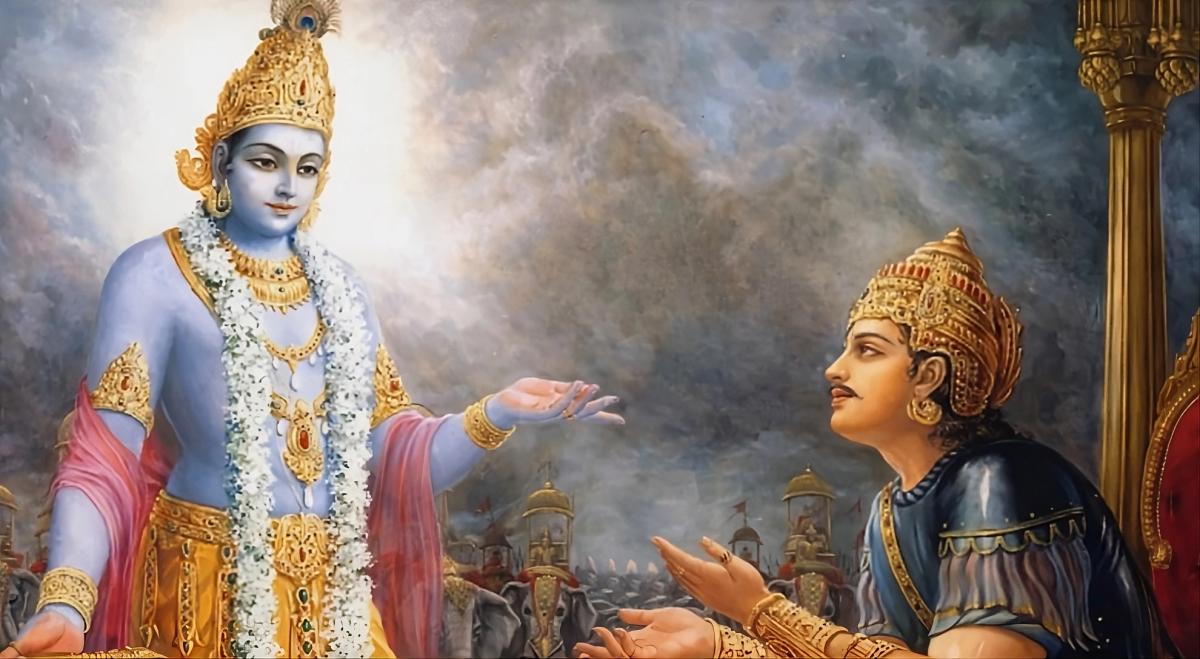
Karma Yoga is the "Path of Action," a spiritual practice where one performs duties with total involvement while remaining unattached to the results. These teachings mainly come from the Bhagavad Gita, where Lord Krishna explains the idea of Karma Yoga.
Instead of viewing work as a stressful burden, Karma Yoga teaches us to use our daily activities as a tool for inner growth. By focusing on the process rather than the personal "fruits" of our labor, we transform ordinary tasks into a journey toward peace. This path allows us to live fully in the world while remaining free from the mental bondage that work often creates.
What is Karma Yoga?
To understand this path, we must look at the technical meaning of the words. "Karma" refers to action, while "Yoga" means linking with the Supreme or achieving a state of perfect inner balance.
Karma Yoga is not merely "service" or physical labor; it is a sophisticated method of managing our awareness. Every action we perform leaves behind a “karmic structure.” This means a layer of past impressions and habits that shape our future behavior.
Karma Yoga is the process of performing actions in a way that undoes these impressions. The specific nature of your work does not matter as much as how you perform it. You can either "crawl" through your day, treating work as a heavy weight that binds you, or you can "dance" through it, using action as a means of liberation.
What Does the Bhagavad Gita Teach About Karma Yoga?
The foundation of this practice is the dialogue between Lord Krishna and the warrior Arjuna. Arjuna was paralyzed by a conflict between his duty to fight and his desire for nonviolence. Krishna clarified that no one can maintain even a physical body without action; therefore, the goal is not to stop acting, but to change the motivation behind the act.
Krishna teaches that work performed for "sense gratification" (pleasing our own senses or ego) creates a reaction that traps the mind in a cycle of stress. However, when work is performed as a "prescribed duty" or a "devotional offering," it ceases to be a burden.
"Perform your duty without concern for the fruits of it."
What is Nishkama Karma and Why Is It Important?
Nishkama Karma is selfless action performed without desire for personal profit. In our standard life, we are often trapped in a "snowballing process": a desire leads to an action, which creates a mental impression, which then triggers even more desires. This chain of cause and effect keeps our minds in a state of constant agitation.
Nishkama Karma is vital because it "fights fire with fire." It uses conscious action to neutralize the unconscious impressions of the past. By disengaging the ego from the work and offering the results to a higher power or the "Self within," we clear the mental static that prevents us from seeing our true nature. This process removes the ego and leads to lasting spiritual freedom.
The 4 Principles of Karma Yoga
A practitioner can transform any activity into yoga by applying these four core principles:
Right Attitude: Approach every task with sincerity and positivity. The internal state of the worker is more important than the scale of the job.
Detachment from Results: Focus entirely on the effort and the process. Do not let your mind be hijacked by anxieties regarding success or failure.
Total Involvement: Give 100% of your attention to the present moment. A famous example involves the master Gurdjieff, who once had students dig deep trenches all day in the sun, only to have them fill the trenches back up before dinner. The goal was to practice total involvement in a task that meant nothing to their egos, breaking the karmic structure through pure focus.
Dharma (Duty): Fulfill your responsibilities to your family and society because they are necessary, not because you expect a personal reward.
The 4 Stages of Karma Yoga You Should Know
As a person grows spiritually, the motivation behind their actions shifts through these four technical stages:
1. Selfish Action (Karma): Working only for personal rewards, money, or the gratification of the ego.
2. Pious Action: Doing "good deeds" with the expectation of getting a better life, better reputation, or a reward in the future.
3. Selfless Service (Karma Yoga): A major psychological shift where work is done for the benefit of others or the satisfaction of the Lord, with no "I-centric" reward expected.
4. Spiritual Liberation (Bhakti/Jnana): Work becomes a natural, effortless flow where there is no longer a sense of a "doer," leading to ultimate freedom.
Karma Yoga vs Other Types of Yoga
Karma Yoga serves as the essential "crutch" or foundation for the spiritual path. Without the balance provided by selfless action, it is difficult to remain stable in other practices:
Bhakti Yoga: The path of devotion and love for the Divine.
Jnana Yoga: The path of knowledge and witnessing the "Self" (Atman).
Dhyana Yoga: The path of meditation and inner stillness.
While these paths focus on the heart, mind, or breath, Karma Yoga manages our outer awareness so that we can succeed in these deeper internal practices.
Common Mistakes People Make in Karma Yoga
Even sincere students can fall into these common traps:
Misunderstanding Service: Thinking it is only "charity" or physical labor. In reality, it is an internal process of the mind.
The "Effort" Trap: If you do a task with struggle or grumbling, you are creating more karma. Yoga requires a joyful, willing involvement.
Ego-Driven Results: Claiming "proprietorship" or personal credit for a successful outcome rather than offering the success up.
Neglecting Self-Care: Some think they must suffer to serve. However, the body is the technical "tool" required to perform Dharma. If you don't maintain the tool through proper rest and health, you cannot fulfill your duties.
How to Practice Karma Yoga in Daily Life
You can begin using these practical steps to reorient your daily life:
Practice Awareness: Watch your motives. Ask yourself, "Am I doing this for a 'thank you,' or because it needs to be done?"
Do Your Best: Perform every task with excellence, whether it is washing a dish or leading a business meeting.
Offer Your Work: Mentally dedicate your efforts to the Divine or the "Self within" before you begin.
Accept Outcomes Gracefully: If you win, don’t brag; if you lose, don’t complain. Simply look at what you learned from the process.
Serve Without Expectations: Find one small way to help someone today without looking for recognition or a "return on investment."
Benefits of Karma Yoga for Mind and Life
Mental Peace: Reduces future-based anxiety by anchoring your awareness in the "now."
Skill Building: Total involvement allows you to master tasks more quickly and efficiently.
Ego Reduction: Removes the heavy focus on "I" and "Mine," making you more humble and resilient.
Spiritual Growth: Clears the mental static and unconscious impressions, preparing the mind for deep meditation.
FAQs
Conclusion
Karma Yoga reminds us that we do not need to retreat to a cave to find spiritual peace. By simply changing how we act, our daily lives can become a source of liberation. When we work with a joyful heart and let go of the constant need for personal rewards, we break the chains of stress and anxiety.
Embracing this path leads to a life that is balanced, purposeful, and truly free.