
 Donate Now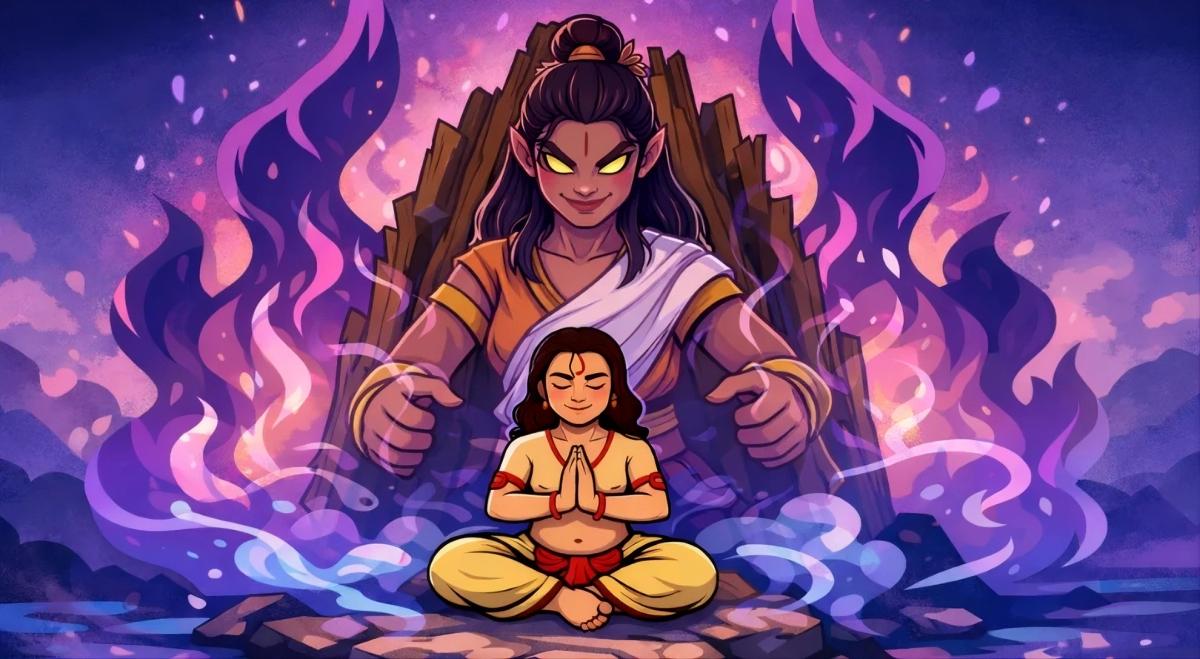
Holika Dahan is one of the historical moments that witnessed the miracle of divine protection. It marks the victory of pure intentions and a devoted heart over evil desires and a demonic heart.
It is a sacred fire ritual performed to remember the moment when the Supreme Lord came to save His devotee.
Let us go through this blog and learn about Holika Dahan’s significance, the story behind the celebration, the timing of the festival, and much more.
Holika Dahan 2026 Date and Muhurat Timing
| Occasion | Date | Timing |
|---|---|---|
| Holika Dahan Muhurta | March 3, 2026 | 06:22 PM to 08:50 PM |
| Purnima Tithi Begins | March 2, 2026 | 05:55 PM |
| Purnima Tithi Ends | March 3, 2026 | 05:07 PM |
Significance of Holika Dahan
The celebration of Holika Dahan carries an intricate blend of theological, seasonal, and spiritual weight. It is far more than a communal gathering; it is a profound expression of the human spirit's natural desire for purity and divine justice.
Victory of Good over Evil – Message of Holika Dahan
The significance of Holika Dahan is hidden in its message that the Supreme Lord does come and save His devotees when He has to, no matter what time, era, or situation it may be.
When the bonfire occurs, it symbolizes the burning of ignorance, evil intentions, and ego. It also represents the protection of those who have pure intent and a devoted heart.
Holika Dahan as the End of Winter and Beginning of Spring
Also known as Basant Utsav, Holika Dahan marks an important seasonal transition. As the March equinox approaches, the earth faces the center of the Sun, signaling the retreat of winter’s cold grip.
Agriculturally, it denotes the arrival of the harvest. The tradition of offering newly harvested crops, such as wheat and gram stalks, to the sacred fire is a gesture of gratitude for the earth's bounty and a prayer for continued prosperity in the coming year.
Spiritual Purification through Holika Dahan
Spiritually, the bonfire represents the internal fire of purification. In Vedic tradition, fire, or Agni, is a divine medium that transforms the old into the new.
Burning the Holika pyre symbolizes the destruction of ego and the removal of negative energies from the household. This act is believed to bring mental clarity and spiritual rebirth, allowing individuals to enter the new season with a cleansed heart.
Holika Dahan Mythology and Sacred Legends
The rituals of Holika Dahan are rooted in ancient Puranic narratives that provide the moral and philosophical framework for the festival.
Key Characters in the Story
The narrative centers on the struggle between a tyrant and a devotee:
Hiranyakashyapu: A demon king who obtained a divine boon that made him nearly immortal. His arrogance led him to demand that he be worshipped as the supreme God.
Prahlada: The young son of Hiranyakashyapu and a devoted follower of Lord Vishnu. Despite his father’s threats and torture, Prahlada’s faith remained unshaken.
Holika: The sister of Hiranyakashyapu, who possessed a divine shawl, or robe, that protected her from fire.
Lord Vishnu: The Supreme Protector, who manifested as the Narasimha avatar, half-man and half-lion, to restore balance and destroy the demon king.
The Holika Dahan Legend (Prahlada Katha)
As described in the Puranas, Hiranyakashipu was a very powerful demon who was blessed with a boon that made him almost immortal. He was a hater of Lord Vishnu and His devotees.
This was because he wanted to become the Lord himself and desired to be worshipped by the people. As a result, he ordered everyone to worship him, and not Lord Vishnu.
However, his own son was slowly revealed as the most sincere devotee of Lord Vishnu. Seeing his son's unshakable devotion, he became very angry and ordered him to be killed.
However, after many attempts, nobody was able to kill Prahlada as ordered by the king.
At last, he called his sister, Holika, who was also blessed with a boon that she could burn anyone she wanted without being affected by the fire herself.
As demanded, Holika took Prahlada with her and sat in the fire. But due to the divine protection of Lord Vishnu, Prahlada escaped the fire unharmed. On the other hand, Holika was burned to death.
That fire is now celebrated as Holika Dahan, which means the burning of demon Holika in the fire.
South Indian Legend of Holika Dahan – Kama Dahan
In Southern India, the festival is often associated with the legend of Kaman Pandigai. This story highlights the sacrifice of Kaam Dev, the God of Love, who fired an arrow of desire at Lord Shiva to awaken Him from meditation and save the world from chaos.
Lord Shiva, in His wrath, opened His third eye and burned Kaam Dev. While the Northern legend of Prahlada focuses on the destruction of external evil, the Southern legend of Kama Dahan focuses on the burning of internal worldly desire.
Together, they teach that purification must be both outward and inward.
Holika Dahan Rituals and Traditions
The performance of Holika Dahan puja is a sacred process intended to ward off negativity and invite the grace of Lord Narasimha.
- 01
Ceremonial Bonfire of Holika Dahan
Holika Dahan is celebrated by preparing a sacred bonfire using wood and dried leaves. This fire is believed to consume negativity, impurities, and harmful emotions. - 02
Burning of the Holika Effigy
A statue or symbolic form of demon Holika is placed on the bonfire. Her burning is celebrated with the chanting of Lord Narasimha and the remembrance of devotee Prahlada. It also symbolizes the burning of evil and destructive desires within and around a person. - 03
Circumambulating the Fire
Once the pyre is lit, devotees perform Parikrama by walking around the fire 3 to 5 times. During this walk, a Kaleva, also known as Mauli or sacred red thread, is wrapped around the pyre. Newly harvested crops are offered to the flames, and water from a pot is poured around the perimeter to preserve the sacred energy. - 04
Mantra Chanting
Devotees chant the Hare Krishna Mahamantra and glorify the divine form of the Supreme Lord in His Lord Narasimha form. Hare Krishna Hare Krishna
Krishna Krishna Hare Hare
Hare Rama Hare Rama
Rama Rama Hare Hare - 05
Applying Sacred Ashes
Once the fire subsides, the ashes, known as Vibhuti, are collected. Traditionally, these ashes are applied to the forehead or body. This is believed to purify the physical self, protect from negative influences, and bring prosperity to the household.
Regional Names
Chhoti Holi: The standard name across North India.
Phagu Purnima: The name used in Bihar and Nepal, emphasizing the month of Phalguna.
Lathmar Holi: In the Braj region, mainly Mathura and Barsana, women symbolically beat men with sticks, reenacting the playful punishment of Lord Krishna by the Gopis.
Dol Purnima: In West Bengal, it is a serene celebration initiated by Rabindranath Tagore, where idols of Radha and Krishna are placed on palanquins.
Hola Mohalla: Observed by the Sikh community in Punjab, it features mock battles and displays of martial valor to celebrate courage.
Modern-Day Holika Dahan Celebrations
Community Gatherings
The bonfire is lit within temples, societies, or villages. It is accompanied by loud chanting and the sharing of prasadam. It also nourishes the spiritual bond between devotees and the Lord.
Eco-Friendly Holika Dahan Practices
In today's modern world, environmental pollution is at its peak.
To spread awareness related to environmental safety, some communities encourage the minimum use of wood to save nature and continue the tradition at the same time.
Social Unity and Forgiveness
This festival is celebrated within the gathering of family, neighbors, or society. It encourages people to leave behind their past pains, whether physical, financial, or emotional, and restart their lives.
The fire symbolizes the burning of all negative emotions, so that one can move forward toward mental and spiritual recovery.
Holika Dahan as a Festival of Renewal
Holika Dahan is a day that rebuilds emotions, more than just a festival that celebrates traditional rituals.
One can let go of bad habits, fears, and gather the courage to reconnect with their emotions, life goals, and personal growth.
Spiritual Message
The ancient tradition of Holika Dahan offers eternal lessons:
Unwavering Faith: Like Prahlada, one must remain steadfast in personal values even when facing overwhelming opposition.
Internal Purification: The bonfire is a metaphor for the fire of knowledge that burns away the wood of ignorance.
Social Harmony: The communal fire reminds us that regardless of status, all are equal before the Divine and within the community.
Overcoming Fear: Through the worship of Lord Hanuman and Lord Narasimha, devotees are encouraged to face life’s challenges with courage.
Conclusion
Holika Dahan 2026 is a solemn yet joyous celebration of the human capacity for goodness. By observing the timings on Tuesday, March 3, 2026, and participating in these sacred traditions, we honor the victory of light over darkness.
This spiritual purification sets the perfect stage for the exuberant Rangwali Holi on Wednesday, March 4, 2026, where the world is drenched in the colors of love and unity.