
 Donate Now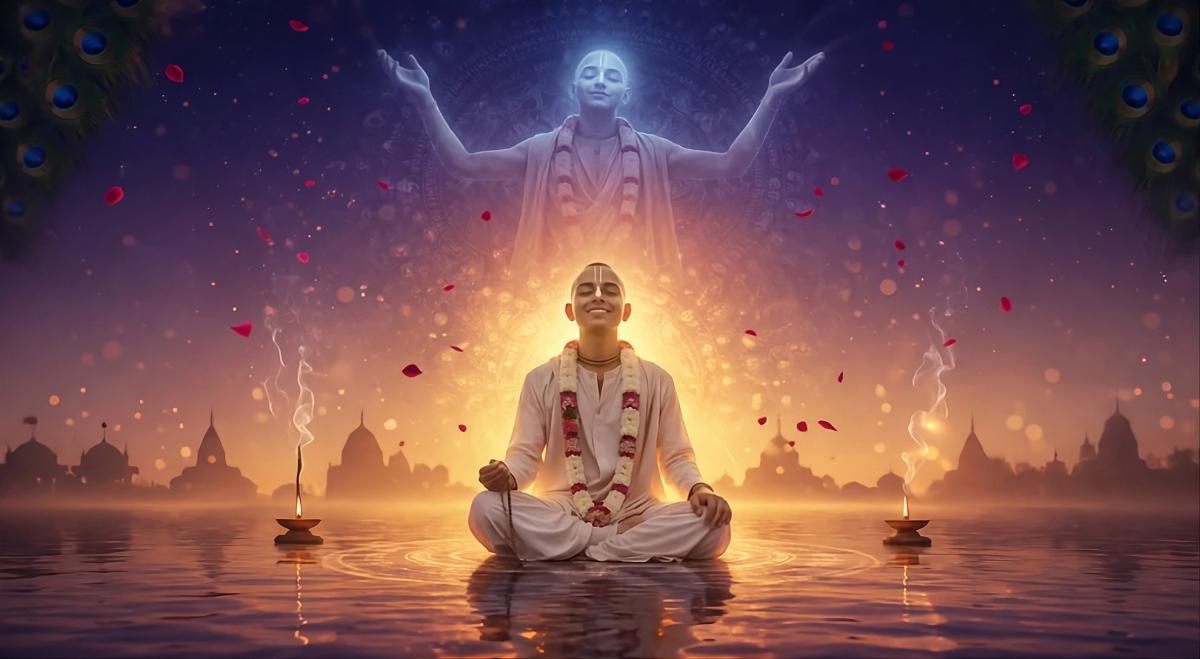
Bhakti Yoga is a beautiful and ancient spiritual path that guides a person toward inner peace. Known as the path of love and devotion, Bhakti Yoga teaches us to connect with the Divine through faith, surrender, and pure emotions. Its teachings are deeply rooted in sacred scriptures like the Bhagavad Gita, where devotion is described as one of the simplest and most powerful ways to realize God.
The essence of Bhakti Yoga lies in its simplicity. You do not need to be a scholar or follow complex practices. Whether you are a student, a working individual, or managing family life, Bhakti Yoga can be practiced by anyone with a sincere heart.
In this article, you will learn the true meaning of Bhakti Yoga, its methods, different types and forms, and how to start practicing Bhakti Yoga in your daily life.
What is Bhakti Yoga
The word Bhakti comes from the Sanskrit root Bhaj, which means "to be attached to God." Imagine a slender thread of Prem (pure love) that ties your heart to the lotus feet of the Divine. That is Bhakti. It is "love for love's sake," where you want nothing in return. There is no bargaining here—you don't love to get a reward; you love because your heart cannot help but turn toward the Divine.
To help you understand this deep connection, our teachers use several names for it:
- Bhajan: The act of worship or singing to God.
- Anurag: A deep, intense attachment to the Divine.
- Prem & Priti: Pure, unselfish love that expects nothing back.
How the Bhakti Yoga Method Works
Some people think Bhakti is just being "emotional," but the Bhakti Yoga method is actually a very helpful discipline for your mind and will. It is a way of training your heart to stop being upset by worldly things and to find its home in God instead.
Think of it like a flower blooming in a garden. Your love grows in these stages:
- Faith: You start with a small seed of belief.
- Attraction: You feel a gentle pull to know more about the Divine.
- Adoration: You begin to worship and feel a deep respect.
- Single-mindedness: Your mind stops wandering and focuses only on God.
- Supreme Love: You reach total satisfaction and feel one with the Beloved.
Core Practices in Bhakti Yoga
Three fundamental daily practices to cultivate devotion
- 01
Mantra Chanting (Japa)
Japa is the quiet, repeated chanting of a Divine name. Using tools like 'Project Mantra,' you are tuning your heart into cosmic love. Just like a radio needs the right frequency to play music, Japa helps your soul tune into the vibration of peace. - 02
Kirtan & Devotional Singing
Kirtana is singing the glories of God, usually with a group. When you clap your hands, play an instrument, or dance, your whole body joins in the prayer. This joy makes the mind calm and lets the love inside you shine out for everyone to see. - 03
Seva (Selfless Service)
Seva or Padasevana means serving the 'Lotus Feet' of God. Serve the people around you, as humanity is the Virat-Swarupa—the cosmic form of God. Helping a sick neighbor or feeding the poor is considered touching the feet of the Divine.
The 9 Forms of Bhakti Yoga
Explore the nine traditional approaches to devotion as per Srimad-Bhagavata
- 01
Sravana (Hearing)
Listening to stories of God. A famous example is King Parikshit, who found liberation just by listening to the wisdom of Suka Maharishi. - 02
Kirtana (Singing)
Praising God’s greatness through song. - 03
Smarana (Remembering)
Keeping the Divine in your mind all day long. - 04
Padasevana (Serving)
Serving the world and humanity. - 05
Archana (Worship)
Offering simple things like flowers or light in a ritual. - 06
Vandana (Prayer)
Bowing down with humility. - 07
Dasya (Servant)
Feeling like a devoted servant of the Lord. - 08
Sakhya (Friendship)
Treating God as your very best friend. - 09
Atmanivedana (Surrender)
Offering your whole self—body, mind, and soul—to the Divine.
Types of Bhakti Yoga
Bhakti Yoga describes different types of devotion that reflect the growth and maturity of a seeker over time.
Sakamya vs. Nishkamya Bhakti
Sakamya is when we pray because we want something, like a job or health. Nishkamya is higher; it is loving God just because you love Him. This pure love brings the greatest peace.
Apara-Bhakti vs. Para-Bhakti
Apara-Bhakti is for beginners who use images and rituals to focus. Para-Bhakti is the highest state, where you start to see God in every person, every tree, and every moment.
Gauna vs. Mukhya
Gauna is the lower, indirect preparation, while Mukhya is the direct, supreme love for the Lord.
Stages of Devotion in Bhakti Yoga
Shanta
Peaceful and calm, like the steady heart of the warrior Bhishma.
Dasya
The attitude of a servant, like Sri Hanuman serving Lord Rama.
Sakhya
The love of a best friend, like Arjuna’s bond with Krishna.
Vatsalya
The love of a parent for a child, like Mother Yasoda with little Krishna.
Madhurya
The highest love; a "oneness in separation" where the soul longs for the Beloved, like Mira Bai or Radha.
Benefits of Practicing Bhakti Yoga
When you fill your heart with devotion, your whole life changes:
- Your heart becomes soft, kind, and compassionate.
- Jealousy, hatred, and pride begin to melt away.
- Anger and greed—the enemies of peace—are replaced by calm.
- Worries and fears vanish as you feel "protected" by the Divine.
- You eventually gain Jnana (true wisdom) and lasting bliss.
How to Start Practicing Bhakti Yoga (Step-by-Step Guide)
Follow these simple steps to cultivate devotion and connect with the Divine
- 01
Step 1: Create a Sacred Space
Set aside a clean corner in your home for a Puja room or altar. - 02
Step 2: Use Simple Tools
Light a lamp or incense and keep a picture of a deity or Guru that inspires you. This helps your mind focus. - 03
Step 3: Practice Right Conduct
Bhakti grows when you practice Satyam (truthfulness), Ahimsa (non-injury), and Daya (compassion for all). - 04
Step 4: Stay Cheerful
Ramanuja taught Anavasada, which means being optimistic and cheerful. A happy heart is more open to God. - 05
Step 5: Daily Routine
Start with just five minutes of Japa (chanting) or prayer every morning. Consistency (Abhyasa) is the key to transformation.
Origin & History of Bhakti Yoga
Bhakti is an ancient, living tradition. Its roots are found in the Vedas, the Vishnu Purana, and the Srimad-Bhagavata. Throughout history, great saints like Sri Ramanuja, Sri Swami Sivananda, and Paramahamsa Vishwananda have kept this flame alive. It remains the most loved path today because it speaks the language of the human heart.
Frequently Asked Questions (FAQs)
Conclusion
Bhakti Yoga is the simplest and sweetest way to find the peace you are looking for. It doesn't ask you to be perfect; it only asks you to be sincere. Just as a river naturally flows toward the ocean, let your heart flow toward the Divine.
Take one small step today. Offer a single flower, say a short prayer, or do one act of kindness for a stranger. Let the current of devotion carry you home to a life of eternal joy. May your heart be filled with light and love.