
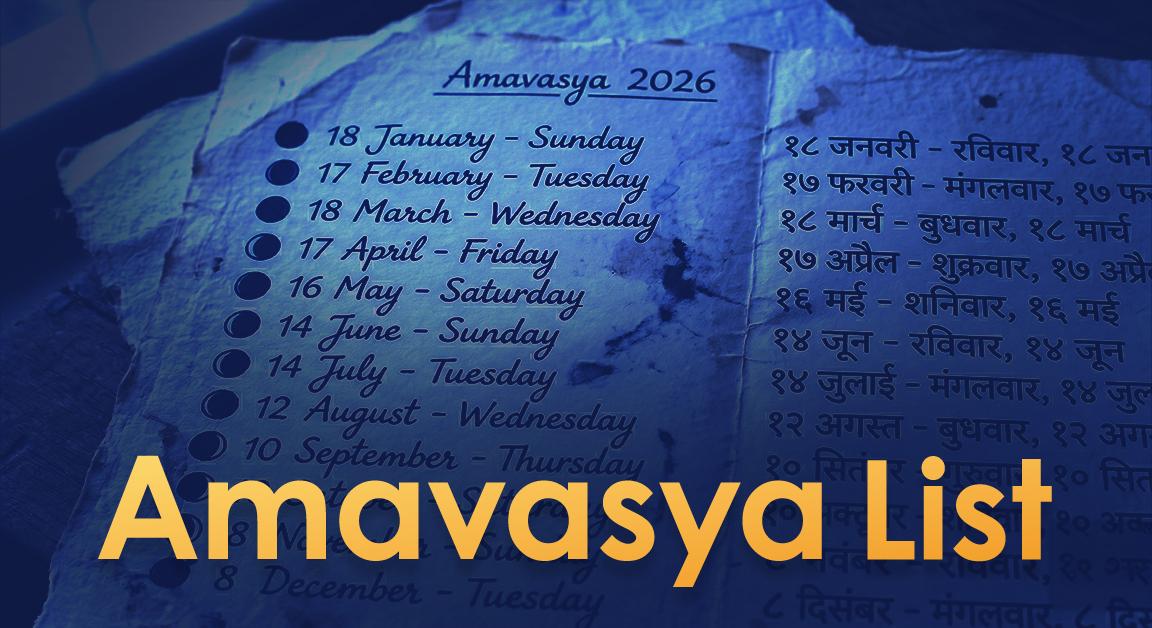
The Amavasya 2026 calendar lists all 12 Amavasya dates from January to December, including Mauni, Somvati, Shani and Hariyali Amavasya. The table below gives each Amavasya’s name, date, weekday, and tithi start and end times.
Amavasya is the last tithi of Krishna Paksha, the waning phase of the Hindu lunar cycle. Its timing can extend across two dates, so checking both the beginning and ending time helps you understand the complete period.
Amavasya 2026 Dates and Timings
| Amavasya Name, Date & Day | Tithi Begins (IST) | Tithi Ends (IST) |
|---|---|---|
| Magha / Mauni Amavasya — 18 January, Sunday | 18 January, 12:03 AM | 19 January, 01:21 AM |
| Phalguna Amavasya — 17 February, Tuesday | 16 February, 05:34 PM | 17 February, 05:30 PM |
| Chaitra Amavasya — 19 March, Thursday | 18 March, 08:25 AM | 19 March, 06:52 AM |
| Vaishakha Amavasya — 17 April, Friday | 16 April, 08:11 PM | 17 April, 05:21 PM |
| Jyeshtha Amavasya — 16 May, Saturday | 16 May, 05:11 AM | 17 May, 01:30 AM |
| Adhika Jyeshtha Amavasya — 15 June, Monday | 14 June, 12:19 PM | 15 June, 08:23 AM |
| Ashadha Amavasya — 14 July, Tuesday | 13 July, 06:49 PM | 14 July, 03:12 PM |
| Shravana / Hariyali Amavasya — 12 August, Wednesday | 12 August, 01:52 AM | 12 August, 11:06 PM |
| Bhadrapada Amavasya — 11 September, Friday | 10 September, 10:33 AM | 11 September, 08:56 AM |
| Ashwin / Mahalaya Amavasya — 10 October, Saturday | 9 October, 09:35 PM | 10 October, 09:19 PM |
| Kartik Amavasya — 9 November, Monday | 8 November, 11:27 AM | 9 November, 12:31 PM |
| Margashirsha Amavasya — 8 December, Tuesday | 8 December, 04:12 AM | 9 December, 06:21 AM |
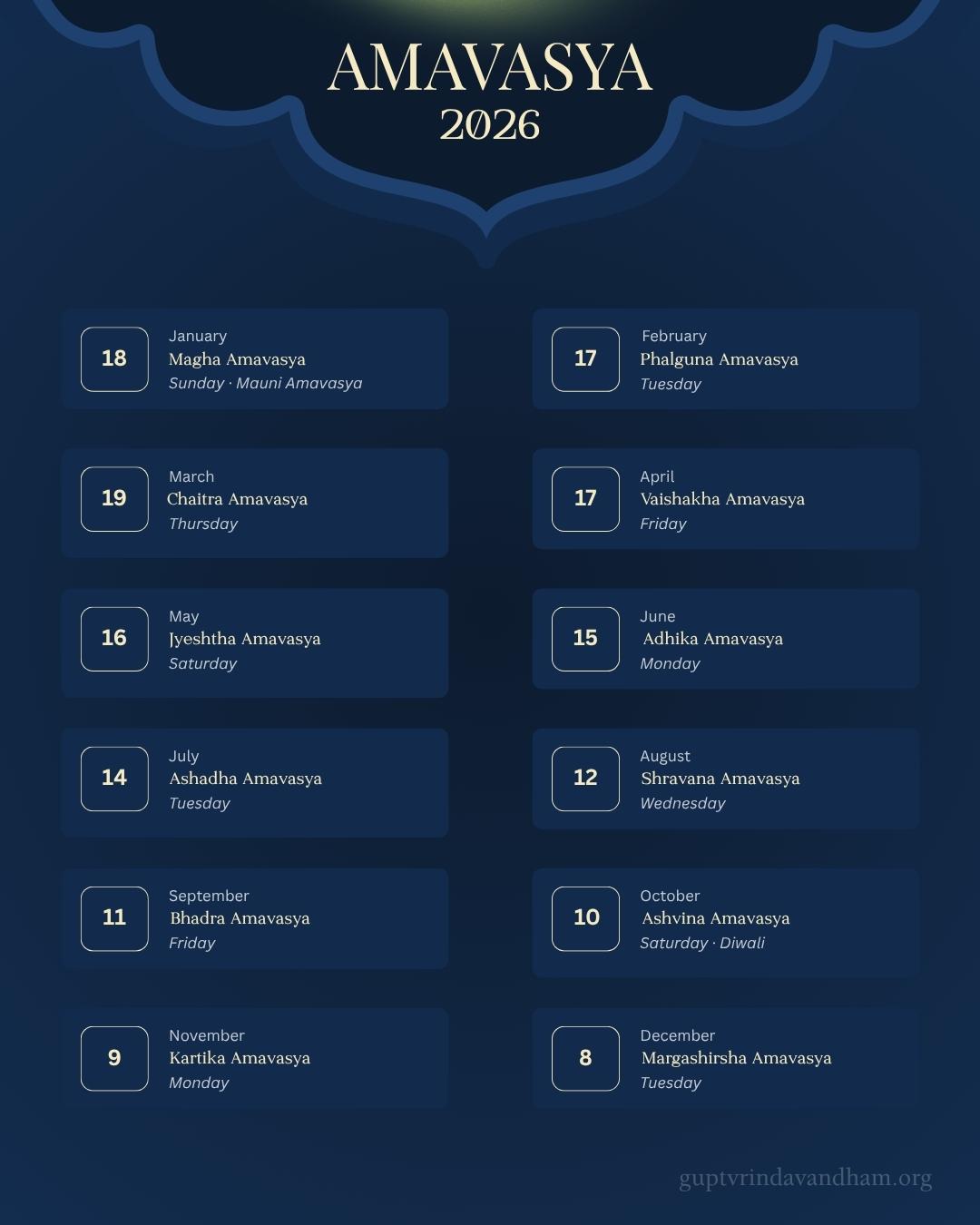
All dates are in 2026. The first column lists the named monthly Amavasya. Tithi timings show when Amavasya begins and ends; they are not puja muhurats.
Important Amavasya Dates in 2026
Mauni Amavasya
Mauni Amavasya falls on 18 January 2026. It is also called Magha Amavasya. These are two names for the same January Amavasya, rather than separate dates.
Somvati Amavasya
Somvati Amavasya falls on 15 June and 9 November 2026. The name refers to an Amavasya falling on Monday.
Both tithi windows begin on the preceding Sunday and continue into Monday. This explains why a calendar showing the tithi’s starting date may display a different date.
Shani Amavasya
Shani Amavasya falls on 16 May and 10 October 2026. An Amavasya falling on Saturday receives this name.
A weekday-based name can appear alongside the monthly name. For example, the May entry is both Jyeshtha Amavasya and Shani Amavasya.
Hariyali and Mahalaya Amavasya
Hariyali Amavasya falls on 12 August, while Mahalaya Amavasya falls on 10 October 2026.
The October date is also a Saturday. It can therefore be identified as Ashwin Amavasya, Mahalaya Amavasya and Shani Amavasya. These names describe the same calendar entry.
Why Do Some Calendars Show Two Amavasya Dates?
A tithi does not necessarily begin at midnight or last exactly 24 hours. One Amavasya tithi can occupy parts of two consecutive dates.
Some panchangs also list Darsha Amavasya separately from the named monthly Amavasya. In the reference calendar, these entries differ in four months:
- March: Darsha Amavasya on 18 March; Chaitra Amavasya on 19 March.
- June: Adhika Darsha Amavasya on 14 June; Adhika Jyeshtha Amavasya on 15 June.
- September: Darsha Amavasya on 10 September; Bhadrapada Amavasya on 11 September.
- November: Darsha Amavasya on 8 November; Kartik Amavasya on 9 November.
Each pair falls within the same Amavasya tithi window and should not be counted as two separate tithis.
For a particular vrata or festival, check the observance listed in the calendar followed by your temple or family. Its date-selection rules may differ from those used for the monthly calendar entry.
How to Read the Calendar Correctly
Always read the date beside the time, especially for entries ending after midnight.
For example, 01:21 AM on 19 January means the early hours immediately after the night of 18 January. It does not mean the night after the daytime of 19 January.
When noting an Amavasya date:
- Check its name and listed date.
- Read the complete tithi start and end times.
- Confirm any festival-specific observance separately.
For other lunar dates, the Purnima calendar lists full-moon dates, while the Ekadashi calendar covers Ekadashi fasting dates.
FAQs
Conclusion
Amavasya is the day to overcome emotions like fear, greed, lust, and anger by observing the day with devotion, scriptural reading, and charity-like activities.
May this upcoming Amavasya bring the blessings of the Supreme Lord, Lord Krishna, into yours, your family's, and your future generations.