

Sri Ram Navami
- Home /
- Festivals /
- Sri Ram Navami
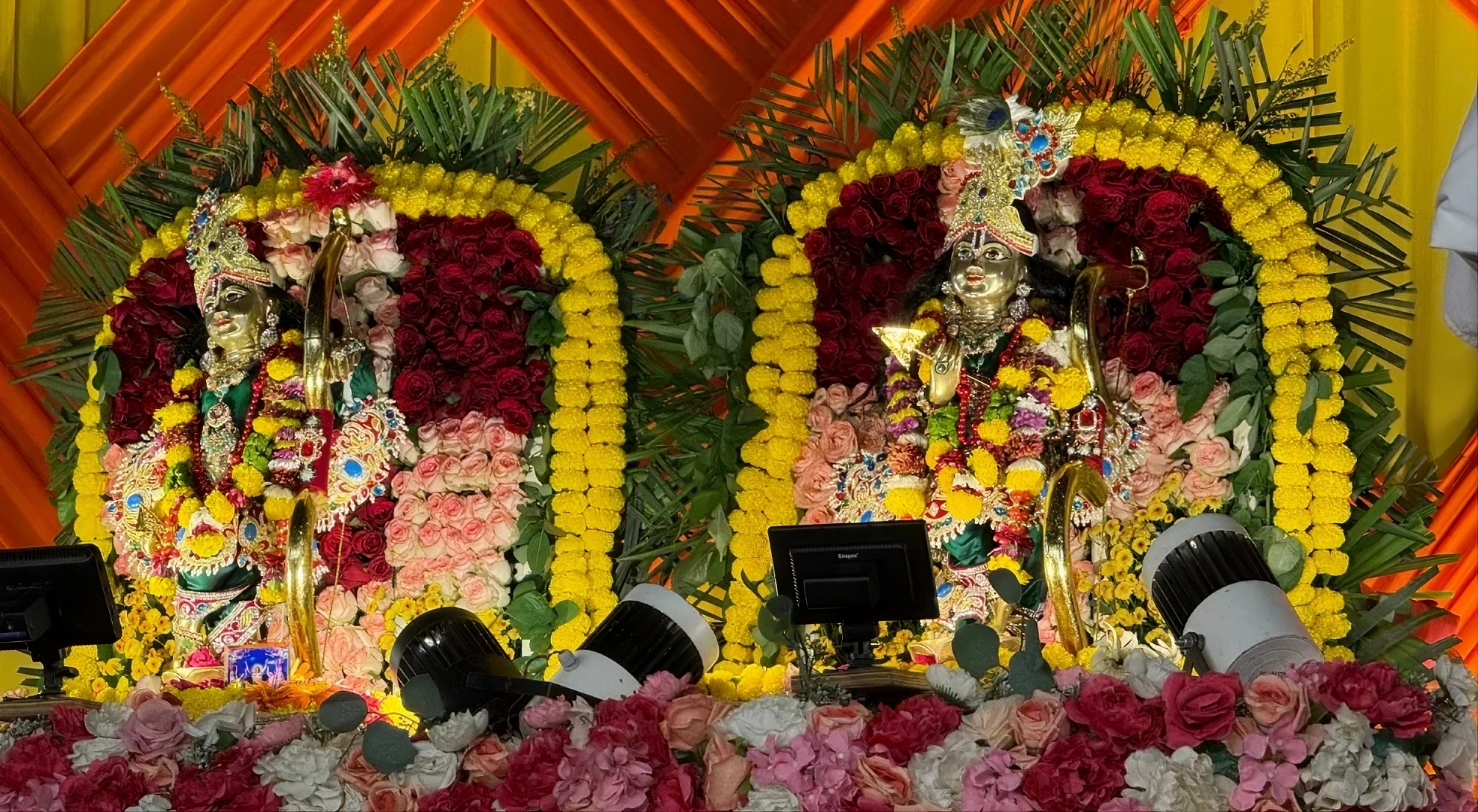
Ram Navami is the glorious appearance day of Lord Shri Ramchandra, the seventh incarnation in the Dashavataras (ten avatars) of Lord Vishnu.
He descended into this world during the Treta Yuga to illuminate the path of Dharma (righteousness) and set the ultimate example for humanity.
This sacred day is celebrated with deep devotion, glorifying Lord Ram’s divine victory of righteousness and light over ignorance across all over the world.
This sacred festival occurs during the Shukla Paksha (waxing moon) of the month of Chaitra, a period that also honors the upcoming Mohini Ekadashi.
As we approach this sacred occasion, let us dive deep into the divine mysteries and blessings that Ram Navami offers to every sincere seeker.
Ram Navami 2026: Festival Dates and Timings
Observing the festival at the precise Vedic moments ensures the maximum spiritual benefit for the devotee. In the year 2026, the cosmic alignment for the appearance of the Lord is particularly auspicious. According to the Vedic calendar, the following timings are essential for your 2026 Ram Janmotsav celebrations:
- Date: Thursday, March 27, 2026.
- Ram Navami 2026 Start Date: The Tithi begins in the late morning of March 26.
- Navami Tithi Begins: 11:51 AM on March 26, 2026.
- Navami Tithi Ends: 10:09 AM on March 27, 2026.
This festival serves as the divine conclusion to Chaitra Navratri 2026, specifically Ram Navami. Many practitioners spend the nine days of Navratri March 2026 Ram Navami in intense prayer and purification. Whether you are seeking Sri Rama Navami 2026 information for temple visits or home puja, these specific windows are vital for your Vrat.
Why Did Lord Rama Incarnate? Purpose of His Descent on Ram Navami
The Supreme Lord does not take birth like an ordinary human being bound by the laws of Karma.
In the Bhagavad Gita (4.7), Lord Krishna explains that He manifests whenever there is a decline in religion and a rise in irreligion.
The purpose of Ram Janmotsav is to deliver the pious and re-establish the eternal principles of truth.
He descends "millennium after millennium" (BG 4.8) to destroy those who cause suffering to the saintly.
Lord Rama is known as Maryada Purushottam, the "superior among men" who never deviated from the code of ethics.
He proved His divinity by manifesting the six Aishwaryas (riches) perfectly: Strength, Fame, Wealth, Beauty, Knowledge, and Renunciation.
By celebrating Shri Ram Navami, we align ourselves with these divine qualities and seek protection from the chaos of the material world.
The Divine Symbolism: Meaning Behind the Names
The Ramayana is not merely an ancient history; it is a profound map for the spiritual evolution of the soul.
The name RAMA is derived from two syllables: 'Ra' (radiance/light) and 'Ma' (within).
This signifies that the Lord is the light of pure consciousness residing within the heart of every living being.
His father, King Dasharatha, symbolizes the human body, described as a "Chariot of Ten" (the ten senses).
These include the five Karmendriyas (active senses) and the five Gyanendriyas (knowledge-acquiring senses).
His mother, Kaushalya, represents "Skill" or the refined awareness needed to master these senses.
Only when the senses are guided by such skill can the divine consciousness (Rama) be born within us.
Finally, Ayodhya means "a place of no war," representing the state of inner peace where no conflict exists.
The Inner Ramayana: The Battle Within
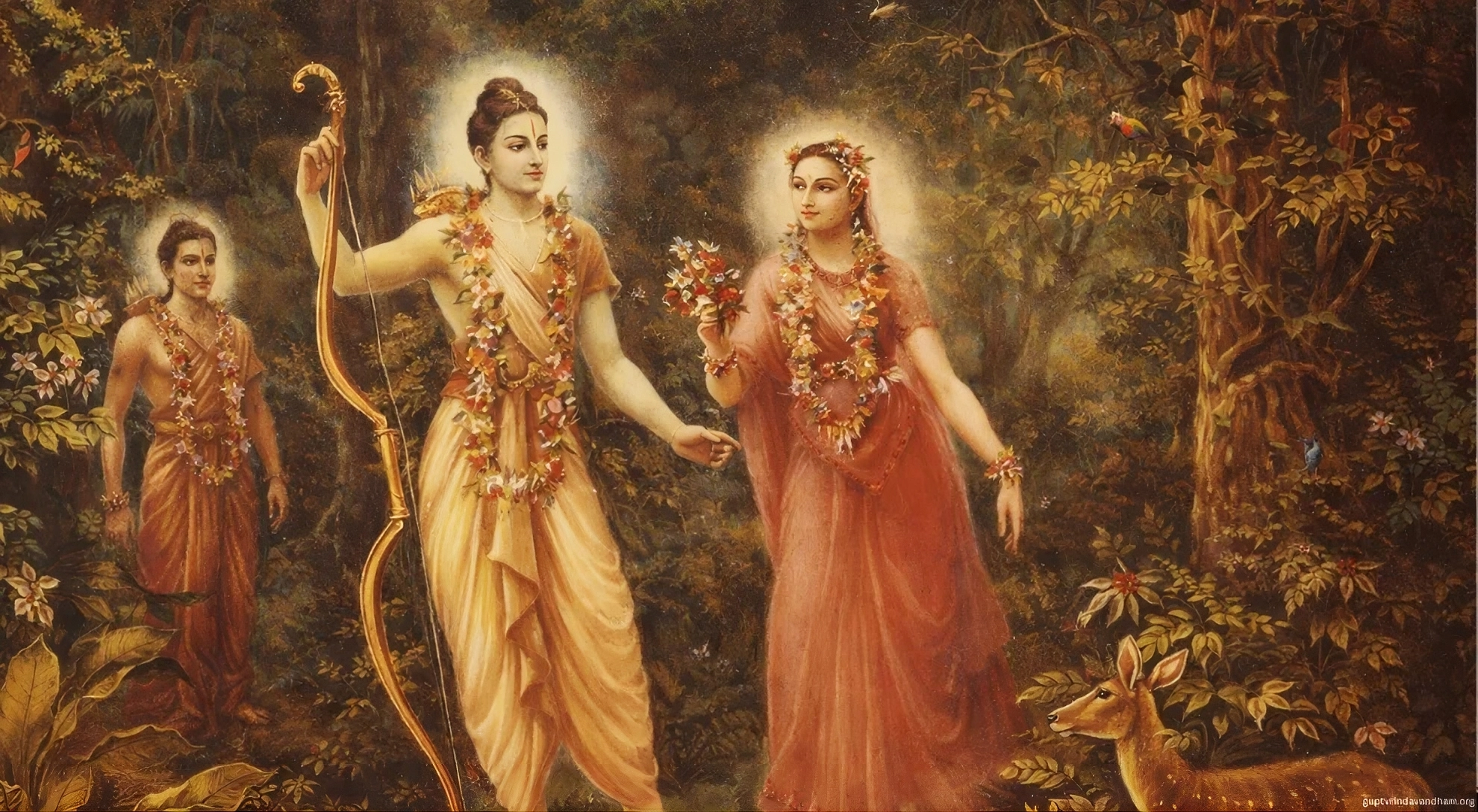
In the present age of Kali Yuga, the epic battle between Rama and Ravana takes place inside the individual. The Vedic strategists explain that Rama represents the Atman (the soul) which seeks its original home.
Sita represents the Mind, which is naturally pure but can be kidnapped by the Ravana of Ego and Lust. The ten heads of Ravana symbolize the various desires that distract the mind from its divine source.
Hanuman represents Prana (the life force or breath) and the power of pure devotion. It is only through the help of Prana and devotion that the Mind (Sita) can be reunited with the Soul (Rama).
By controlling the breath through meditation, we build a bridge (Ram Setu) over the ocean of material existence. This internalizing of Ram Navami allows the devotee to experience a permanent victory over the ego.
The Story of the Ramayana: A Journey of Dharma
The appearance of Lord Rama was preceded by a cosmic event involving the gatekeepers of Vaikuntha, Jai and Vijay. Cursed by the four Kumaras (Sanaka, Sanatana, Sanandana, and Sanat), they had to take birth as demons three times.
To deliver them, Lord Vishnu appeared in the Surya (Sun) dynasty as the son of King Dasharatha. The King had 353 queens, but only three were prominent: Kaushalya, Keikai, and Sumitra. After a Putra Kameshti sacrifice, a divine being emerged from the fire with a bowl of kheer (sweet rice pudding).
Kaushalya received a portion and desired a son who would rule the entire earth with justice. Keikai desired a son who would be the personification of Dharma, receiving the second portion. Sumitra received two portions and prayed that her sons would serve their brothers with unconditional love. Thus, Rama, Bharata, Lakshmana, and Shatrughna were born, filling the kingdom of Ayodhya with celestial joy.
The epic is divided into seven Kandas (chapters), each representing a phase of the Lord’s journey:
- Bal Kanda: Describes His childhood and the killing of demons like Tadaka.
- Ayodhya Kanda: His exile to the forest to uphold His father’s promise to Kaikeyi.
- Aaranya Kanda: The life in the forest and the abduction of Sita by the cunning Ravana.
- Kishkindha Kanda: The alliance with Hanuman and the monkey army.
- Sundar Kanda: Hanuman's leap across the ocean to find Sita in the Ashok Vatika.
- Yudh Kanda: The fierce battle in Lanka where Ravana was defeated.
- Uttar Kanda: The return to Ayodhya and the establishment of Rama-rajya.
In the final battle, the demon king Ravana seemed invincible until Vibhishana revealed a secret. Ravana's life force was hidden in his navel, and Rama struck it with a divine arrow to end the reign of terror.
This story of Ram Janmotsav reminds us that even the mightiest ego must fall before the Lord. Millions find hope in Ram Navmi by remembering that truth always prevails over the most powerful illusion.
How to Celebrate Ram Navami 2026 at Home (Puja Vidhi)
Start your Chaitra Ram Navami early by taking a bath and wearing clean, traditional attire. Decorate your altar with fresh flowers, mango leaves, and a beautiful picture of the Rama Durbar.
The 16 steps include Avahana (invitation), Asana (offering a seat), and Snana (ritual bathing of the idol). You should also offer Gandha (sandalwood paste), Pushpa (flowers), and light a ghee Diya.
At the Madhyahna Moment of 12:44 PM, perform a grand Aarti with the ringing of bells and blowing of conches. Offer a special Bhog (food offering) of Panakam, a traditional drink made with jaggery, ginger, pepper, and cardamom.
This drink is a natural coolant and is highly symbolic of the sweetness and spice of life. Spend the day in Ram Navami meditation, reading the Ramayana to absorb the Lord's divine instructions.
Fasting Rules and Vrat Vidhi
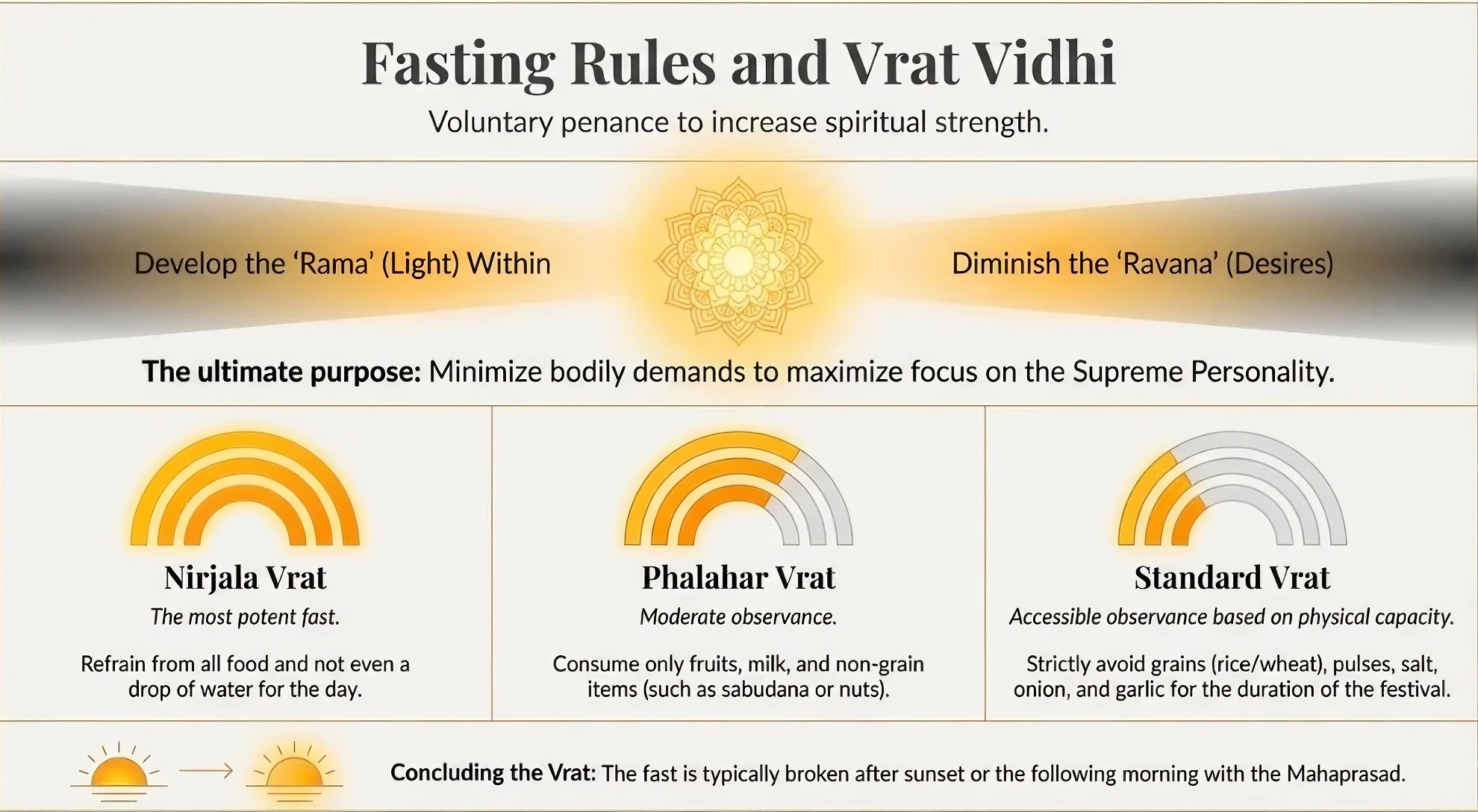
Fasting on Rama Navami 2026 is a method of voluntary penance to increase one's spiritual strength. There are several ways to observe the fast for Sri Rama Navami in 2026, depending on your physical capacity:
- Nirjala Vrat: The most potent fast, where the devotee refrains from even a drop of water for the day.
- Phalahar Vrat: Consuming only fruits, milk, and non-grain items like sabudana or nuts.
- Standard Vrat: Avoiding grains (rice/wheat), pulses, salt, onion, and garlic for the duration of the festival.
The purpose of the Vrat is to minimize bodily demands and maximize the focus on the Supreme Personality. By observing these rules, we develop the "Rama" (light) within and diminish the "Ravana" (desires). The fast is typically broken after the sunset or the following morning with the Mahaprasad.
Sacred Mantras and the Power of Sound
The most powerful way to connect with Lord Rama in this age is through the vibration of His holy names. The Vedic scriptures emphasize that the Hare Krishna maha-mantra is the most effective tool for purification:
Hare Kṛṣṇa Hare Kṛṣṇa Kṛṣṇa Kṛṣṇa Hare Hare / Hare Rāma Hare Rāma Rāma Rāma Hare Hare
This mantra contains the name of Rāma, which destroys the seeds of material desires in the heart. The Taraka Mantra, "Shri Ram Jai Ram Jai Jai Ram," is also chanted to cross the ocean of birth and death.
Chanting these sounds regularly brings a sense of deep inner calm and mental clarity. It is said that the name of Rama is more powerful than the Lord Himself, as it is accessible to everyone.
Regional Traditions Across India
The celebration of Ramnavami 2026 reflects the diverse cultural landscape of the holy land of Bharat. In Ayodhya, the festivities reach a peak as thousands take a dip in the holy Sarayu River.
The atmosphere at Kanak Bhawan is electric, with devotees singing until the walls vibrate with the Lord's name. In South India, the "Kalyanam Utsava" or the ceremonial wedding of Rama and Sita is the main highlight.
Huge quantities of Panakam are prepared using jaggery, ginger, and black pepper to serve the cooling Prasad to all. In the Ramayan Circuit of Madhya Pradesh, cities like Chitrakoot and Orchha are decorated like celestial kingdoms.
ISKCON temples worldwide celebrate Ram Janmotsav with elaborate Abhishekam and fire sacrifices called Homa. These traditions ensure that the legacy of the Lord remains a living, breathing reality for every generation.
Conclusion
As Ram Navami 2026 concludes, we should carry the essence of the festival into our daily interactions. Lord Rama's life teaches us that sacrifice for the sake of truth is the highest form of success.
By celebrating Ram Navami, we remind ourselves to be ideal in our roles as parents, children, and citizens. A vital part of the celebration is Anna Daan (giving food to the needy), as suggested by the ancient masters.
Practicing charity on this day ensures that the "Ayodhya" of peace remains established in our hearts and homes. May the divine grace of Lord Shri Ramchandra bring you protection, wisdom, and eternal spiritual fulfillment.
Related Links: What to Donate on Ram Navami | Lord Rama Names | Ram Navami Story