
 Donate Now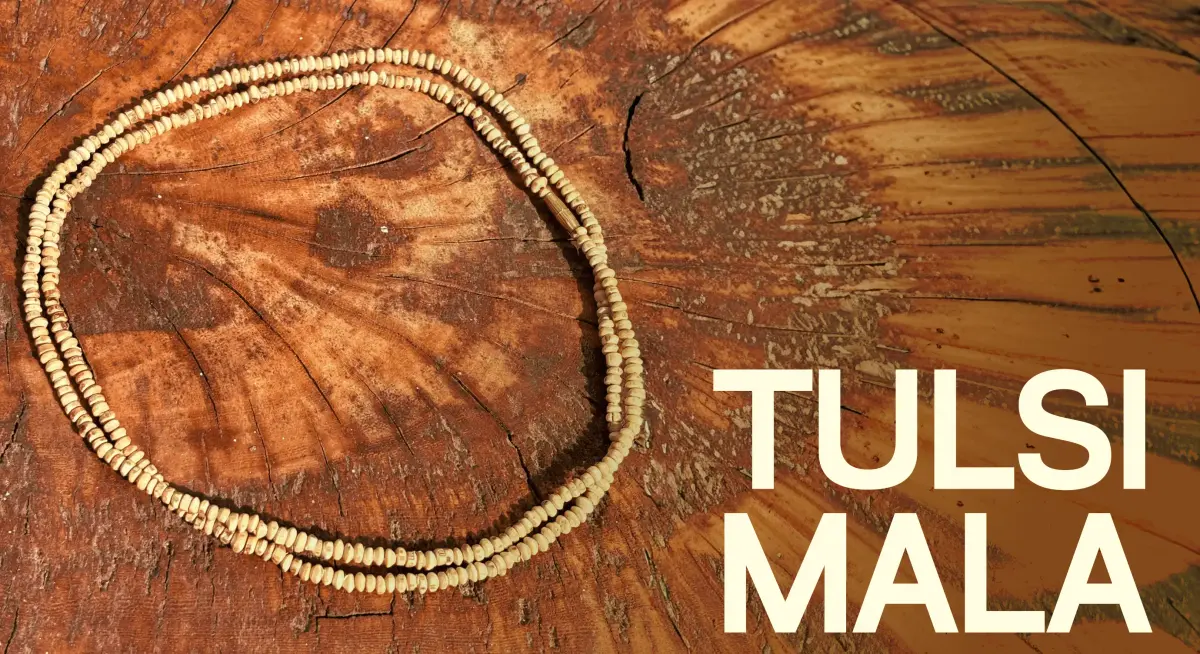
A Tulsi or Kanthi mala is a string of beads made from the dried stems of the sacred Tulsi plant. Devotees of Lord Vishnu or Krishna are often seen wearing a Tulsi mala and tilak. These serve as the ornaments and identification of a devotee, symbolizing devotion and surrender to the Lord. The mala also represents the devotee’s desire to remain under the shelter of Tulsi Devi and cultivate a life of bhakti, or devotional service.
Why Is Tulsi Sacred? The Connection to Tulsi Maharani
Tulsi is not an ordinary plant; she is a pure devotee and an eternal servant of Lord Krishna. She is considered an expansion of Srimati Radharani, known as Vrindadevi, the director of the pastimes in Vrindavan. Tulsi Maharani is exceptionally dear to Krishna, such that the Lord does not accept any offerings without Tulsi leaves.
Lord Krishna, who is very affectionate toward His devotees, sells Himself to a devotee who offers Him merely a Tulsi leaf and a palmful of water, CC Adi 3.104. Devotees always live in Her shelter by wearing a Tulsi mala so that they too may become dear to the Lord.
The lotus feet of the Lord are always decorated with Tulsi leaves, whose aroma can bestow pure devotional service, just like the Four Kumaras were transformed from impersonalists to pure devotees. The glories of Tulsi Maharani are beyond our imagination. Even by seeing her, one becomes purified.
Scriptural References of Wearing Tulsi Mala/Tulsi Neck Beads
In the Skanda Purana, it is stated that a person who is decorated with tilaka and wears Tulsi beads around their neck will never be approached by the Yama-dutas. The Padma Purana states that persons who mark twelve places of their body with Lord Vishnu's symbolic representations and who have Vishnu tilaka on their forehead are devotees of the Lord. And anywhere they remain, they make that place as good as Vaikuntha.
Types of Tulsi Mala
There are primarily two types of Tulsi mala, which are an essential part of a devotee's devotional life.
Kanthi Mala (Neck Beads)
The Kanthi Mala is worn around the throat, kanth, as a symbol of surrender and dedication to Lord Krishna. It acts as a sign that the wearer is a “pet” or protected associate of the Supreme Lord. The types of Kanthi Mala are generally categorized by the number of rounds, rows of beads, looped around the neck.
Tulsi Kanthi Mala is commonly worn in one, two, or three rounds. There is no universal scriptural rule that one round is only for beginners or that three rounds are reserved exclusively for initiated devotees. Anyone may wear one, two, or three rounds of Tulsi Kanthi Mala, provided they do so under the guidance of a bona fide guru or a qualified spiritual authority.
Japa Mala (Chanting Beads)
A Japa Mala is a specific type of Tulsi string used for meditative chanting. It typically consists of 108 beads plus one larger “head” bead known as the Krishna bead or Sumeru. Devotees use this mala to keep count while chanting the Hare Krishna maha-mantra.
Always chant on Tulsi japa beads in a clean state. Avoid touching the beads without bathing or with unclean hands. Chant in a clean place, and avoid chanting while lying down or sitting on a bed.
Beginners can start chanting with two rounds, then gradually reach sixteen rounds. It is very important to track the count of our daily chanting of the Holy Names; this is recommended by great devotees of the Lord.
Benefits of Wearing Tulsi Mala
Wearing Tulsi beads around the neck, known as Kanthi Mala, is considered highly beneficial in the Vaishnava tradition, with numerous spiritual rewards described in the Puranas and other Vedic scriptures.
Protection from the messengers of death, Yamadutas.
Purification and release from sinful reactions.
Attainment of devotion, bhakti.
One becomes dear to Lord Krishna.
For a deeper understanding of this topic, visit this page: Link
Rules for Wearing Tulsi Mala/Kanthi Mala
The Tulsi plant is exceptionally dear to Lord Krishna; wearing it requires strict adherence to a pure lifestyle to avoid committing spiritual offenses.
1. Follow the four regulative principles: no meat eating, no intoxication, no gambling, and no illicit sex.
2. One should only eat food that has been offered to the Lord as Prasadam and avoid food that contains onion and garlic.
3. A wearer should chant the Holy Name of the Lord, Hare Krishna Mahamantra, daily.
How to Chant Japa on Tulsi Mala
Devotees chant on Tulsi Mala to keep count of the number of rounds of the Holy Name; great Vaishnava acharyas recommend this practice. Tulsi mala is considered sacred, and its touch purifies us and strengthens our devotion, bhakti.
To chant on a Tulsi mala, one should first maintain cleanliness and avoid chanting on the bed. One should hold the mala with the thumb and middle finger, and avoid using the index finger for chanting. Chant on all 108 beads, rotate the mala inward, and do not cross the 109th bead, known as the Sumeru.
How to Make Tulsi Kanthi Mala at Home
Making a Tulsi Kanthi Mala at home is a simple process that can be completed in about thirty minutes to an hour using common kitchen tools. Handcrafting your own mala ensures originality and purity while providing a special sense of devotion.
Required Materials
Dried Tulsi wood, knife, scissors, a needle, thread, fasteners from an old mala for tightening, warm ghee, or sesame oil.
Procedure
1. Cut small twigs from naturally dried Tulsi stems. Ensure the twigs are neither too thick nor too thin.
2. Use a knife to scrape and smooth each twig so the beads become polished and comfortable to wear without irritating the skin.
3. Use scissors to cut the smoothed twigs into small, equal-sized pieces to serve as beads.
4. Pass a strong thread through the needle and begin stringing the beads one by one.
5. Continue adding beads until the mala reaches the desired length based on your neck size.
6. If you are using old screws or fasteners, thread them onto the ends and tie a secure knot to ensure the beads do not slip off.
7. The final and essential step is to soak the finished mala in warm ghee or sesame oil for 24 hours. This process ensures the beads become extra soft and comfortable against the throat.
How to make Tulsi Kanthi Mala at Home
Making a Tulsi Kanthi Mala at home is a simple process that can be completed in about thirty minutes to an hour using common kitchen tools. Handcrafting your own mala ensures originality and purity while providing a special sense of devotion.
Required Materials
Dried Tulsi wood, knife, scissors, a needle, thread, fasteners (from old mala for tightening), warm ghee or sesame oil.
Procedure
- Cut small twigs from naturally dried Tulsi stems. Ensure the twigs are neither too thick nor too thin.
- Use a knife to scrape and smooth each twig so the beads become polished and comfortable to wear without irritating the skin
- Use your scissors to cut the smoothed twigs into small, equal-sized pieces to serve as beads.
- Pass your strong thread through the needle and begin stringing the beads one by one.
- Continue adding beads until the mala reaches the desired length based on your neck size.
- If you are using old screws, thread them onto the ends and tie a secure knot to ensure the beads do not slip off.
- The final and essential step is to soak the finished mala in warm ghee or sesame oil for 24 hours. This process ensures the beads become extra soft and comfortable against the throat.
Tulsi Mala vs Rudraksha — Key Differences
| Feature | Tulsi Mala | Rudraksha Mala |
|---|---|---|
| Worshipable Deity | Lord Krishna | Lord Shiva |
| Made From | Wood from the sacred Tulsi plant | Seeds of the Rudraksha tree |
| Who Wears It? | Vaishnavas and devotees of Lord Krishna | Devotees of Lord Shiva |
| Primary Purpose | Chanting the Holy Name of Lord Krishna (Hare Krishna Mahamantra) | Japa, meditation, and worship of Lord Shiva |
| Symbolism | Surrender and pure devotional service to Lord Krishna | Austerity, spiritual discipline, and devotion to Lord Shiva |
| Scriptural Significance | Highly glorified in the Padma Purana, Skanda Purana, Garuda Purana, and Hari-bhakti-vilasa | Glorified in the Shiva Purana and other Shaiva scriptures |
Conclusion
Tulsi Mala (Kanthi/Japa mala) has a very important position in Gaudiya Vaishnavism. Its contact can sanctify the place, food, or even a devotee. Anyone willing to advance in the path of bhakti or devotional service must serve Tulsi Maharani and remain in her shelter.