
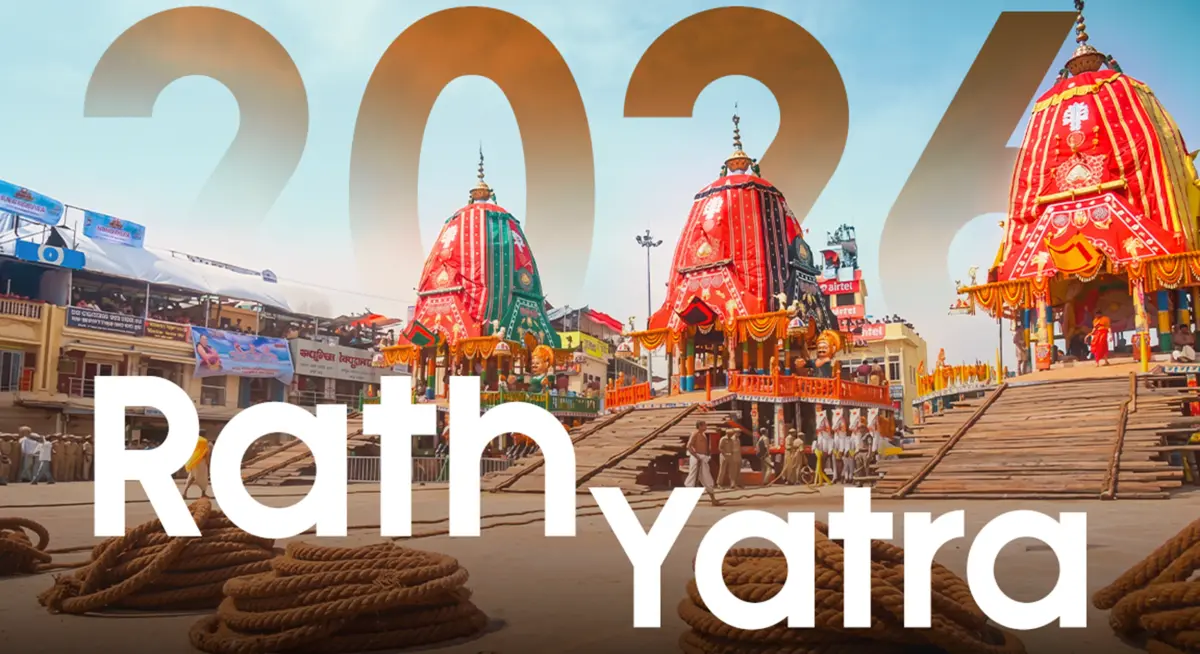
Rath Yatra 2026 will be celebrated on Thursday, 16 July, marking the grand chariot procession of Lord Jagannath, Lord Baladeva, and Subhadra Devi. One of the most celebrated festivals in the Vaishnava tradition, Rath Yatra commemorates the divine journey of the Lord from His main temple to the Gundicha Temple, accompanied by millions of devotees chanting His holy names.
This sacred festival symbolizes the Lord's desire to come out of the temple and bestow His mercy upon everyone, regardless of caste, creed, nationality, or background. The sight of Lord Jagannath riding on His magnificent chariot is considered highly auspicious and spiritually uplifting.
In this guide, we will explore Rath Yatra 2026 in detail, including its date, significance, history, major rituals performed at the Jagannath Temple in Puri, and how devotees around the world participate in this globally celebrated Vaishnava festival with devotion and enthusiasm.
Rath Yatra 2026: Key Dates and Schedule
| Festival | Date | Activities |
|---|---|---|
| Snana Purnima | 29 June, 2026 | Deities bathe with 108 pitchers of holy water. |
| Anavasara Period | June 29 to July 14, 2026 | Temple closed for darshan during the 15-day Anavasara period. |
| Nabajaubana Darshan | 15 July, 2026 | First darshan of the deities in a new form after 15 days. |
| Gundicha Marjana | 15 July, 2026 | Gundicha Temple cleaned by devotees. |
| Ratha Yatra | 16 July, 2026 | Grand Chariot festival - from Jagannath Temple to Gundicha Temple. |
| Hera Panchami | 20 July, 2026 | Goddess Lakshmi visits Gundicha Temple, searching for Lord Jagannath. |
| Sandhya Darshana | 23 July, 2026 | Last evening's darshan at Gundicha Temple. |
| Bahuda Yatra | 24 July, 2026 | Deities return to Jagannath temple; while returning, the chariot stops at Mausi Maa temple. |
| Suna Besha | 25 July, 2026 | Deities adorned with gold ornaments on chariots. |
| Adhara Pana | 26 July, 2026 | Sacred sweet drink (Adhara Pana) offered to deities. |
| Niladri Bijaya | 27 July, 2026 | Deities return to the sanctum inside Jagannath Temple. |
Why Rath Yatra is Spiritually Powerful?
Rath Yatra is not merely a religious procession; it is one of the most spiritually significant festivals in the Hindu calendar. At its heart lies a profound message — the Lord comes to meet His devotees.
Unlike most temple festivals where devotees wait in long queues to receive darshan of the deity inside the sanctum, Lord Jagannath personally comes out of the temple during Rath Yatra and travels through the streets with Lord Baladeva and Subhadra Devi. This allows people from every caste, community, nationality, and background to receive His blessings without distinction.
This universal accessibility is one of the reasons Rath Yatra is known as the great festival of devotees. During the festival, a king sweeps the road before the Lord's chariot, while ordinary devotees pull the ropes of the chariot — both participating in the same act of devotion before the Supreme Lord.
Why is Jagannath Rath Yatra Celebrated? (Skanda Purana and Brahma Purana)
The glories of Rath Yatra are described in scriptures such as the Skanda Purana, Brahma Purana, and Narada Purana. These sacred texts explain that even pulling the Lord's chariot for a single moment grants immense spiritual merit comparable to performing great Vedic sacrifices. Simply beholding Lord Jagannath on His chariot is said to purify the heart and help free the soul from the cycle of birth and death.
Rath Yatra Meaning for Vaishnavas
For Vaishnavas, Rath Yatra carries an even deeper spiritual meaning. It commemorates Lord Krishna's return to Vrindavan from Dwarka. This journey symbolizes divine reunion after separation and reflects the loving relationship between the Lord and His devotees. The emotions of longing, remembrance, and reunion expressed during Rath Yatra make it one of the most cherished festivals in the Vaishnava tradition.
What Happens During Rath Yatra 2026 - Day by Day
Rath Yatra follows a series of sacred rituals that have been observed for centuries. Each phase of the festival carries unique spiritual significance.
Phase 1: Before Rath Yatra
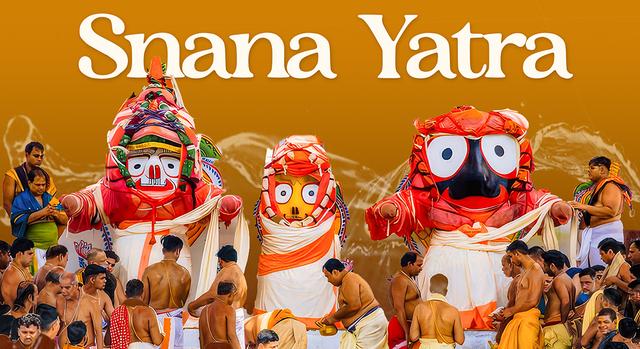
The Rath Yatra cycle begins with Snana Purnima on 29 June 2026, when Lord Jagannath, Lord Baladeva, and Subhadra Devi are ceremonially bathed with water from 108 sacred pitchers infused with herbs and flowers.
Following the bathing ceremony, the deities are believed to become unwell and enter a fifteen-day period known as Anavasara. During this time, from June 29 to July 14, 2026, the Jagannath Temple remains closed for public darshan.
Devotees traditionally visit the Alarnath Temple during this period of separation. After recovering, the Lord reappears in a fresh and youthful form during Nabajaubana Darshan on 15 July 2026.
On 15 July 2026, devotees perform Gundicha Marjana, the ceremonial cleaning of the Gundicha Temple. This tradition was personally established by Sri Chaitanya Mahaprabhu, who taught that the temple should be purified to welcome the Lord with devotion and humility.
Phase 2: The Day of Rath Yatra
On 16 July 2026, the grand Rath Yatra begins. Lord Jagannath, Lord Baladeva, and Subhadra Devi are ceremonially brought from the temple and placed upon their magnificent chariots — Nandighosa, Taladhwaja, and Darpadalana respectively.
This sacred procession, known as Pahandi Bije, is accompanied by devotional singing, drums, conches, and joyous celebrations.
Before the chariots begin moving, the Gajapati King of Puri performs the famous Chhera Pahanra ceremony, sweeping the road before the Lord with a golden broom. This act demonstrates that everyone, regardless of social status, is ultimately a servant of the Supreme Lord.
Afterward, lakhs of devotees pull the massive chariots along the Grand Road (Bada Danda), continuously chanting the holy names of Lord Jagannath.
Phase 3: At Gundicha Temple
Upon reaching the Gundicha Temple, the deities remain there for seven days. During this period, devotees receive special darshan and participate in various celebrations.
On 20 July 2026, Hera Panchami is observed. On this day, Goddess Lakshmi visits Gundicha Temple in search of Lord Jagannath. According to tradition, she playfully expresses her displeasure and instructs her attendants to symbolically damage a part of the Lord's chariot before returning to the main temple.
Phase 4: Return Journey
The return journey, known as Bahuda Yatra, takes place on 24 July 2026. The deities travel back toward the Jagannath Temple and stop at the Mausi Maa Temple, where Lord Jagannath is offered the traditional preparation known as Poda Pitha.
On 25 July 2026, the Lord appears in the magnificent Suna Besha, adorned with dazzling gold ornaments and jewelry while seated on the chariots.
The following day, Adhara Pana is offered, a special sweet drink presented to the Lord and His associates.
Finally, on 27 July 2026, the deities return to the sanctum of the Jagannath Temple during Niladri Bijaya, marking the conclusion of Rath Yatra 2026.
Rath Yatra 2026: Celebrated in 200+ Cities Worldwide
Originally, the Rath Yatra festival was celebrated only within the temple communities of India, almost exclusively in Jagannath Puri, Odisha, and places like Vrindavan, Mathura, Kolkata, as well as Assam colonies, Manipur, and Tripura. However, it is now a truly worldwide festival, taking place in 200+ cities across every continent, through the immense efforts of His Divine Grace A.C. Bhaktivedanta Swami Srila Prabhupada, the Founder-Acharya of ISKCON.
Srila Prabhupada introduced Rath Yatra to the West in 1967, beginning in San Francisco, which became the first ISKCON Rath Yatra outside India. From that point, the festival gained great popularity among devotees in the West.
Srila Prabhupada himself initiated the first Rath Yatra in London in 1969, and New York City followed shortly afterwards in the early 1970s.
For exploring the true essence of the Rath Yatra festival celebration globally, check out our detailed blog to get the full information: Rath Yatra Around the World.
Join the celebrations of Lord Jagannath during Rath Yatra 2026 at Gupt Vrindavan Dham, Jaipur, and witness something truly exceptional and merciful.
Support Jagannath Rath Yatra
Offer your seva for the divine Jagannath Rath Yatra and help organize this sacred festival dedicated to Lord Jagannath, Baladeva and Subhadra Devi.
FAQs
Conclusion
Ratha Yatra serves as a divine reminder that the Lord is for everyone, a tangible expression of the grand Jagannath Rath Yatra in Puri, Odisha, on 16 July 2026, extending to ISKCON celebrations in more than 200 cities globally. Rituals, chariot pulls, and chanting of “Jai Jagannath!” are yet another delightful articulation of the same principle, that God always comes to meet His devotees.
Happy Rath Yatra 2026. May the blessings of Lord Jagannath, Lord Balabhadra, and Devi Subhadra be with you.