
When we begin offering food to Lord Krishna at home, one of the common questions we face is what to cook every day without onion and garlic. Do we have to prepare elaborate dishes for the Lord, or can we offer the simple meals that we prepare for our family?
Many delicious sattvic dishes require neither complicated ingredients nor hours of preparation. In this blog, we will explore seven easy no-onion, no-garlic recipes for Krishna bhoga, including breakfast, lunch, dinner and sweet preparations.
Quick Summary: No-Onion, No-Garlic Recipes for Krishna Bhoga
In his letter to Upendra dated 19 February 1972, Srila Prabhupada explains that any suitable food can be offered to Krishna as long as it has no meat, fish, eggs, garlic or onions, and that what matters is preparing it nicely and offering it with loving devotion. This guide gives 7 easy recipes, each for about two to three people: Vegetable Poha, Sattvic Toor Dal Tadka, Ghee Jeera Rice, Jeera Aloo Sabzi, No-Onion No-Garlic Paneer Curry, Vegetable Moong Dal Khichdi and Suji Halwa. Flavour comes from hing, cumin, ginger, tomatoes, curry leaves and coriander; offer the bhoga on a plate kept only for Krishna, with Tulasi leaves and the bhoga offering mantras, then honour it as prasadam.
Why Is Krishna Bhoga Prepared Without Onion and Garlic?
In his letter to Upendra dated 19 February 1972, Srila Prabhupada explains that suitable foodstuffs available to us can be offered to Lord Krishna, provided they do not contain meat, fish, eggs, garlic, onions or other objectionable ingredients. He further states:
“What matters is that everything is very nicely prepared and offered with great loving devotion, that is wanted.”
Srila Prabhupada explains that devotees can use suitable ingredients available to them rather than restricting themselves to particular varieties of food. What matters is preparing the food nicely and offering it to Lord Krishna with loving devotion.
7 Easy No-Onion, No-Garlic Recipes for Krishna Bhoga
The following recipes use commonly available kitchen ingredients. Each preparation is suitable for approximately two to three people. You can adjust the quantities according to your family's requirements.
1. Vegetable Poha
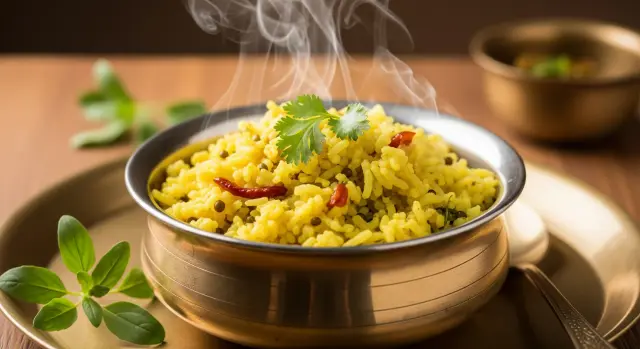
Poha, or flattened rice, is a simple breakfast preparation that can be offered to Lord Krishna in the morning. Adding fresh vegetables, roasted peanuts and mild spices makes it a wholesome breakfast.
Ingredients: 1½ cups thick poha, 1 small potato (finely diced), ¼ cup green peas, 2 tbsp peanuts, 1 tbsp ghee, ½ tsp mustard seeds, ¼ tsp turmeric powder, 5–6 curry leaves, ½ tsp salt, fresh coriander and 1 tsp lemon juice.
Preparation:
- Rinse the poha gently in water, drain it and keep it aside for 5 minutes.
- Heat ghee in a pan and roast the peanuts. Remove them and keep aside.
- Add mustard seeds, curry leaves and potatoes. Cover and cook until the potatoes become tender.
- Add green peas, turmeric and salt. Cook for another 3–4 minutes.
- Add the softened poha and roasted peanuts. Mix gently and cook for 2 minutes.
- Garnish with coriander and lemon juice.
2. Sattvic Toor Dal Tadka
Dal is one of the simplest preparations for everyday Krishna bhoga. A tempering of ghee, cumin and hing gives it a pleasant flavour without requiring onion or garlic.
Ingredients: ½ cup toor dal (arhar dal), 2 cups water, 1 chopped tomato, 1 tbsp ghee, ½ tsp cumin seeds, ½ tsp grated ginger, ¼ tsp turmeric powder, a pinch of hing (asafoetida), ½ tsp salt and fresh coriander.
Preparation:
- Wash the dal thoroughly and pressure-cook it with water and turmeric until soft.
- Allow the pressure to release naturally, then lightly mash the cooked dal.
- Heat ghee in a separate pan and add cumin seeds, hing and grated ginger.
- Add the chopped tomato and cook until it softens.
- Pour the cooked dal into the tempering, add salt and simmer for 5 minutes.
- Garnish with fresh coriander.
3. Ghee Jeera Rice
Jeera rice is an easy rice preparation that goes well with dal, vegetable curries and homemade curd. It requires only a few ingredients and can be prepared regularly for lunch bhoga.
Ingredients: 1 cup basmati rice, 1¾ cups water, 1 tbsp ghee, 1 tsp cumin seeds, 1 bay leaf and ½ tsp salt.
Preparation:
- Wash the rice thoroughly and soak it for 20 minutes.
- Heat ghee in a heavy-bottomed pan and add cumin seeds and the bay leaf.
- Once the cumin seeds begin to crackle, add the drained rice and stir gently for a minute.
- Add water and salt, cover the pan and cook on low heat until the water is absorbed.
- Allow the rice to rest for 5 minutes before gently separating the grains.
4. Jeera Aloo Sabzi
Jeera aloo is a dry potato preparation that requires minimal cooking. It is particularly useful when you want to prepare a simple bhoga with chapati and dal.
Ingredients: 3 medium boiled potatoes, 1 tbsp ghee, 1 tsp cumin seeds, ¼ tsp turmeric powder, ½ tsp coriander powder, ¼ tsp amchur (dry mango powder), a pinch of hing, ½ tsp salt and fresh coriander.
Preparation:
- Peel the boiled potatoes and cut them into small cubes.
- Heat ghee in a pan and add cumin seeds and hing.
- Reduce the flame and add turmeric and coriander powder.
- Immediately add the potatoes and salt. Mix gently to coat them with the spices.
- Cook for 5–7 minutes, stirring occasionally.
- Add amchur powder and garnish with fresh coriander.
5. No-Onion, No-Garlic Paneer Curry
You can prepare a creamy paneer curry without using onion or garlic. Tomatoes and cashews provide a rich gravy that pairs well with chapati, paratha or rice.
Ingredients: 200 g fresh paneer, 3 medium tomatoes, 10 cashews, 1½ tbsp ghee, ½ tsp cumin seeds, 1 tsp grated ginger, ¼ tsp turmeric powder, ½ tsp coriander powder, ½ cup water, ½ tsp salt and fresh coriander.
Preparation:
- Soak the cashews in warm water for 15 minutes.
- Heat a little ghee and cook the chopped tomatoes until soft.
- Allow the tomatoes to cool, then blend them with the soaked and drained cashews.
- Heat the remaining ghee and add cumin seeds, ginger, turmeric and coriander powder.
- Add the prepared tomato-cashew paste and cook for 5–7 minutes, stirring regularly.
- Add water, salt and paneer cubes. Simmer for another 3–4 minutes and garnish with coriander.
6. Vegetable Moong Dal Khichdi
Khichdi is a popular prasadam preparation in ISKCON temples. It combines rice, lentils and seasonal vegetables in one dish. You can also explore the traditional ISKCON khichdi recipe prepared at Gupt Vrindavan Dham.
Ingredients: ½ cup rice, ½ cup yellow moong dal, 1 cup chopped seasonal vegetables, 3 cups water, 1½ tbsp ghee, 1 tsp cumin seeds, ½ tsp grated ginger, ¼ tsp turmeric powder, a pinch of hing and ¾ tsp salt.
Preparation:
- Wash the rice and moong dal thoroughly.
- Heat ghee in a pressure cooker and add cumin seeds, hing and ginger.
- Add the chopped vegetables and sauté for 2 minutes.
- Add rice, dal, turmeric, salt and water.
- Pressure-cook until the rice and dal become soft.
- Allow the pressure to release naturally and mix gently.
7. Suji Halwa
A Krishna bhoga thali can also include a simple sweet preparation. Suji halwa, made with semolina, ghee and sugar, is easy to prepare at home without requiring any elaborate arrangements.
Ingredients: ½ cup suji (semolina), ¼ cup ghee, ⅓ cup sugar, 1½ cups water, ¼ tsp cardamom powder, 6 chopped cashews and 1 tbsp raisins.
Preparation:
- Heat ghee in a heavy-bottomed pan and lightly roast the cashews and raisins. Remove them and keep aside.
- Add suji to the same pan and roast on low heat until golden and fragrant.
- In a separate vessel, heat water and dissolve the sugar.
- Gradually pour the hot sugar solution into the roasted suji, stirring continuously and carefully.
- Cook until the water is absorbed and the halwa thickens.
- Add cardamom powder, roasted cashews and raisins.
How to Offer Food to Lord Krishna at Home
While preparing bhoga, maintain cleanliness in the kitchen, use fresh ingredients and avoid tasting the food before offering it to the Lord.
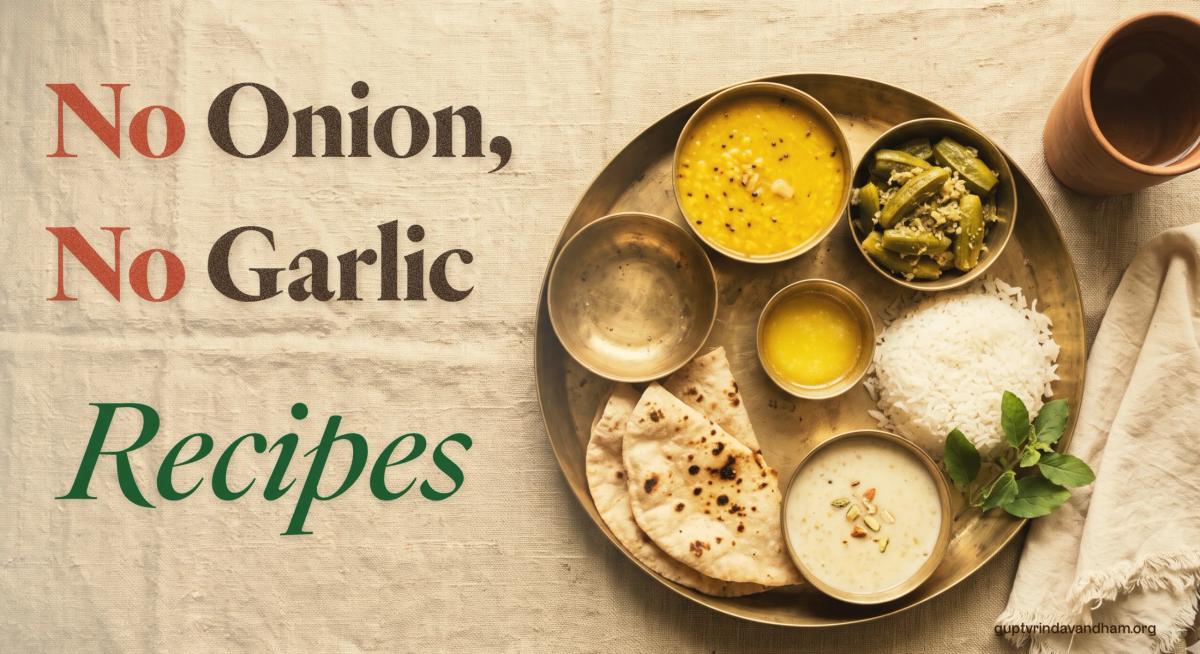
Once the preparations are ready, arrange a portion of each dish on a plate reserved exclusively for Krishna. Place Tulasi leaves on the preparations and keep a glass of fresh water alongside the plate.
Place the bhoga before the Deity or picture of the Lord, chant the prescribed bhoga offering mantras and pray to Krishna to accept your offering. After completing the offering, honour the food as prasadam with your family.
Frequently Asked Questions
What can I use instead of onion and garlic in sattvic cooking?
You can use hing, cumin seeds, ginger, tomatoes, curry leaves and fresh coriander to enhance the flavour of your preparations.
Can these recipes be prepared on Ekadashi?
Not all of them. Grains and pulses are avoided while observing Ekadashi. You should prepare separate dishes using ingredients suitable for the Ekadashi fast.
Can I use ready-made masalas for Krishna bhog?
Yes, provided they do not contain onion, garlic or any other ingredients unsuitable for offering to Krishna.
What dishes can I include in an everyday Krishna bhog thali?
A simple Krishna bhog thali can include chapati, rice, dal, seasonal sabzi, homemade curd and a sweet dish.
Conclusion
Preparing bhoga for Lord Krishna does not require expensive ingredients or elaborate recipes. Even simple preparations like dal, rice and sabzi can be offered to the Lord with love and devotion. By making bhoga offering a part of our daily routine, we can engage our cooking and eating habits in the service of Lord Krishna.