
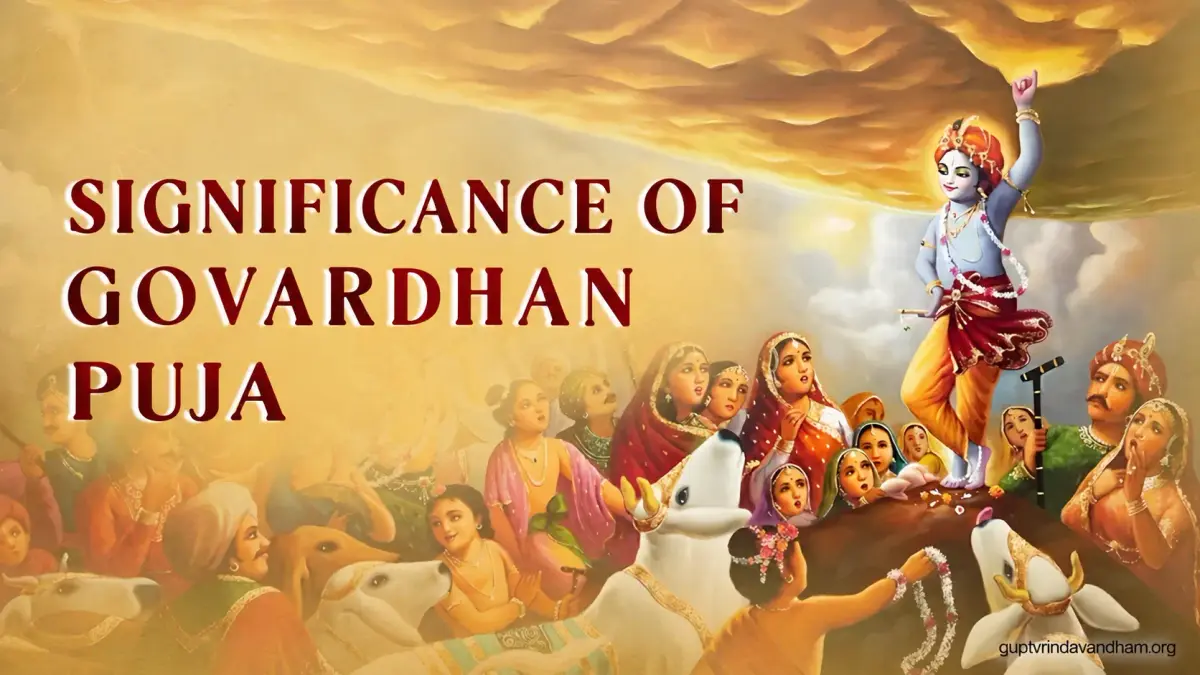
Why do families shape a small hill from cow dung and worship it during Govardhan Puja? Behind this simple tradition lies a loving connection with Krishna, the cows of Vrindavan and Sri Giriraj.
The significance of Govardhan Puja becomes clearer when we understand what its offerings represent. The hill recalls Krishna’s shelter, cow dung connects the worship with the cowherd life of Vraja, and the food offered expresses gratitude to the Lord.
Understanding these meanings can make even a simple offering more personal. Explore the devotion behind this tradition and discover how its lessons of faith, humility and service can become part of everyday life.
What Is the Spiritual Significance of Govardhan Puja?
Govardhan Puja celebrates loving dependence on Lord Krishna. The residents of Vraja trusted His instructions and approached Him for shelter when danger arose.
Their relationship with Krishna was personal and affectionate. They followed Him because He was their dearest Lord, and He protected them as His own family.
The significance of this festival lies in that exchange of love. Devotees remember Krishna’s care and respond through prayer, offerings and service. The detailed Govardhan Lila explains the events behind this devotional relationship.
Why Is Cow Dung Used in Govardhan Puja?
Cow dung, commonly called gobar, is traditionally used to make a small representation of Govardhan Hill. This practice is especially associated with Braj and brings the remembrance of Sri Giriraj into the household.
Its use has three closely connected meanings.
It Represents Sri Giriraj Govardhan
The mound represents the sacred hill worshipped by the residents of Vraja under Krishna’s guidance. Flowers, greenery and small cow figures may be arranged around it to recall the landscape of Vrindavan.
The worship is directed towards Sri Giriraj through this representation. The material helps devotees remember the hill and offer their respects.
It Connects the Worship with Krishna’s Cows
Vrindavan’s daily life centred on caring for cows, tending the land and serving Krishna. Using a material received from the cow keeps that connection present in the worship.
It also reminds worshippers that reverence for cows should be expressed through care. Feeding, sheltering and protecting them gives practical meaning to the respect shown during the festival.
It Has a Traditional Place in Ritual Purity
Cow dung is regarded as a purifying substance in Vedic ritual tradition. Srila Prabhupada discusses this traditional understanding in the introduction to Bhagavad-gita As It Is.
Its use in Govardhan worship belongs to that religious context. The devotional meaning comes from the tradition and the intention to honour Sri Giriraj.
Is Govardhan Puja About Worshipping Cow Dung?
The cow-dung mound is worshipped as a representation of Sri Giriraj. Understanding whom it represents helps explain why devotees approach it with respect.
In Srimad-Bhagavatam 10.24.35, Krishna manifests a great form, identifies Himself with Govardhan and accepts the offerings of the residents of Vraja. This establishes the sacred connection between Govardhan worship and Krishna.
For devotees, the mound becomes a focus for remembrance, prayer and loving offerings to Sri Giriraj.
What Does Govardhan Puja Teach About Humility?
Indra’s pride led him to misuse his authority when his worship was stopped. Krishna corrected that pride while protecting the residents of Vraja.
This teaches a practical lesson: ability, wealth and responsibility should be used in service. They become obstacles when they make us forget our dependence on the Lord.
Govardhan Puja invites devotees to examine their own attitude. An offering made to please Krishna, without seeking recognition, expresses the humility at the heart of devotional service.
How Does Sri Giriraj Teach the Meaning of Service?
Srimad-Bhagavatam 10.21.18 glorifies Govardhan as hari-dasa-varya, the best among the servants of Lord Hari.
Govardhan serves Krishna, Balaram, Their friends and Their cows by providing water, soft grass, caves and other necessities. His service brings nourishment, comfort and pleasure to the Lord and His companions.
This gives devotees a simple example to follow. Service can mean preparing an offering, helping someone take prasadam, caring for animals or assisting others in their worship. Its value lies in the desire to serve.
Why Are Food Offerings Meaningful in Govardhan Puja?
Food offerings express gratitude for the nourishment we receive. Offering food to Krishna turns an everyday necessity into an act of devotion.
The original Govardhan worship included feeding the community and giving grass to the cows. Sharing was therefore part of the celebration from the beginning.
The devotional lesson is generosity: receive with gratitude, offer with love and share with others. Readers looking for the festival observances can explore the Govardhan Puja celebration page.