
 Donate Now
Jaipur, a well-known tourist attraction, is known for its royal legacy and traditional roots. But there is something far beyond this legacy, and inside the cultural vibe lies a spiritual treasure – the magnificent temples of Lord Krishna. The architectural design of the temples is adorned with a traditional Rajasthani look and filled with devotion.
In this blog, we will explore the most famous Krishna temples in Jaipur, its spiritual background, and unique traditions.
1. Govind Dev Ji Temple

Govind Dev Ji is the most famous temple in Jaipur. It houses the deities of Lord Krishna and Shrimati Radha Rani. The environment of this mandir is aromatic and devotional, especially for worship. For years, this has been a heart-touching place of devotion for the Gaudiya Vaishnavas.
History:
Originally, the deity of Govind Dev Ji belonged to Vrindavan, which was installed by the great-grandson of Lord Krishna. During the 17th century, the Mughals attacked the temples of Vrindavan. At that time of danger, Maharaj Sawai Jai Singh II, the devotee of Lord Krishna, brought the deity from Vrindavan to Jaipur in 1735. He established the deity of Govind Dev Ji within the City Palace Complex, in the central part of the eastern direction.
Architectural Design:
The entire temple is inspired by the old Rajasthani traditional look. The pillars, walls, deity place, and roof are beautifully carved like an ancient/ historical monument. It has the largest RCC flat roof, about 119 feet.
Rituals & Festivals:
The most unique aspect of this temple is the seven aartis followed by different dresses and shringar of Goving Dev Ji, including
- Mangala Aarti (early morning),
- Shringar Aarti (dressing),
- Gwal Aarti (mid-morning),
- Rajbhog Aarti (midday offering),
- Utthapan Aarti (afternoon),
- Sandhya Aarti (evening), and
- Shayan Aarti (night rest).
The temple is usually filled with many devotees. During festivals like Janmastmi, Radhastamin, Govardhan Puja, Holi, and others, it is fully decorated with fresh and beautiful flowers, lights, and the blissful kirtan for hours.
2. Gupt Vrindavan Dham
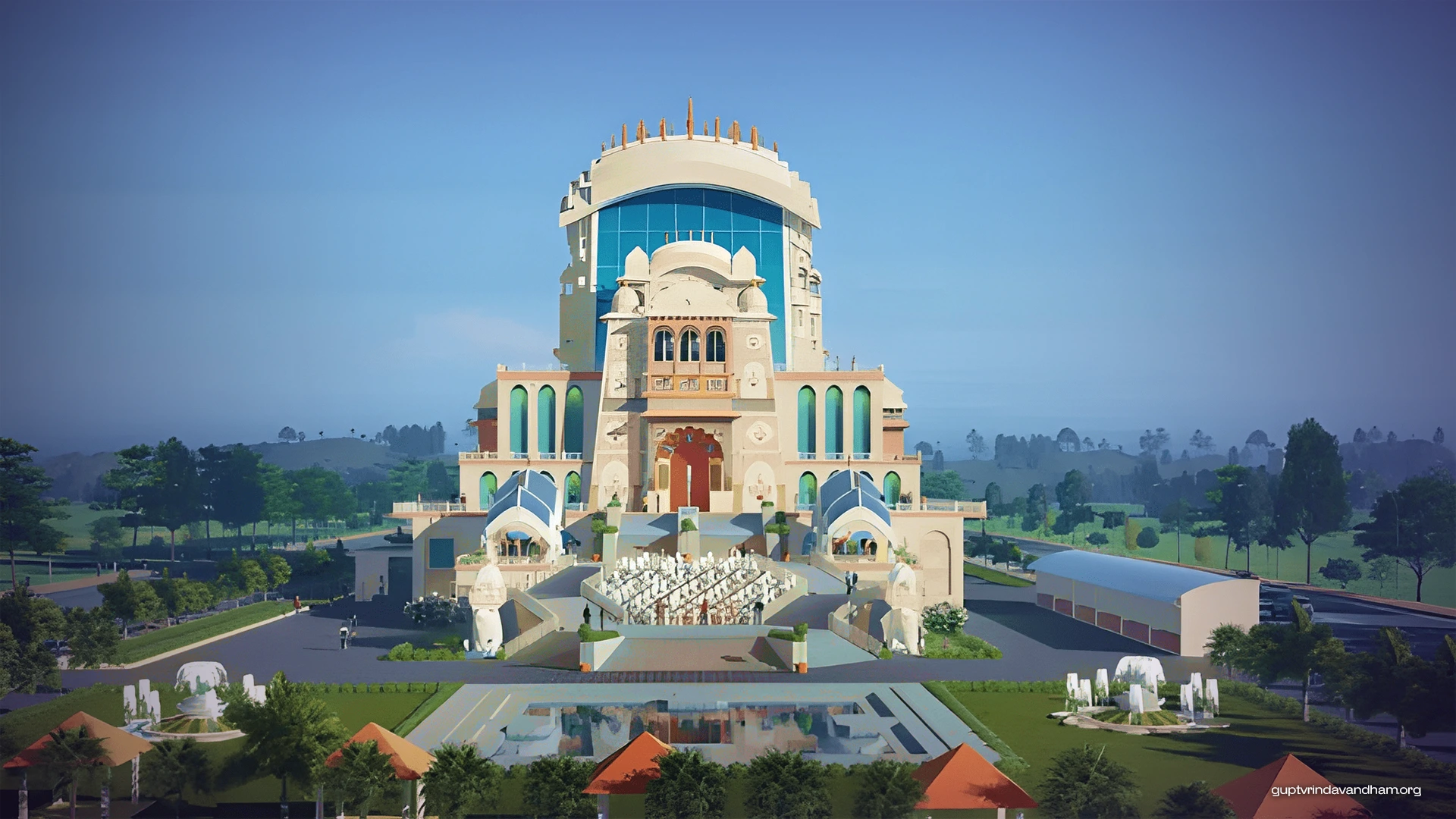
Gupt Vrindavan Dham, the devotional soul of Jagatpura, Jaipur. It houses the deities of Lord Krishna and Lord Balaram. It is entirely designed to bring back the essence of Lord Krishna's divine leelas to the modern hearts. From Tulsi Puja to Harinaam Sankirtan, it spreads Krishna Consciousness by the simple use of modern technology.
It offers various sevas for every age people, cultural and educational camps for the children, Bhagwat Gita sessions for the youth, free Khichdi distribution for the visitors, shelters for the sick and badly wound cows, and many job opportunities for the Lord Krishna’s devotees – to live a life while serving the temple.
The sole purpose is to make Krishna Consciousness affordable, flexible, and more relatable to modern lifestyles.
History:
The name ‘Gupt Vrindavan’ means ‘Hidden Vrindavan’, which typically signifies the essence of Lord Krishna’s divine pastimes. It is entirely inspired by the Hare Krishna Movement, started by His Divine Grace A.C. Bhaktivedanta Swami Srila Prabhupada.
Rituals & Festivals:
The temple schedules different aarti sessions - Mangla Aarti at 5 AM, Tulsi worship, japa meditation, and Shringar Aarti. On weekends, there are special morning sessions, including Lord Krishna leelas, Gaura Katha, Harinaam Sankirtan, and free prasadam.
There are many festivals celebrated in the temple, like Janmashtami, Rath Yatra, Nityananda Trayodashi, Gaura Purnima, and more.
3. Radha Damodar Temple
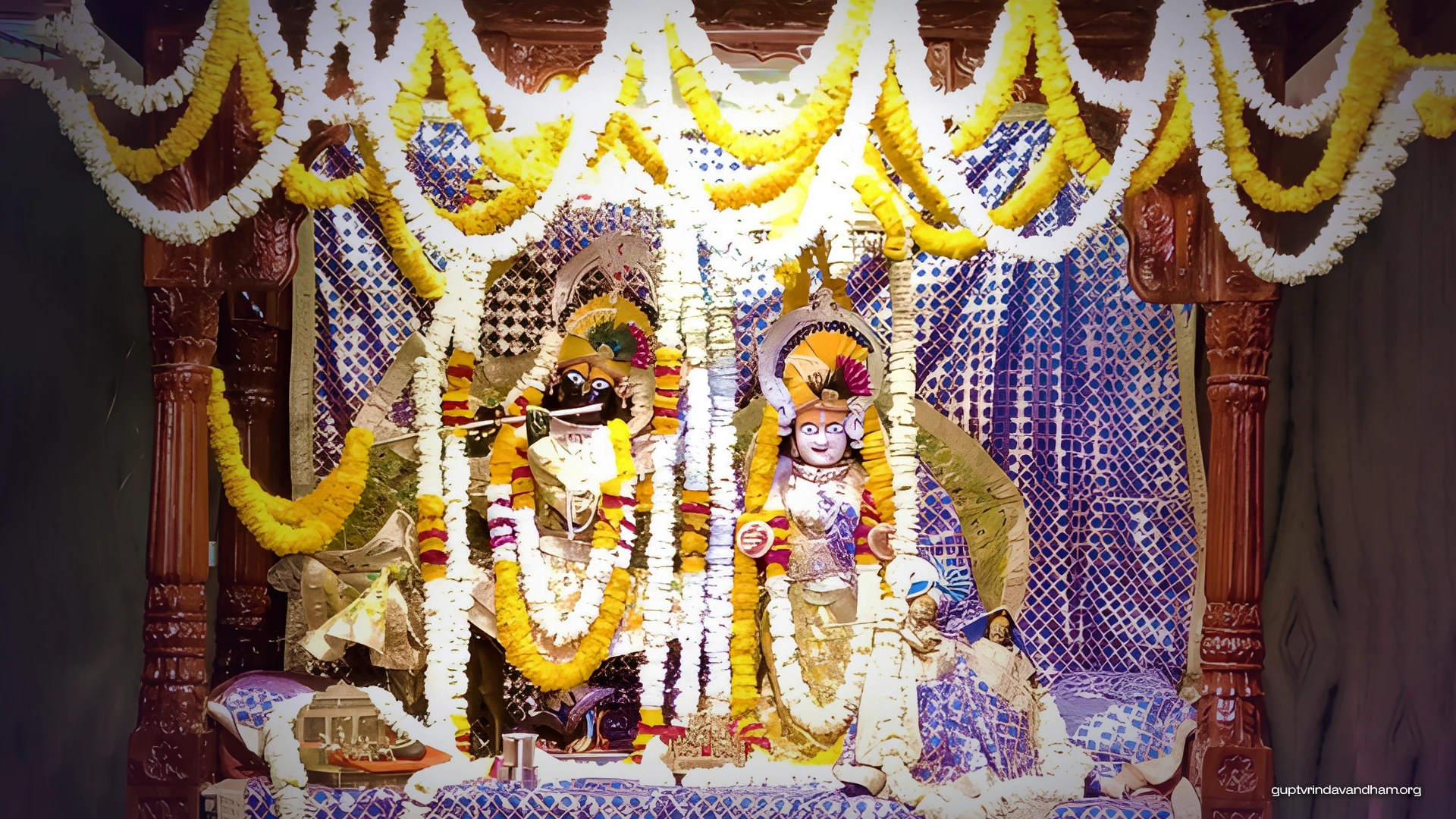
Radha Damodar Temple is well-known among the locals of Jaipur. It houses the deities of Lord Krishna and Shrimati Radha Rani. It is situated near Chaura Rasta, and reflects the original vibes of Vrindavan. Sadhus, Spiritual seekers, Kirtaniyas, and other devotees found this place spiritually magnetic.
History:
The temple replicates the original temple of Radha Damodar in Vrindavan. During the mid-16th century, a great Gaudiya Vaishnava poet named Srila Rupa Goswami worshiped the deity of Radha Damoder personally. After the Mughal attack, the deities were moved to Jaipur for a certain period, and later brought back to Vrindavan.
To continue the worship, the replica deities were installed in this temple. The aura and devotional environment of the temple is as magnificent as the original temple in Vrindavan.
Visitor Information:
The temple opens from 5 AM to 9 PM. On the festivals of Gaura Purnima and Nityananda Trayodashi, and others, the devotees sing Damoder Ashtakam, read scriptures.
4. Radha Ras Bihari Ji
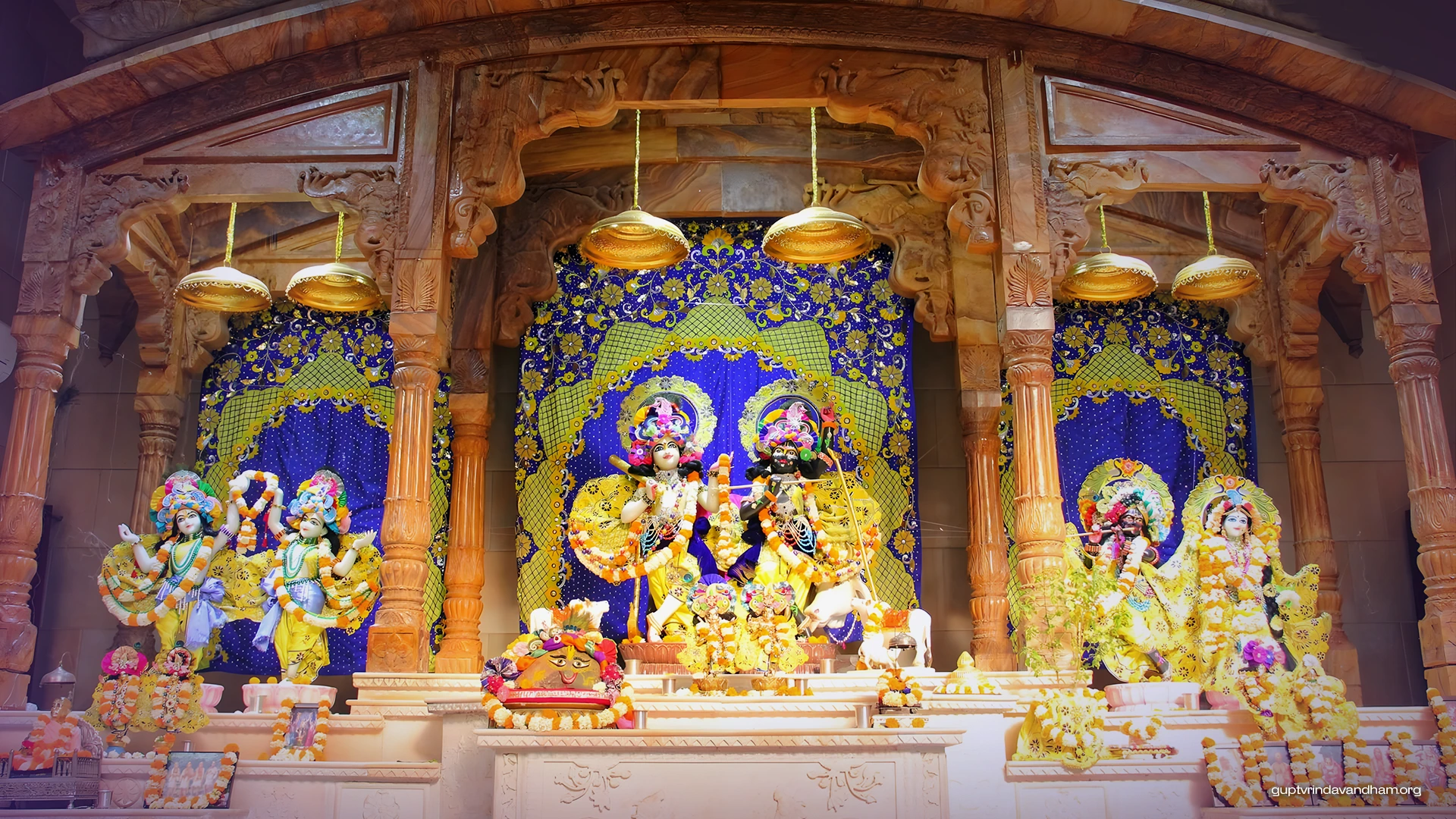
Radha Ras Bihari is a popular ISKCON temple in Jaipur. It houses the deities of Lord Krishna and Srimati Radha Rani. It’s a traditionally designed pilgrimage, located near Mansarovar. By the 2000s, His Divine Grace A.C. Bhaktivedanta Swami Srila Prabhupada established this temple.
The inside environment is so joyful and spiritually engaged, followed by Harnam Sankirtan and prasadam distribution.
Rituals & Festivals:
Every day, the ritual followed an early morning aarti at 4.30 AM and Tulsi Puja. The other includes Srimad Bhagavatam classes, Soulful Harinam Sankirtan, and prasadam distribution.
There are festival celebrations, including Rath Yatra, Gaura Purnima, Radhashtami, Nityananda Trayodashi, Ekadashi, and Kartik Deepdaan.
Temple timing is 4.30 AM to 9 PM.
5. Gopinath Ji Temple
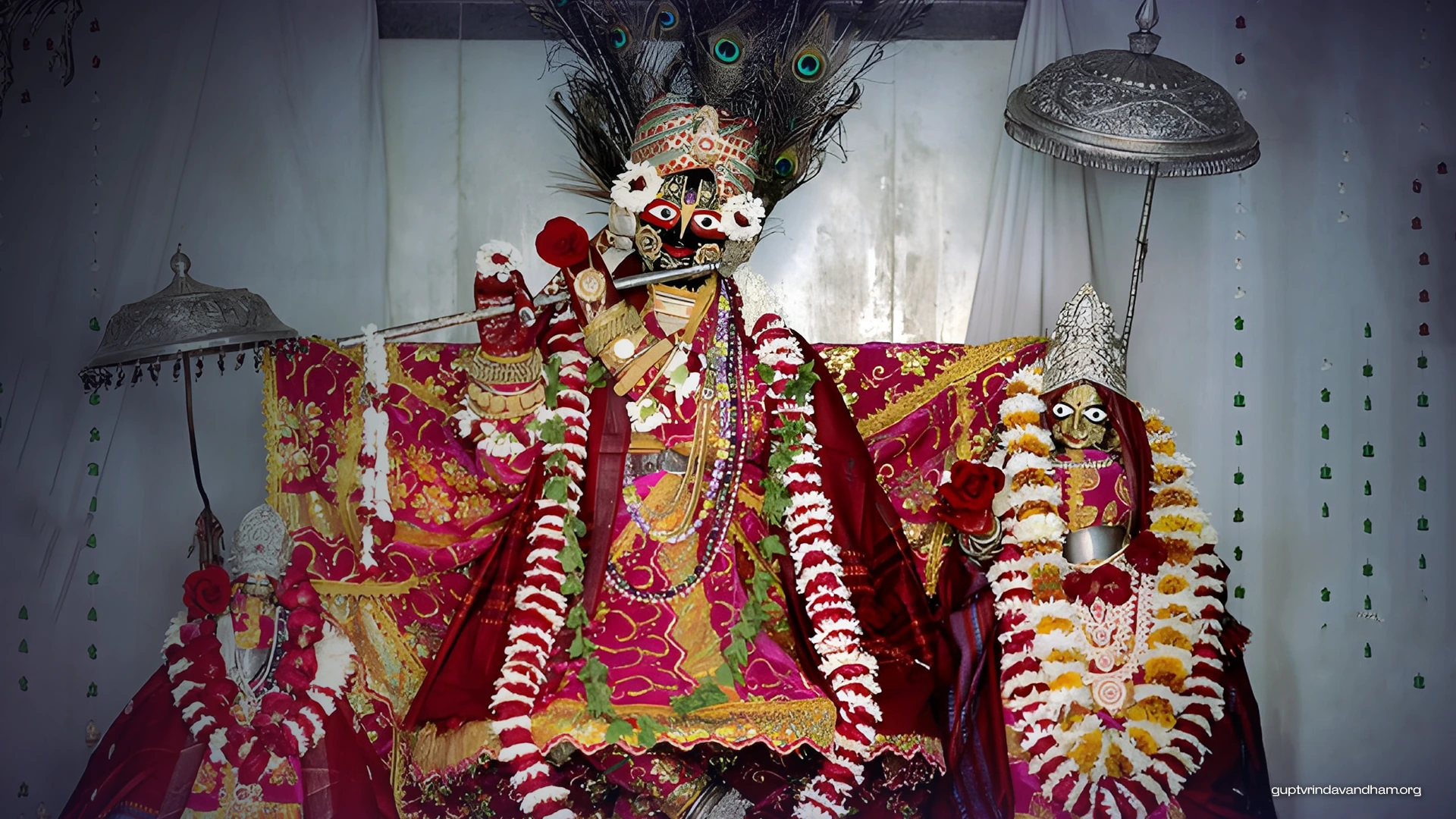
Gopinath Ji Temple is the hidden gem of spirituality, situated on Chandpole Road, Purani Bastir, Jaipur. It houses the deities of Lord Krishna and Srimati Radha Rani. The environment of this temple is is as blissful as the original temples in Vrindavan.
History:
During the 16th century, the deities were originally worshipped by Madhu Pandit, the disciple of Sri Gadadhar Pandit – the close associate of Chaitanaya Mahaprabhu.
By the 17th century, the Mughals attacked Vrindavan. To protect the deities, the temple devotees carefully moved the deities to Jaipur. With the help of the local king in Jaipur, this temple was secretly established, and worship has continued till now.
Rituals & Festivals:
The temple rituals start with a Mangala Aarti, including deities' shringar and various bhog offerings, and end with Shayan Aarti.
There are various festival celebrations, including Janmashtami, Radhashtami, Holi, Kartik Purnima, Phool Bangla festival, and more. The entire festival is decorated beautifully with flowers and lights, and the flavor of Kirtan, all day.
Final Words
Whether you are a royal seeker, a meditator, or a spiritual community seeker, Jaipur is your destination. Visit the Hare Krishna Temples, fill your soul with Harinaam Sankirtan and your taste with mercy prasadam of Lord Krishna.