
 Donate Now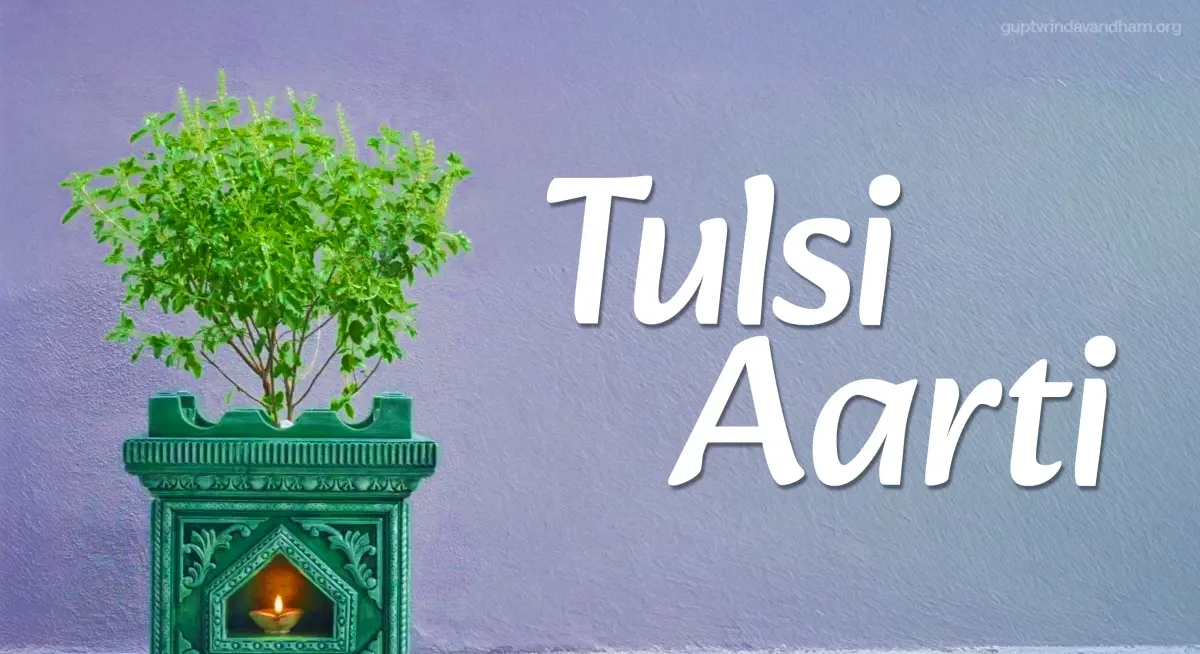
Tulasi Devi is not merely a plant but a pure devotee of Lord Krishna. For a Vaishnava, performing Tulasi Aarti is far more than a daily ritual; it is a heartfelt offering of devotion to Srimati Tulasi Maharani. Devotees worship Tulasi Devi and pray for eternal residence in Vrindavan.
By participating in Tulasi Aarti, devotees humbly seek the mercy of Tulasi Maharani, praying for the strength to practice pure bhakti, knowing that without her mercy, the path to Lord Krishna cannot be reached.
What Is Tulasi Aarti?
An Aarti is a traditional Vedic ceremony representing an offering of light and devotion. Tulasi Aarti involves reciting prayers in glorification of Tulasi Maharani, who is recognized as the Goddess of Devotion. In ISKCON temples, Tulasi Aarti is performed twice daily — in the morning and evening.
During the ceremony, the devotee performing Aarti offers incense, a ghee lamp, and flowers. Others sing the prayers of glorification and beg her mercy. Following the song, it is customary to offer water to her roots and perform parikrama, circumambulation, by walking around her three times, a process said to destroy even the greatest sins.
ISKCON Tulasi Aarti — Complete Lyrics with Meaning
This Aarti is sung by Gaudiya Vaishnavas, including devotees in ISKCON temples, in glorification of Tulasi Devi. It was composed by the great Acharya, Srila Krishnadasa Kaviraja Goswami. Before reciting the Tulasi Aarti, devotees first offer their obeisances by reciting the Tulasi Pranam Mantra.
Tulasi Pranam Mantra
vṛndāyai Tulasi-devyai priyāyai keśavasya ca
viṣṇu-bhakti-prade devī satya vatyai namo namaḥ
vrndayai — unto Vrnda; Tulasi-devyai — unto Tulsi Devi; priyayai — who is dear; kesavasya — to Lord Kesava; ca — and; viṣṇu-bhakti — devotional service to Lord Vishnu; prade — who bestows; devi — O goddess; satya-vatyai — unto Satyavati; namah namah — repeated obeisances.
Translation: I offer my repeated obeisances unto Vrinda, Srimati Tulasi Devi, who is very dear to Lord Kesava. O goddess, you bestow devotional service to Krishna and you possess the highest truth.
Tulasi Aarti
namo namaḥ Tulasi kṛṣṇa-preyasi namo namaḥ
rādhā-kṛṣṇa-sevā pābo ei abilāṣī
namo namaḥ — bowing again and again; Tulasi — O Tulasi; kṛṣṇa-preyasī — O beloved of Kṛṣṇa; namo namaḥ — repeated obeisances; rādhā-kṛṣṇa-sevā — the service of Śrī Śrī Rādhā and Kṛṣṇa; pābo — I will obtain; ei — this; abhilāṣī — I am desirous.
Translation: O Tulasi, beloved of Krishna, I bow before you again and again. My desire is to obtain the service of Sri Sri Radha and Krishna.
ye tomāra śaraṇa loy, tara vāñchā pūrṇa hoy
kṛpā kori’ koro tāre vṛndāvana-vāsi
ye — whoever; tomāra — your; śaraṇa loy — takes shelter; tāra — his; vāñchā — desires; pūrṇa hoy — are fulfilled; kṛpā kori' — being merciful; koro — you make; tāre — him; vṛndāvana-vāsī — a resident of Vrindavana.
Translation: Whoever takes shelter of you has his wishes fulfilled. Bestowing your mercy on him, you make him a resident of Vrindavana.
mora ei abhilāṣa, vilāsa kuñje dio vāsa
nayana heribo sadā yugala-rūpa-rāśi
mora — my; ei — this; abhilāṣ — desire; vilās kuñje — in the pleasure groves; dio — please give; vās — a residence; nayane — with my eyes; heribo — I will behold; sadā — always; yugala-rūpa-rāśī — the waves of the Divine Couple's beauty.
Translation: My desire is that you will also give me a residence in the pleasure groves of Sri Vrindavana-dhama. Thus within my vision I will always behold the beautiful pastimes of Radha and Krishna.
ei nivedana dhara, sakhīra anugata koro
sevā-adhikāra diye koro nīja dāsī
ei nivedana — this request; dharo — please keep; sakhīra — of one of the cowherd damsels; anugata koro — make me a follower; sevā-adhikāra — the privilege of devotional service; diye — bestowing; koro — please make; nija dāsī — your own maidservant.
Translation: I beg you to make me a follower of the cowherd damsels of Vraja. Please give me the privilege of devotional service and make me your own maidservant.
dīna kṛṣṇa-dāse koy, ei yena mora hoy
śrī-rādhā-govinda-preme sadā yena bhāsi
dīna kṛṣṇa-dāse — the fallen and lowly servant of Kṛṣṇa, named Kṛṣṇadāsa; koy — prays; ei — this; yena — just like; mora hoy — is mine; śrī-rādhā-govinda-preme — in the ecstatic love for Śrī Rādhā and Govinda; sadā — always; yena — just like; bhāsi — swimming.
Translation: This very fallen and lowly servant of Krsna prays, “May I always swim in the love of Sri Radha and Govinda.”
Tulasi Pradakshina Mantra
yāni kāni ca pāpāni brahma-hatyādikāni ca
tāni tāni praṇaśyanti pradakṣiṇaḥ pade pade
yāni kāni — whatever; ca — and; pāpāni — sins; brahma-hatya — killing of a brāhmaṇa; ādikāni — and so on; ca — also; tāni tāni — all of them; praṇaśyanti — are destroyed; pradakṣiṇaḥ — by the circumambulation of Tulasi Devī; pade pade — at every step.
Translation: By the circumambulation of Srimati Tulasi Devi, all the sins that one may have committed are destroyed at every step, even the sin of killing a brahmana.
While collecting Tulasi leaves from the plant, the following mantra should be chanted:
tulasy amṛta-janmāsi sadā tvaṁ keśava-priya
keśavārthaṁ cinomi tvāṁ varadā bhava śobhane
Translation: O Tulasi, you were born from nectar. You are always very dear to Lord Kesava. Now, in order to worship Lord Kesava, I am collecting your leaves and manjaris. Please bestow your benediction on me.
Mood While Reciting the Prayers
The mood of a devotee while reciting these prayers should be one of humbly begging for the mercy of Srimati Tulasi Maharani. She is eternally engaged in the loving service of Sri Sri Radha and Krishna in Goloka Vrindavan. If we sincerely serve her with a prayerful heart, she bestows upon us eternal residence in Vrindavan.
Benefits of Chanting Tulasi Mantras
| Benefit | Scripture | Reference |
|---|---|---|
| Purification of consciousness | Padma Purana | Simply seeing, touching, or worshipping Tulasi purifies one and grants liberation. |
| Lord Krishna's mercy | Hari Bhakti Vilasa | Compiles Vaishnava teachings on wearing and worshipping Tulasi to attain Lord Krishna's mercy. |
| Protection from inauspiciousness | Skanda Purana | Yamaraja himself instructs his messengers to stay away from anyone who wears or chants Tulasi's name. |
| Destruction of sins | Brihan Naradiya Purana | Cleaning the area around the Tulasi plant's roots destroys the grievous sin of killing a brahmana. |
Conclusion
Worshiping Tulasi Devi or reciting Tulasi Aarti is much more than a daily ritual. It is an act of devotion to her, which makes us eligible to receive her mercy.
There are so many spiritual benefits for a worshiper, but the mood of a devotee should be sincere service to her, which can attract the mercy of Tulasi Devi and Lord Krishna.