
 Donate Now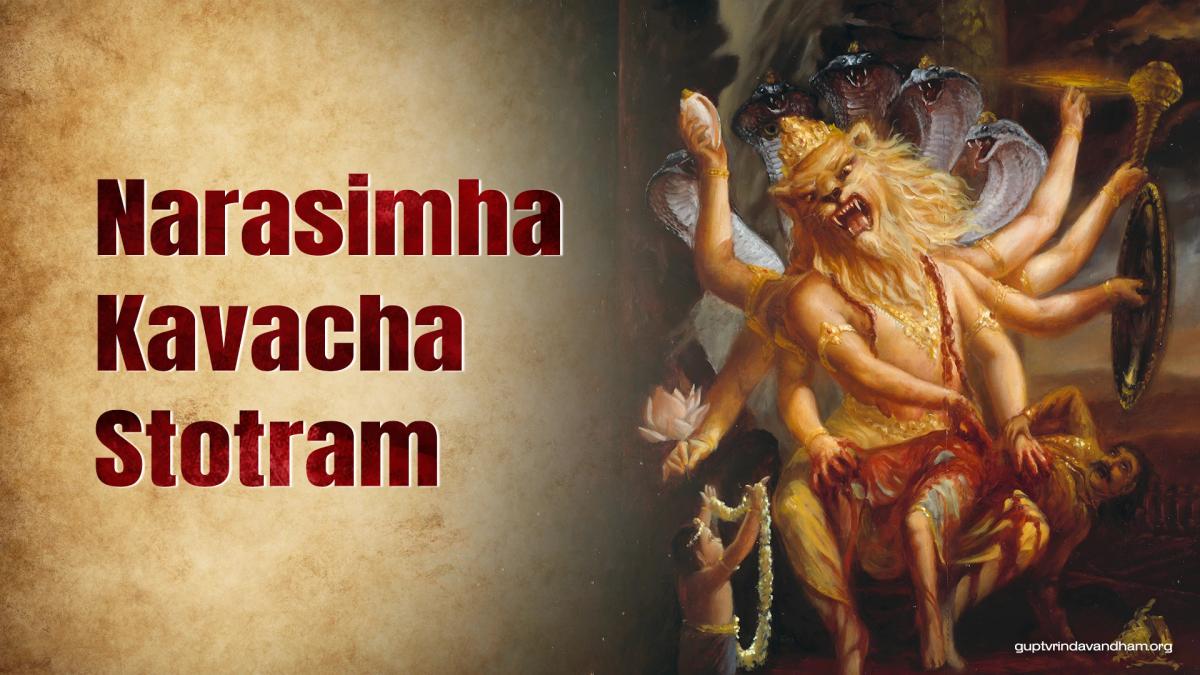
The Narasimha Kavacha Stotram is a sacred hymn that serves as a direct channel to this divine protection. It is a powerful and most pious prayer, a spiritual shield revealed by the paramount devotee, Prahlada Maharaja. This sacred armor, when worn with faith, envelops the chanter in the Lord's protective energy. Let us now delve into the Narasimha Kavacha Stotram meaning, sacred origin, and transformative power of this revered hymn.
What is Narasimha Kavacha Stotram?
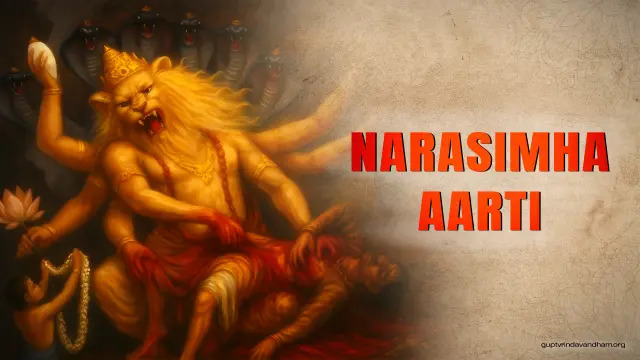
Narasimha Kavacha Stotram is a powerful Sanskrit hymn dedicated to Lord Narasimha, the half-man, half-lion incarnation of Lord Vishnu. The word "Kavacha" means armour or shield, and this stotra is meant to protect the devotee from all dangers, fears, and negative influences.
Glories of Narasimha Kavacha Strotram?
The Narasimha Kavacha Stotra is a profoundly powerful protective mantra originating from the Brahmanda Purana, and is said to have been spoken by Prahlada Maharaja, the fearless child devotee of Lord Narasimha. This sacred hymn is revered as the "Mantra-Rāja"—the king of all mantras—due to its immense potency in bestowing protection, prosperity, and spiritual elevation.
It is believed that one who chants this kavacha with devotion is granted all material opulences and spiritual strength, and ultimately attains higher realms, including the heavenly planets or Vaikuntha. Before reciting the stotra, it is recommended to first meditate deeply on the transcendental form of Lord Narasimha, especially as vividly described in verses 3 to 6 of the stotra. These verses portray His fierce yet divine appearance, evoking a mood of both awe and surrender.
By invoking Lord Narasimha’s protection through this stotra, devotees align themselves with divine shelter, transcending fear, negativity, and illusion.
Narasimha Kavacha Stotram Prayer
Sri Narasimha Kavacha Mantra
1
nṛsiṁha-kavacaṁ vakṣye prahlādenoditaṁ purā
sarva-rakṣā-karaṁ puṇyaṁ sarvopadrava-nāśanam
Meaning: I shall now recite the Nṛsiṁha-kavaca, formerly spoken by Prahlāda Mahārāja. It is most pious, vanquishes all kinds of impediments, and provides one all protection.
sarva-saṁpat-karaṁ caiva svarga-mokṣa-pradāyakam
dhyātvā nṛsiṁhaṁ deveśaṁ hema-siṁhāsana-sthitam
Meaning: It bestows upon one all opulences and can give one elevation to the heavenly planets or liberation. One should meditate on Lord Nṛsiṁhadeva, Lord of the universe, seated upon a golden throne.
vivṛtāsyaṁ tri-nayanaṁ śarad-indu-sama-prabham
lakṣmyāliṅgita-vāmāṅgaṁ vibhūtibhir upāśritam
Meaning: His mouth is wide open, and He has three eyes. He is as radiant as the autumn moon. His left side is embraced by mother Lakṣmīdevī, and His form is the shelter of all opulences, both material and spiritual.
catur-bhujaṁ komalāṅgaṁ svarṇa-kuṇḍala-śobhitam
śriyāsu śobhitoraskaṁ ratna-keyūra-mudritam
Meaning: The Lord has four arms, and His limbs are very soft. He is decorated with beautiful golden earrings. His powerful chest is resplendent like the lotus flower, and His arms are decorated with jewel-studded ornaments.
tapta-kāñcana-sankāśaṁ pīta-nirmala-vāsasam
indrādi-sura-maulistha sphuran māṇikya-dīptibhiḥ
Meaning: He is dressed in a spotless yellow garment, which exactly resembles molten gold. He is the original cause of existence, beyond the mundane sphere. He is the crowning glory of the demigods such as Indra, the king of heaven. He is bedecked with rubies which are blazingly effulgent.
virājita-pada-dvandvaṁ śaṅkha-cakrādi-hetibhiḥ
garutmatā ca vinayāt stūyamānaṁ mudānvitam
Meaning: His feet are very attractive, and He is armed with various weapons such as the conch, chakra, and other divine weapons. He is always filled with great joy. Garuḍa constantly offers Him humble prayers with great reverence.
sva-hṛt-kamala-saṁvāsaṁ kṛtvā tu kavacaṁ paṭhet
nṛsiṁho me śiraḥ pātu loka-rakṣātma-sambhavaḥ
Meaning: Having seated Lord Nṛsiṁhadeva upon the lotus of one’s heart, one should recite the following mantra:
May Lord Nṛsiṁhadeva, who protects all the planetary systems, please protect my head.
sarvago ’pi staṁbha-vāsaḥ phālaṁ me rakṣatu dhvanim
nṛsiṁho me dṛśau pātu soma-sūryāgni-locanaḥ
Meaning: Although the Lord is all-pervading, He hid Himself within a pillar. May He please protect my speech and the results of all my activities. May Lord Nṛsiṁhadeva, whose eyes are the sun, and fire, please protect my eyes.
smṛtiṁ me pātu nṛhariḥ muni-varya-stuti-priyaḥ
nāsāṁ me siṁha-nāsas tu mukhaṁ lakṣmī-mukha-priyaḥ
Meaning: May Lord Nṛhari, who is pleased by the prayers offered by the best of sages, please protect my memory. May He who has the nose of a lion please protect my nose, and may He whose face is very dear to the goddess of fortune please protect my mouth.
sarva-vidyādhipaḥ pātu nṛsiṁho rasanāṁ mama
vaktraṁ pātv indu-vadanaḥ sadā prahlāda-vanditaḥ
Meaning: May Lord Nṛsiṁhadeva, who is the knower of all sciences, please protect my sense of taste. May He whose face is as beautiful as the full moon and who is offered prayers by Prahlāda Mahārāja please protect my face.
nṛsiṁhaḥ pātu me kaṇṭhaṁ skandhau bhū-bharaṇānta-kṛt
divyāstra-śobhita-bhujaḥ nṛsiṁhaḥ pātu me bhujau
Meaning: May Lord Nṛsiṁhadeva please protect my throat. He is the sustainer of the earth and the performer of unlimitedly wonderful activities. His arms are resplendent with transcendental weapons. May He please protect my shoulders.
karau me deva-varado nṛsiṁhaḥ pātu sarvataḥ
hṛdayaṁ yogi-sādhyaś ca nivāsaṁ pātu me hariḥ
Meaning: May the Lord, who bestows benedictions upon the demigods, please protect my hands, and may He please protect me from all sides. May He who is achieved by the perfect yogīs please protect my heart, and may Lord Hari please protect my dwelling place.
madhyaṁ pātu hiraṇyākṣa-vakṣaḥ-kukṣi-vidāraṇaḥ
nābhiṁ me pātu nṛhariḥ sva-nābhi-brahma-saṁstutaḥ
Meaning: May He who ripped apart the chest and abdomen of the great demon Hiraṇyakaśipu please protect my waist, and may Lord Nṛhari please protect my navel. He is offered prayers by Lord Brahmā, who has sprung from His own navel.
brahmāṇḍa-koṭayaḥ kaṭyāṁ yasyāsau pātu me kaṭim
guhyaṁ me pātu guhyānāṁ mantrāṇāṁ guhya-rūpa-dhṛk
Meaning: May He, on whose hips rest all the universes please protect my hips. May the Lord please protect my private parts. He is the knower of all mantras and all mysteries, but He Himself is not visible.
ūrū manobhavaḥ pātu jānunī nara-rūpa-dhṛk
jaṅghe pātu dharā-bhāra-hartā yo ’sau nṛ-kesarī
Meaning: May He who is the original Cupid please protect my thighs. May He who exhibits a human-like form please protect my knees. May the remover of the burden of the earth, who appears in a form of a half-man half-lion, please protect my calves.
sura-rājya-pradaḥ pātu pādau me nṛharīśvaraḥ
sahasra-śīrṣā-puruṣaḥ pātu me sarvaśas tanum
Meaning: May the bestower of heavenly opulence please protect my feet. He is the Supreme Controller in the form of a man and lion combined. May the thousand-headed Supreme enjoyer please protect my body from all sides and in all respects.
mahograḥ pūrvataḥ pātu mahā-vīrāgrajo ’gnitaḥ
mahā-viṣṇur dakṣiṇe tu mahā-jvālas tu nairṛtau
Meaning: May that most ferocious personality please protect me from the east. May He who is superior to the greatest heroes please protect me from the southeast, which is presided over by Agni. May the Supreme Viṣṇu please protect me from the south, and may that Supreme Person of blazing luster please protect me from the southwest.
paścime pātu sarveśo diśi me sarvatomukhaḥ
nṛsiṁhaḥ pātu vāyavyāṁ saumyāṁ bhīṣaṇa-vigrahaḥ
Meaning: May the Lord who is all-pervading please protect me from the west. His faces are everywhere, so may He please protect me from this direction. May Lord Nṛsiṁhadeva please protect me from the northwest, which is predominated by Vāyu, and may He whose form is in itself the supreme ornament please protect me from the north, where Soma resides.
īśānyāṁ pātu bhadro me sarva-maṅgala-dāyakaḥ
saṁsāra-bhayataḥ pātu mṛtyor mṛtyur nṛ-kesarī
Meaning: May the all-auspicious Lord, who Himself bestows all-auspiciousness, please protect me from the northeast, the direction of the sun-god. May He who is death personified please protect me from the fear of death and rotation in this material world.
garjantaṁ garjayantaṁ nija-bhuja-paṭalaṁ sphoṭayantaṁ harantaṁ
dīpyantaṁ tāpayantaṁ divi bhuvi ditijaṁ kṣepayantaṁ kṣipantam
krandantaṁ roṣayantaṁ diśi diśi satataṁ saṁharantaṁ bharantaṁ
vīkṣantaṁ ghūrṇayantaṁ kara-nikara-śatair divya-siṁhaṁ namāmi
Meaning: Lord Nṛsiṁhadeva roars loudly and causes others to roar. With His multitudes of arms, He tears the demons asunder and kills them in this way. He is always seeking out and tormenting the demoniac descendants of Diti, both on this earth planet and in the higher planets, and He throws them down and scatters them.
He cries with great anger as He destroys the demons in all directions, yet with His unlimited hands He sustains, protects, and nourishes the entire cosmic manifestation. I offer my respectful obeisances to the Lord, who has assumed the form of a transcendental lion.
iti shri-brahmanda-purane prahladoktam shri-narasimha-kavacam sampurnam
Thus ends the Narasimha-kavaca as it is described by Prahlada Maharaja in the Brahmanda Purana.
Ugram Viram Mahavishnum
Official Name: Narsimha Kavacha Bija Mantra
ugram viram maha-vishnum
jvalantam sarvato mukham
nrisimham bhishanam bhadram
mrityur mrityum namamy aham
Ugram Viram Mahavishnum Translation
'May my head be protected by the moon colored one, who is the greatest among humans. My obeisances unto the ferocious and powerful, the great Vishnu, the fiery one, whose faces are on all sides, the fearful one, Narasimha, who causes the death of even death personified, (or who can overcome
death).
How to Chant the Narasimha Kavacha Stotram with Devotion
The act of chanting the Kavacha is a sacred ritual of surrender, a moment where the devotee consciously places themselves under the Lord's care. To engage in this practice effectively, the internal disposition of the heart is just as crucial as the correct external recitation of the verses. The prayer itself guides the practitioner on how to begin.
The primary prerequisite for chanting is meditation. Before reciting the Kavacha, one should first meditate on the transcendental form of Lord Narasimhadeva.
The stotra’s opening verses provide a vivid and immersive description for this purpose: one should meditate on the Lord seated on a golden throne,
His mouth wide open, His three eyes as radiant as the autumn moon, and His left side embraced by mother Lakṣmīdevī.
The instructions specify that one should perform this meditation by "Having seated Lord Nṛsiṁhadeva upon the lotus of one’s heart."
To experience the full potency of the Narasimha Kavacha Stotram, it must be chanted with a pure heart, unwavering faith, and a mood of complete surrender.
When the heart is purified, the mantra becomes a direct conversation with the Lord. It is this combination of focused meditation and heartfelt devotion that transforms the prayer from a recitation into a powerful experience of divine shelter, bestowing upon the devotee its manifold blessings.