
 Donate Now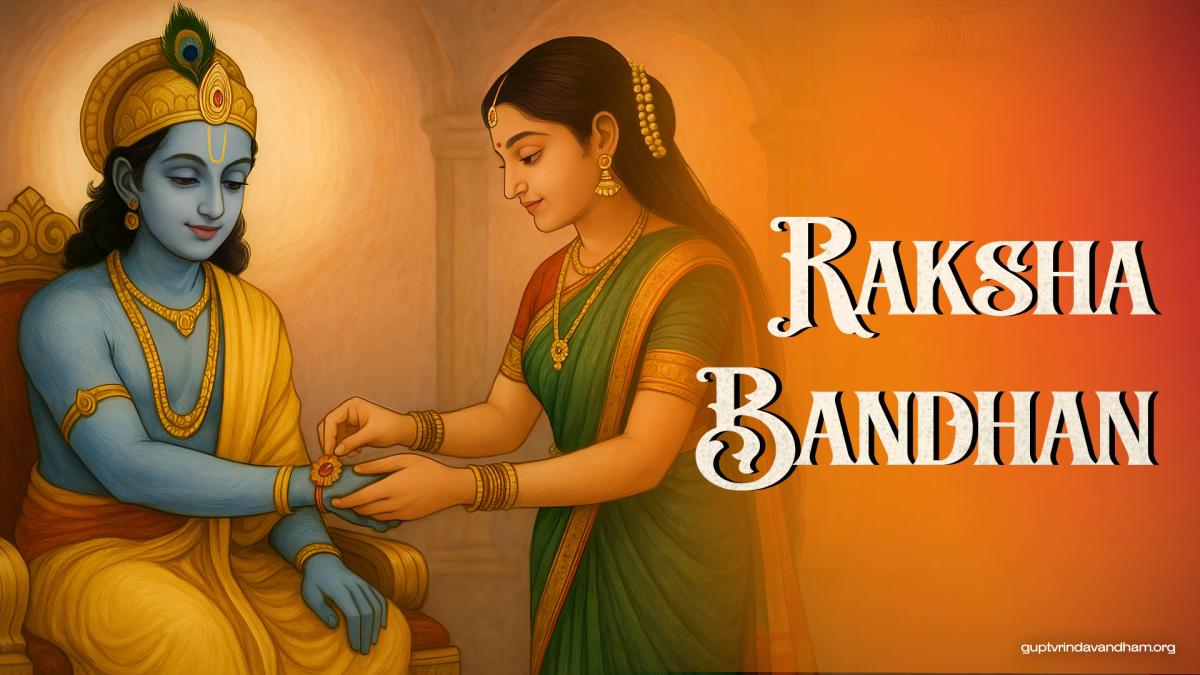
Raksha Bandhan is widely celebrated across India and in countries such as Nepal and Bangladesh. The festival of Rakhi strengthens the bonds of love, trust, and protection between brothers and sisters. Every year, sisters tie a Rakhi on their brothers' wrists while praying for their well-being, and brothers promise to protect and support them.
The Rakhi symbolizes a sacred promise to care for one another and remain protected in both material and spiritual life. When this bond is centered on Lord Krishna, it reminds us that the highest and ultimate protection comes from the Lord.
Raksha Bandhan 2026: Exact Date and Day
| Festival detail | Timing |
|---|---|
| Raksha Bandhan date | Friday, 28 August 2026 |
| Purnima begins | 9:08 AM, 27 August 2026 |
| Purnima ends | 9:48 AM, 28 August 2026 |
| Bhadra kaal | Ends before sunrise |
| Rahu Kaal (avoid) | 10:46 AM – 12:22 PM |
Unlike festivals fixed to the solar calendar, Raksha Bandhan follows the lunar tithi. Therefore, its Gregorian date changes every year.
Shubh Muhurat for Tying Rakhi in 2026
| City | Sunrise (Aug 28, 2026) |
|---|---|
| Kolkata | 5:17 AM |
| Patna | 5:13–5:16 AM |
| Varanasi | 5:20–5:23 AM |
| Lucknow | 5:25–5:28 AM |
| Delhi | 5:57 AM |
| Jaipur | 6:04 AM |
| Hyderabad | 5:50 AM |
| Bengaluru | 5:55–6:00 AM |
| Ahmedabad | 6:05–6:08 AM |
| Mumbai | 6:22 AM |
What Rakhi Really Means: A Thread of Protection
The Sanskrit words raksha and bandhan mean “protection” and “bond.” A Rakhi, therefore, is a sacred thread that represents a brother’s lifelong promise to protect his sister.
Complete protection can only be given by the Lord—protection from birth, death, old age, disease, and all the miseries of life. Therefore, brothers and sisters pray to the Lord for each other’s protection and spiritual well-being.
The Ancient Origins of Raksha Bandhan
Raksha Bandhan is associated with several stories that took place in different ages. These stories show how a relationship becomes stronger after accepting the sacred thread.
Yama and Yamuna: The Bond Between Siblings
Once, Yama, the god of death, was unable to visit his sister Yamuna for many years because of his duties. She felt sad and deeply missed her brother. On Ganga’s suggestion, Yama finally visited Yamuna. She welcomed him with love, served him food, and tied a Rakhi on his wrist while praying for his well-being.
Yama asked what she desired, and Yamuna requested him to visit her more often. Yama agreed and declared that any brother who receives a Rakhi from his sister with such love would be blessed with a long life.
Krishna and Draupadi: A Beloved Devotional Tradition
In Dwarka, while Lord Krishna was peeling sugarcane, He accidentally cut His finger, and it began to bleed. While His queens searched for a cloth to cover the wound, Draupadi immediately tore a strip from her sari and tied it around His finger.
Moved by her selfless act, Lord Krishna promised to protect her in every situation. This promise was later fulfilled in the assembly of the Kauravas.
Lakshmi and King Bali
Another significant story associated with Raksha Bandhan involves King Bali and Goddess Lakshmi. Lord Vishnu, in His Vamana avatar, was so pleased with Bali’s complete surrender that He agreed to remain as Bali’s gatekeeper.
Seeking to bring her husband back to Vaikuntha, Goddess Lakshmi approached Bali and asked him to accept her as his sister. She tied a Rakhi on Bali’s wrist, and when he offered her a gift, she requested the return of Lord Vishnu. Bound by his promise and the sacred bond of Rakhi, Bali allowed Lord Vishnu to return with her.
How to Celebrate Raksha Bandhan: Rituals and Traditions
Families may begin the day by waking up early during Brahma Muhurta, taking a bath, and wearing clean clothes. The day can begin with the worship of Lord Vishnu and prayers for His complete protection over the family.
Arrange a simple puja thali with Rakhi, diya, kumkum, akshat, flowers, and sweets or prasadam. The sister applies tilak, places akshat, ties the Rakhi on the right wrist, and offers a prayer to the Lord for the recipient’s well-being. The brother or recipient offers blessings, gratitude, and a sincere promise of care.
The Raksha Bandhan celebration can be made more spiritual by first offering sweets to the Lord, chanting together, reading the Bhagavad Gita, or performing seva in temples.
Celebrating Raksha Bandhan with Lord Krishna at Gupt Vrindavan Dham
At Gupt Vrindavan Dham, families may seek darshan, offer prayers, participate in devotional activities, and honour prasadam. Rather than treating Rakhi only as a social custom, we can offer a Rakhi to Lord Krishna and seek His eternal shelter and divine protection.
Everyone needs protection, but no one can provide ultimate protection, because Lord Krishna is the supreme protector of all. Keeping this in mind, both brother and sister pray to the Lord for each other’s protection and spiritual advancement.
Conclusion
Raksha Bandhan is much more than a festive tradition—it is a celebration of prayer, responsibility, and the sacred bond of loving protection. When family relationships are centered on the remembrance of Lord Krishna, they nurture not only material well-being but also spiritual growth.
Families can make this occasion even more meaningful by engaging in devotional seva at Gupt Vrindavan Dham and seeking the eternal blessings and protection of the Lord.