
 Donate Now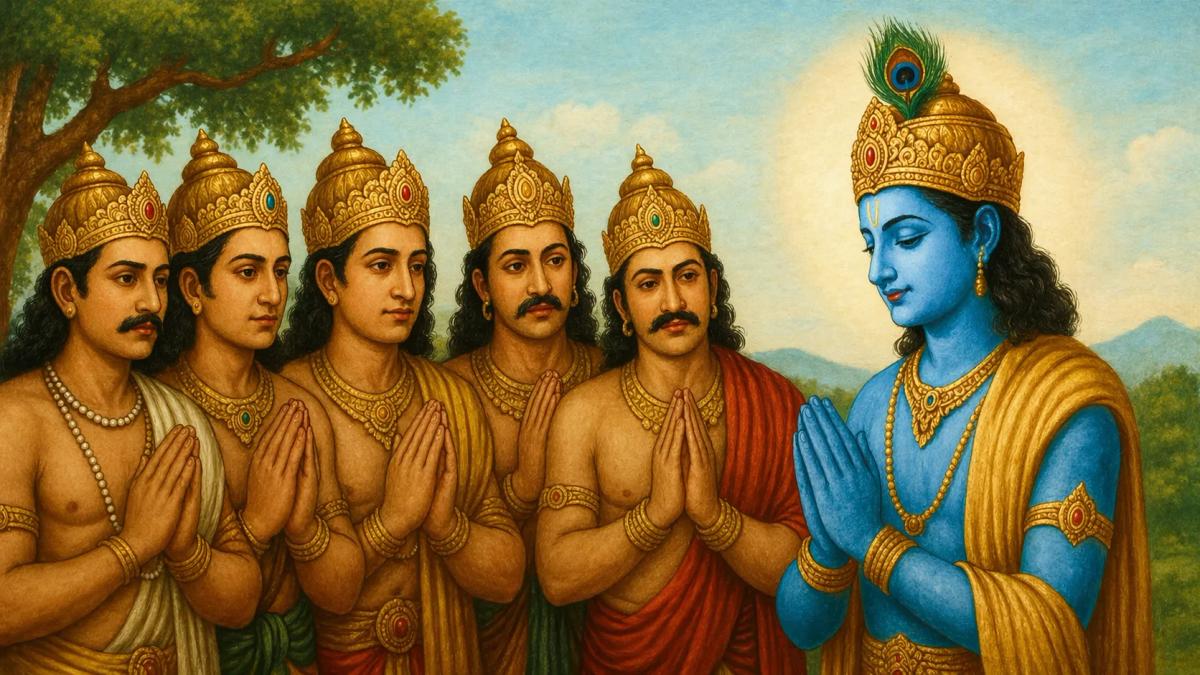
The Nirjala Ekadashi 2026 will be observed on Thursday, June 25, as per the Vaishnava Calendar. This ekadashi is the most spiritually powerful observance among the 24 annual Ekadashi fasts in the Vaishnava tradition, offering a religious alternative for believers who cannot observe all the 24 Ekadashi fasts due to work, health, or life pressures.
Also known as Pandava Nirjala Ekadashi, Bhimseni Ekadashi, Nirjala Gyaras and Bhim Agigyaras. Its name explicitly reflects its strict fasting requirements: unlike other Ekadashi fasts that allow consumption of fruits and milk, the Nirjala Ekadashi fast must be observed from sunrise to the next sunrise, requiring a complete 24-hour period without food and water.
During the fast, devotees should engage only in devotional practices, scripture recitation, and chanting of the Hare Krishna Mahamantra. In addition, it is said that this fast also accumulates the combined spiritual merits of all Ekadashis.
In this guide, we'll explore Nirjala Ekadashi in detail, including the exact date and time, Vrat Katha, Puja Vidhi, fasting rules, the exact Parana time, and common things to avoid so that you can attain the mercy of this auspicious day.
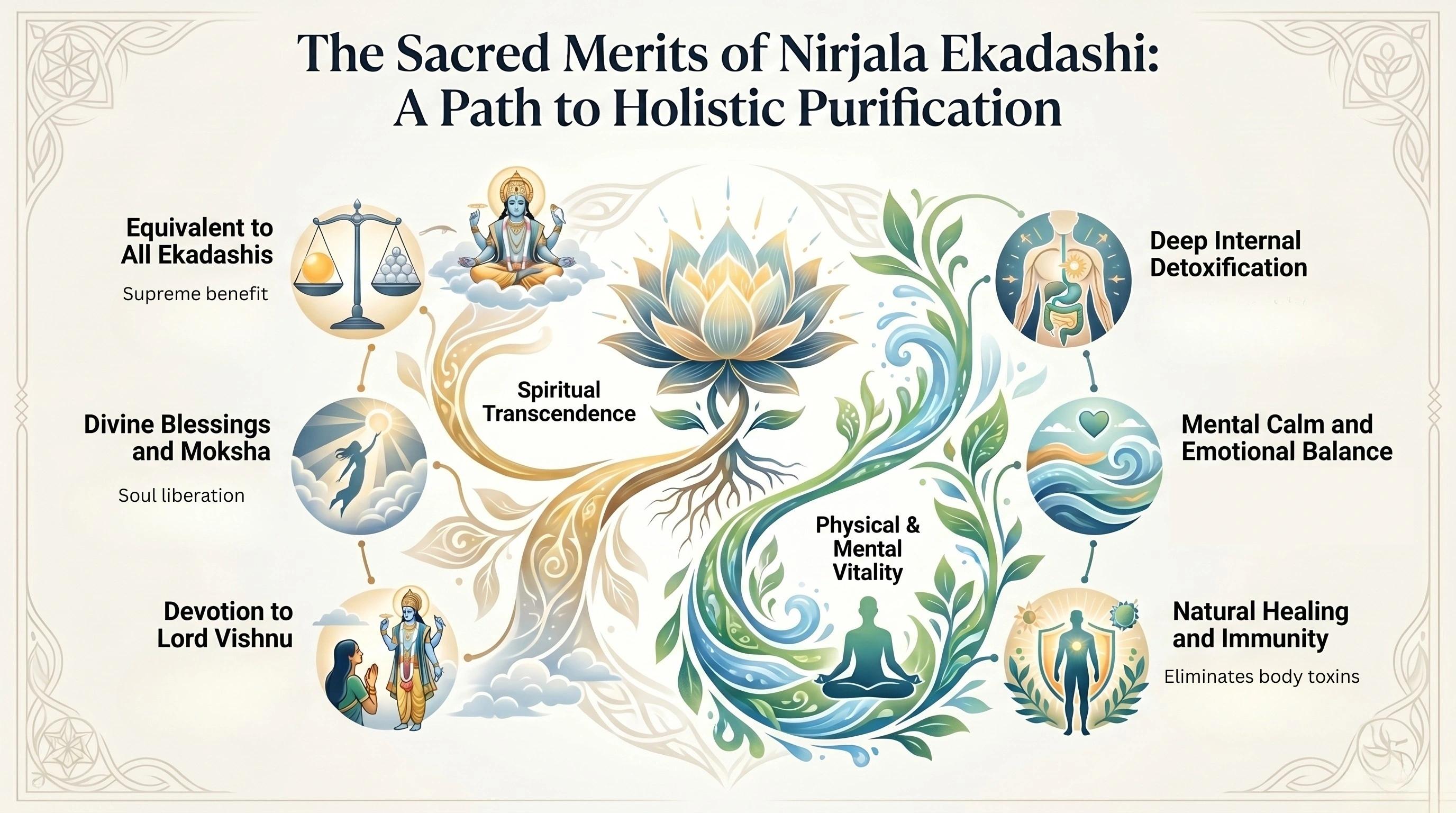
Why Nirjala Equals All 24 Ekadashis Combined
Nirjala Ekadashi is considered the most sacred fasting day in the Hindu Vaishnava calendar. The word “Nirjala” originates from Sanskrit and means “without water,” directly reflecting the core rule of this vrat.
Unlike other Ekadashi fasts, where devotees abstain only from grains and certain foods, Nirjala Ekadashi requires complete fasting without even drinking a single drop of water for the entire duration of the fast.
Among all Ekadashis, Nirjala Ekadashi is regarded as the most spiritually powerful observance. The Padma Purana glorifies this sacred vrat through the teachings of Maharishi Vyasadeva to Bhimasena, explaining the immense spiritual merit obtained by observing this fast.
It is believed that sincerely observing Nirjala Ekadashi grants the spiritual benefits of observing all 24 Ekadashis of the year together.
In the Padma Purana, Maharishi Vyasadeva told Bhimsen:
“Lord Krishna — who holds the club, discus, conch, and lotus flower in His hands — personally told me that all the merit achieved by fasting on every Ekadashi throughout the year can be attained simply by observing this one Nirjala Ekadashi fast. Of this, there is no doubt.”
Nirjala Ekadashi 2026 Date, Tithi Timings and Parana Time
| Detail | Date and Time |
|---|---|
| Tithi Begins | 24 June 2026, 6:14 PM |
| Tithi Ends | 25 June 2026 - 8:11 PM |
| Fasting Day | Thursday, 25 June 2026 |
| Parana Time | 26 June 2026 - 05:35 AM to 10:11 AM |
Nirjala Ekadashi Vrat Katha: The Story of Bhimsen
The story of Pandava Nirjala Gyaras is clearly described in scriptures such as the Brahma Vaivarta Purana, set during the great war of the Mahabharata.
It begins with Bhimsen, one of the Pandava brothers who was unable to observe fasts throughout the year.
Among the five Pandava brothers, everyone in the family kept the sacred Ekadashi Vrat regularly, except Bhimsen. As he was the son of Vayudev, the Wind God, Bhimsen was blessed with an extraordinarily powerful digestive fire.
Bhim was unable to control his hunger, no matter how diligently he tried; he could not fast for even a few hours.
But as he was a great devotee of Lord Vishnu, he felt deep guilt, and his entire family observed the Ekadashi fast, while Bhim could not control his hunger for even an hour.
So, he went to his grandfather, the great Sage Vyasadeva, and told him every challenge he was facing with true intention. He simply said, "I cannot fast, but I want to serve Lord Vishnu. Please provide me with a solution."
Vyasadeva listened to him and told him about a special Ekadashi Vrat, observed in the Shukla Paksha of the month of Jyestha (between May and June), known as Nirjala Ekadashi.
He instructed Bhimsen to observe this one fast completely, without having food or water, for a whole day from sunrise to the next sunrise.
Only Achaman - a single drop of holy water was allowed as ritual purification. The rest of the day should be spent engaging in spiritual practices and chanting the holy names of Lord Vishnu.
Vyasadeva then revealed the significance of keeping this sacred fast, in which he said that by observing this single Nirjala Fast, one can attain the spiritual merit of all other fasts of the year.
Every sin is washed away, and past karmic debts are cleared, and when death comes, the divine messengers of Lord Vishnu come to escort the devotee to Vaikuntha.
After hearing this blessed advice from his grandfather, Bhimsen observed the Nirjala Ekadashi fast with full devotion. That's why it is also revered as Pandava Nirjala Ekadashi, Bhimseni Ekadashi, and Bhim Agiyaras.
Nirjala Ekadashi Fasting Rules: What Can You Eat or Drink?
Do
- Achaman only — single drop of holy water for spiritual purification.
- Chant the holy names throughout the day, especially the Hare Krishna Mahamantra.
- Listen to Ekadashi Vrat Katha during the day.
- Recite Bhagavad Gita or Bhagavatam for spiritual focus.
- Perform Puja and offer prayers to Lord Vishnu.
Don't
- Any kind of food, including grains, fruits, sweets, and vegetables.
- Water — not even a single sip.
- Milk, tea, juice, or any beverage.
- Sleeping during the day.
- Lying, Ninda, arguments and disputes.
- Tobacco, pan, or any other intoxication.
- Watching entertainment or indulging in activities which are not devotional.
Who Should Not Observe the Nirjala Ekadashi Fast?
The Nirjala Gyaras is a waterless fast as per Vedic scriptures, with inherently strict rules, yet the compassion and blessings of the Supreme Lord Vishnu far surpass the rigidity of this fast.
That is why pregnant women, older adults, and people with pre-existing underlying medical conditions are prohibited from attempting this full fast without following all the regulations.
Moreover, these people may instead choose a half-fast that includes fruit and water, or devote their time to reciting sacred scriptures and performing good deeds such as Gauseva or Annadaan Seva.
Sincere devotion is far more valuable than difficult spiritual practices. If anyone faces a health issue while observing the fast, they may seek divine forgiveness before resuming eating and drinking. The divine always accepts sincere, humble intentions offered with pure devotion.
Nirjala Ekadashi Puja Vidhi
Observing Bhimsen Ekadashi is not just about going without food and water; the fast is incomplete without properly worshipping Lord Vishnu.
The Nirjala Ekadashi Puja method starts one day before and continues till the Parana on Dwadashi. Below is a step-by-step guide for observing Nirjala Ekadashi.
Step-by-Step Ritual
- 01
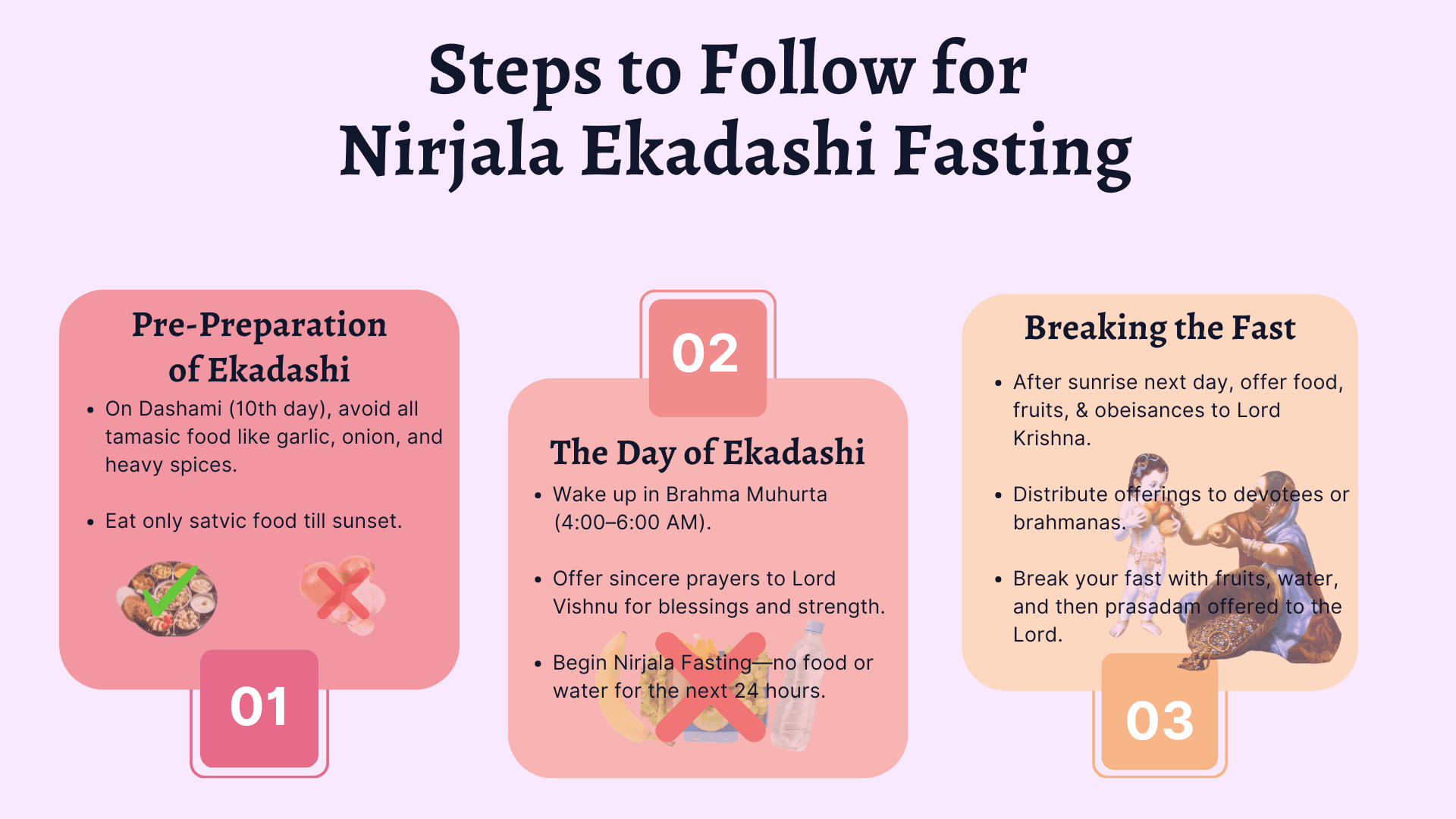
Step 1: Wake up in Brahma Muhurat (4:00 AM - 6:00 AM)
On the day of Nirjala Ekadashi, wake up early in the morning before sunrise. Take a pure bath and wear clean clothes, preferably yellow or white, as yellow is the beloved colour of Lord Vishnu. - 02
Step 2: Take the Sankalpa
After bathing, sit before the deity of Lord Vishu and take a vow to observe a complete Nirjala Ekadashi fast until Dwadashi to please Lord Vishnu. This sankalpa transforms the physical fast into a spiritual offering. - 03
Step 3: Puja Samagri
Before starting the puja, gather some select items such as Tulsi leaves, which are most loved by Lord Vishnu and offered with everything. Yellow flowers like marigold or champa are used during the puja. Panchamrit, made with milk, curd, ghee, honey, and sugar, is prepared for abhishekam. Sandalwood paste is applied as tilak on the idol. A ghee lamp (diya) represents the removal of darkness and creates a perfect spiritual environment, while incense sticks purify the atmosphere during the puja. Seasonal fruits are offered as bhog to the Lord, and fresh water is used for the fresh bath of the deity during abhishekam. - 04
Step 4: Recitation of Scriptures and Chanting of Mantras
The entire day of Pandava Nirjala Ekadashi should be spent purely with indulging in continuous chanting of Lord Krishna's holy names: Hare Krishna Mahamantra. - 05
Step 5: Evening Aarti
As the sun sets, perform the evening aarti. Offer fresh Tulsi leaves, light a new ghee lamp, and spend time in silence, praying before Lord Vishnu. This is the best time to listen to Nirjala Ekadashi Vrat Katha with family. - 06
Step 6: Night Jagran
Do not sleep on the night of Ekadashi. The night should be spent in Harinam - Sankirtan and scripture reading. Stay awake and keep your mind focused on the Lotus feet of the Lord. If you are observing at home, chant the Hare Krishna Mahamantra or listen to kirtan of the Lord throughout the night.
Parana: How to Break the Nirjala Fast (Dwadashi, 26 June)
Breaking the Pandava Nirjala Ekadashi fast correctly is an important part of observing it properly. According to the Vaishnava tradition, breaking the fast at the wrong time is considered an offence and can reduce the spiritual merits of the Nirjala Upvas.
For Nirjala Ekadashi in 2026, the Parana must be done on 26 June between 5:35 AM and 10:11 AM. This sacred time window begins after Hari Vasara ends. Remember not to break the fast before this specific period, even if Dwadashi has already begun.
When the Parana time begins, first offer bhog to the Lord consisting of fruits, Tulsi leaves, and water. Your fast is officially considered broken after the bhog is offered. Afterwards, distribute prasadam to family members and fellow devotees, which is regarded as an essential part of Nirjala Ekadashi observance.
While breaking your own fast, first take a few sips of holy water, then eat fruits followed by light sattvic prasadam. Avoid heavy meals, as the body needs time to gradually return to its normal state after a full day of fasting.
If, for any reason, you are unable to break the fast during the correct Parana time, simply drink water before the Dwadashi tithi ends, pray to Lord Vishnu for forgiveness, and eat later when possible. The Lord always accepts sincere devotion and humble intentions.
Benefits of Nirjala Ekadashi
Nirjala Upvas carries immense spiritual potency and involves a complete 24-hour fast without food or water. Observing this vrat is considered one of the highest acts of devotion to please Lord Vishnu, and sincere devotees are believed to receive His special blessings.
It is believed that this fast helps a soul progress spiritually and attain liberation from material existence. Even devotees who are unable to observe all other Ekadashis during the year are encouraged to observe this one sacred fast because it grants the merit of all Ekadashis combined.
From a physical perspective, fasting without food or water allows the body to eliminate toxins and accumulated waste while giving the digestive system proper rest and reset.
By spending the day in devotional practices and spiritual discipline, Nirjala Ekadashi also promotes mental peace, emotional balance, and control over unnecessary cravings and distractions.
Fasting further supports the body’s natural healing processes and improves overall resilience, discipline, and awareness when observed properly.
Nirjala Ekadashi Daan: Why Donating Water is the Highest Charity on This Day
In Hinduism, charity and compassionate acts are considered sacred offerings to the Lord and a source of positive karma. Donations made on Nirjala Ekadashi are believed to carry exceptionally high spiritual merit.
According to Sage Vyasadeva, after properly observing the Nirjala Upvas, devotees should feed poor people and honour brahmanas to attain the complete blessings of the vrat.
Nirjala Ekadashi falls during the peak summer season of May and June. Because devotees themselves experience thirst during the fast, offering water to others on this day becomes an act of deep compassion and spiritual significance.
Along with water, devotees may also donate:
- Water
- Hand fans and umbrellas
- Earthen water pots (matka)
- Sweet water or sharbat
- Seasonal fruits
- Food and clothes
- Footwear
If you are unable to donate these items, even offering a glass of water to a thirsty person with sincere devotion is considered highly auspicious and spiritually rewarding on Nirjala Ekadashi.
Nirjala Ekadashi at Gupt Vrindavan Dham
- 01
Mangla Aarti
Devotees begin the day with remembrance, prayer, and surrender to Lord Vishnu. During this sacred early morning hour, it is believed that the Lord personally accepts the worship offered by His devotees. - 02
Non-Stop Sankirtan
From early morning until the temple closes, the Hare Krishna Mahamantra continuously echoes throughout Gupt Vrindavan Dham. This spiritually vibrant atmosphere helps devotees remain focused and peacefully observe the Nirjala fast. - 03
Bhagavad Gita Teachings
Senior disciples and devotees narrate the teachings of sacred scriptures such as the Bhagavad Gita and Srimad Bhagavatam throughout the day. Understanding the true significance of Nirjala Gyaras makes the observance spiritually deeper and more meaningful. - 04
Hare Krishna Kirtan Until Sunrise
The night of Pandava Nirjala Ekadashi is spent in collective Harinaam Sankirtan until the sunrise of Dwadashi. Surrounded by fellow devotees, the all-night jagran becomes joyful, devotional, and spiritually uplifting. - 05
Seva Opportunities
Devotees can also make their Nirjala Ekadashi more meaningful through seva opportunities such as Annadaan Seva, Gau Seva, and Temple Nirman Seva at Gupt Vrindavan Dham. Every contribution becomes a sacred offering made with devotion to the Lord.
FAQs
Conclusion
Many people hold very traditional views of Nirjala Ekadashi, mistakenly believing that its core focus is solely on observing a perfect fast. However, in reality, it is a symbol of pure devotion. Even if a person cannot fully follow every fasting rule, sincere intention and heartfelt devotion are what truly matter.
In the sacred history of the Pandavas, Bhim himself struggled to observe complete fasting, yet his wholehearted devotion to Lord Vishnu was lovingly accepted. This Nirjala Ekadashi 2026, surrender your ego at the lotus feet of the Lord and observe this sacred vrat with sincerity to receive the divine grace of the Supreme Lord.
Hare Krishna.