
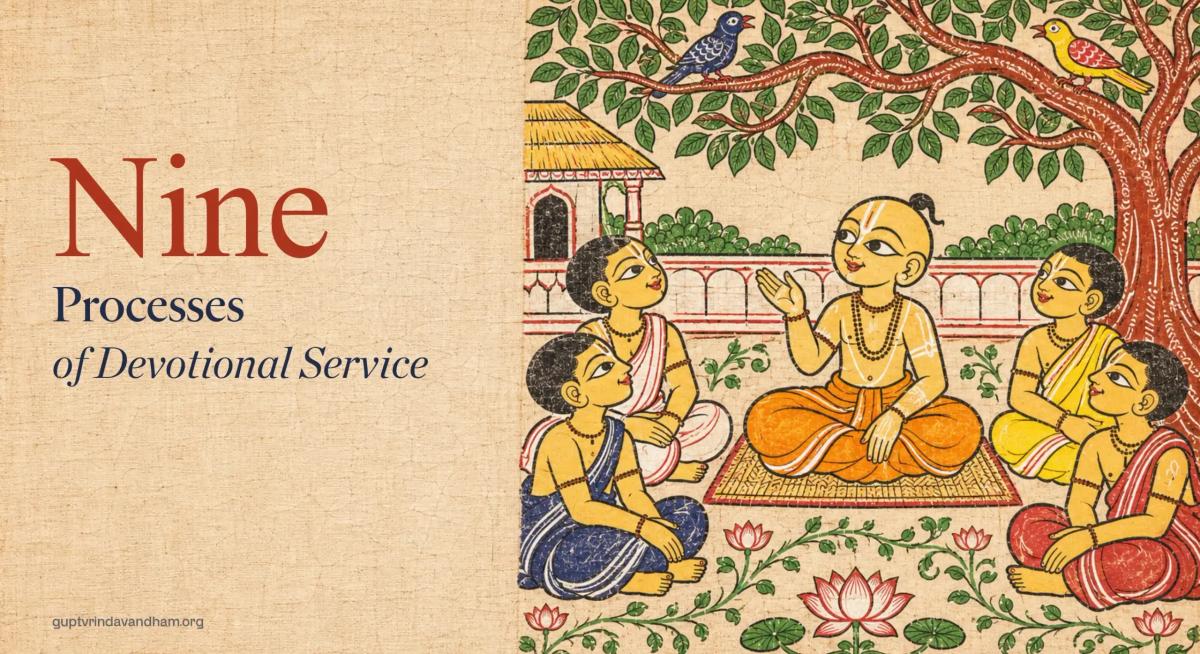
Nine Processes of Devotional Service
- 01
Hearing About the Lord (Shravanam)
Shravanam means listening to Krishna’s holy names, qualities, teachings, and pastimes from authorised scriptures and sincere devotees. Hearing helps us understand whom we are serving and awakens our interest in Him.Note: Example: Maharaja Parikshit heard Srimad Bhagavatam from Sukadeva Goswami during the final seven days of his life.
- 02
Chanting the Lord’s Glories (Kirtanam)
Kirtanam means chanting Krishna’s names and glorifying His qualities and activities. It includes chanting the Hare Krishna maha-mantra, singing devotional songs, and speaking about the Lord.Note: Example: Sukadeva Goswami glorified the Lord by narrating Srimad Bhagavatam to Maharaja Parikshit.
- 03
Remembering the Lord (Smaranam)
Smaranam means remembering Krishna’s names, form, qualities, and pastimes. Regular hearing and chanting nourish this remembrance and help us bring our attention back to Krishna.Note: Example: Prahlada Maharaja continued remembering the Lord despite the persecution he faced from his father, Hiranyakashipu.
- 04
Serving the Lord’s Lotus Feet (Pada-sevanam)
Pada-sevanam means serving the Lord’s lotus feet. It also includes related devotional activities such as circumambulating His temple and serving Tulasi and the Lord’s devotees.Note: Example: Lakshmi Devi lovingly serves the lotus feet of Lord Vishnu with unwavering devotion.
- 05
Worshipping the Deity (Archanam)
Archanam means worshipping the Lord in His Deity form through offerings and service, following authorised guidance. Flowers, incense, lamps, and food can be offered with devotion.Note: Example: Maharaja Prithu is associated with perfection through worship of the Lord.
- 06
Offering Prayers (Vandanam)
Vandanam means offering prayers and respectful obeisances to the Lord. Through prayer, we express gratitude, acknowledge our dependence on Him, and seek His shelter.Note: Example: Akrura is celebrated for offering prayers to the Lord.
- 07
Acting as the Lord’s Servant (Dasyam)
Dasyam means accepting oneself as Krishna’s servant and acting for His satisfaction. It involves following His instructions and using our abilities in His service.Note: Example: Bhakta Hanuman exemplifies devoted service through his unwavering dedication to Lord Ramachandra.
- 08
Developing Friendship with the Lord (Sakhyam)
Sakhyam means approaching the Lord with trust and friendship, accepting Him as our well-wisher. This friendship includes faith in His guidance and a desire to serve His purpose.Note: Example: Arjuna’s friendship with Krishna demonstrates this personal relationship with the Lord.
- 09
Surrendering Everything to the Lord (Atma-nivedanam)
Atma-nivedanam means offering oneself and everything one possesses to the Lord. Our body, mind, words, and resources become dedicated to His service.Note: Example: Bali Maharaja exemplified surrender by offering everything, including himself, to Lord Vamanadeva.