
 Donate Now
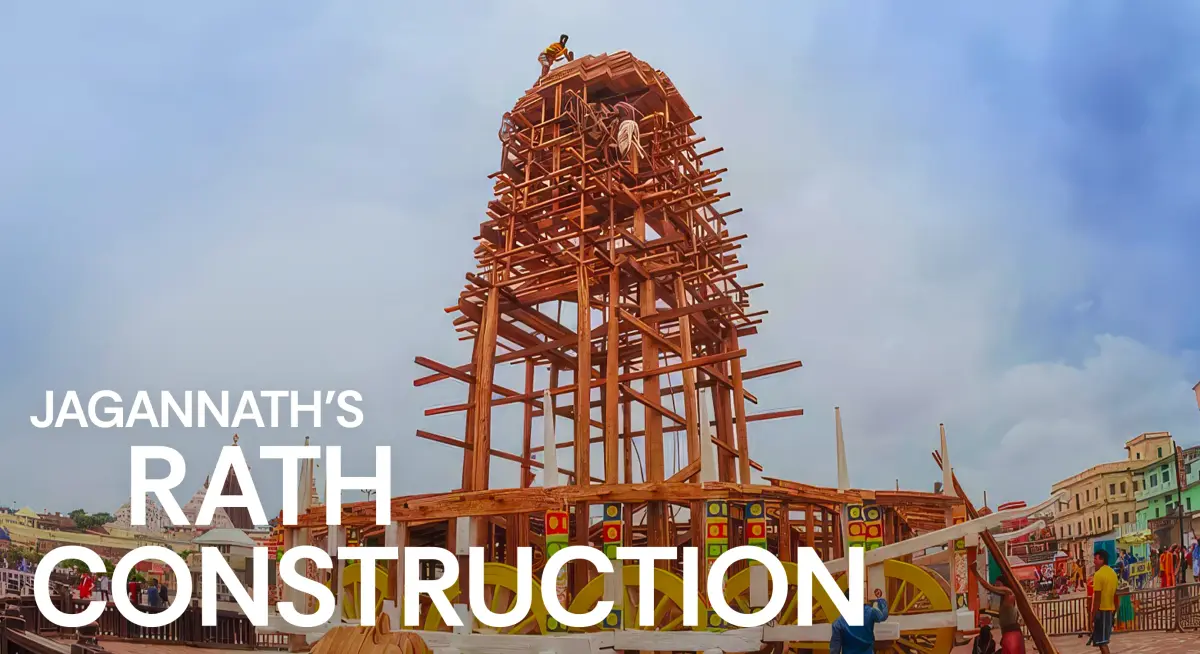
The three chariots of Jagannath Rath Yatra - Nandighosha, Taladhwaja, and Darpadalana are built every year. Each chariot is built by highly skilled artisans, entirely by hand; no machinery or instruments are used in its making.
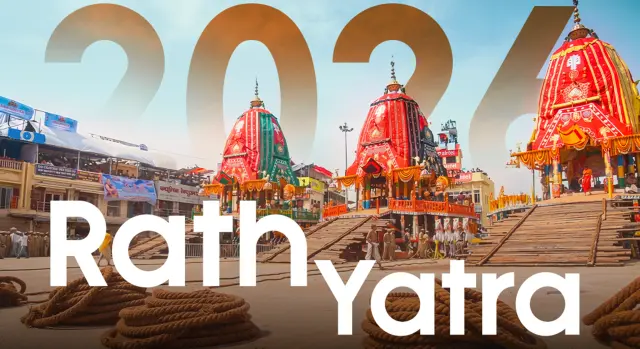
The Ratha Yatra, also known as the chariot festival, is one of the most widely celebrated rituals of Lord Jagannath (Krishna), Lord Balabhadra (Balarama), and Devi Subhadra. During the festival, the deities are placed on the beautiful wooden chariots to travel between Jagannath and Gundicha temple. The journey covers approximately 3 kilometres and features enormous, colourfully decorated wooden chariots pulled by thousands of devotees.
Every single part of these raths is crafted with pure craftsmanship, with several blacksmiths, tailors, and painters working since the day of Akshaya Tritiya. Each of the three chariots has a different colour, height, and carvings.
Through this guide, you will learn the full details of Lord Jagannath Rath, Lord Balabhadra Rath, and Devi Subhadra Rath.
You will also understand how Jagannath’s chariot is built every year, from its wood selection process to the final decoration. Everything will be discussed below.
The Three Chariots of Rath Yatra - Names and Identity
| Detail | Nandighosha (Jagannath) | Taladhwaja (Balabhadra) | Darpadalana (Subhadra) |
|---|---|---|---|
| Height | 45 feet | 44 feet | 43 feet |
| Wheels | 16 | 14 | 12 |
| Colour | Red and Yellow | Red and Green | Red and Black |
| Charioteer | Daruka | Matali | Arjuna |
| Flag | Trailokyamohini | Unnani | Nadisvara |
| Guardian Deity | Garuda | Hanuman | Katyayani (Durga) |
| Horses | White | Black | Red |
| Symbolism | Universal compassion | Strength and justice | Feminine grace |
| Nine Presiding Deities | Varah, Gobardhana, Krishna, Nrusimha, Rama, Narayana, Trivikrama, Hanuman, Rudra | Ganesha, Kartikeya, Sarvamangala, Pralambari, Hatayudha, Mrutyunjaya, Natamvara, Mukteswar, Sheshadeva | Chandi, Chamunda, Ugratara, Vanadurga, Shulidurga, Varahi, Shyamakeli, Mangala, Vimala |
| Four Horses Name | Sankha, Balahaka, Sweta, Harisahwa | Tibra, Ghora, Dirghasrama, Swarnanabha | Rochika, Mochika, Jita, Aparajita |
Chariot-by-Chariot Complete Details
The three chariots of Rath Yatra are structurally the same. But, each of them is different in terms of identity, size and overall appearance.
The number of wheels, the colour of the Ratha Body, and the cloth that covers the entire roof are unique and traditionally designed. Here’s the explanation of how the three chariots are different:
1. Nandighosha (Jagannath’s Chariot):
Lord Jagannath’s chariot, also known as Garudadhwaja and Kapidhwaja, is the largest and tallest chariot of all three, representing the role of Lord Jagannath, the Universal Lord. It is designed with lions, peacocks, and the beauty of the Sun God.
The chariot is built from 832 pieces of sacred wood, and people can easily identify the rath by its colour and the yellow-and-red canopy. The chariot has four white horses and prominently displays the Sudarshana Chakra as its emblem.
Rope Detail:
The pulling rope of the Nandighosha chariot is called Shankhachuda, and pulling it is considered one of the most meritorious acts a devotee can perform during the Rath Yatra.
2. Taladhwaja (Balabhadra’s Chariot)
This chariot is designed and labelled as per the nature of Balabhadra - mature and stable, the appearance of the Taladhwaja chariot symbolises simplicity and groundedness.
The chariot of Lord Balabhadra can be identified by its red and blush green colour and is the second-largest of the chariots, built from 731 wooden pieces. The chariot has the same four black horses, with wooden carvings featuring serpents and warrior motifs, reflecting Balabhadra's identity as the protector.
Rope Detail:
The pulling of Taladhwaja is called Basuki, named after the divine serpent, showcasing Balabhadra’s deep connection with Shesha Naga.
3. Darpadalana:
The Rath of Devi Subhadra is known as Darpadalana or Devadalana. This chariot is smaller than the other two and is made of 711 wooden pieces, beautifully decorated with a lotus-flower design that represents motherhood, love, and care for devotees.
The entire Darpadalana chariot is covered with red and black cloth, and its wooden carvings are softer in design than the other two. Katyayani (Durga) is the guardian deity reflecting Devi Subhadra’s inner strength beneath her graceful exterior.
Rope Details:
The pulling rope of Darpadalana is called Swarnanabha, and it is said that even a one-time pulling moment of this chariot offers blessings of Devi Subhadra herself.
How Jagannath's Chariots Are Built Each Year
Lord Jagannath's Rath has been constructed by the Vishwakarma Sevak community since ancient times, using only sacred wood and natural materials, with each element carrying deep spiritual significance. Every year, this construction takes place at the temple's sacred site, Ratha Khala.
The Sacred Wood Selection Process:
Before the construction begins, a special ritual called Banajaga Yatra is performed to select the right trees for the chariots. Temple priests travel into the forests of Daspalla and Ranapur to identify trees that meet specific sacred criteria and examine the direction each tree faces, the type of soil it grows in, and the species of the trees.
After cutting, the logs are traditionally bound together and set afloat through the Mahanadi River. Once the timber rafts reach the downstream area near Puri, they are collected by local priests and transported by road to Ratha Khala, where the actual construction begins.
The Construction Timeline:
| PHASE | OCCASION | WORK DONE |
|---|---|---|
| Phase 1 | Vasant Panchami (Jan/Feb) | Sacred woods arrive from Daspalla and Ranapur |
| Phase 2 | Ram Navami (March/April) | Logs are cut into 4000+ pieces of specific shapes and sizes |
| Phase 3 | Akshaya Tritiya | Lord Jagannath's Rath construction begins with the Vishwakarma sevaks |
| Phase 4 | Final 2 weeks | Painting, cloth covering and applying decorative elements |
Here’s the basic structure of chariots:
1. The Base (Adhara):
This is the base part that supports the weight of the entire Lord Jagannatha’s Rath and is built from wood such as Phasi, Dhaura, and Asan, without metal nails. The alignment balances Rath's movement very smoothly.
The wooden joints used here are a form of ancient interlocking joinery, as each piece fits into the next like a puzzle, with no glue or nails. This same technique has been used for centuries, since the first Rath Yatra was commenced.
2. Wheels (Chaka):
These are the massive wooden wheels that support the combined weight of the deities Lord Jagannath, Lord Balabhadra, and Devi Subhadra. The wheels are finely carved and sharpened by the tools. Each Chariot has a different number of wheels, which is not random and is tied to sacred symbolism.
The wheels are carved with floral and geometric patterns, and the rim is reinforced with additional wooden layers to handle the weight of thousands pulling devotees and the chariot body together.
3. Vertical Pillars (Bada):
The pillars are designed and curated by the specialised craftsmen from the Vishwakarma Maharana community, whose families have held this sacred responsibility for generations. Each pillar has a significant story; carvings of deities, celestial beings, and natural motifs run from the base to the top. The number and arrangement of pillars differ slightly across the three chariots of Rath Yatra, matching the unique identity of each deity.
4. Roof and Canopy:
The upper dome-like structure covers the Rath's roof. It is a handmade cloth with a beautiful traditional look, inspired by the design of the Jagannath temple. The cloth used for the canopy is not made of ordinary fabric; it is specially woven and stitched by traditional tailors.
The colour of each canopy matches the colour of each chariot’s identity. The dome shape is intentionally modelled after the Jagannath temple's dome in Puri, so the Lord travels in a structure that mirrors his divine home.
5. Decorative Elements:
The Rath is designed with beautiful wooden horses, red flags on each chariot, and beautiful paintings of flowers and birds all over the wheels and pillars. It looks like an ancient and traditional chariot, suitable for carrying the Supreme Lord.
The red flags flying at the top of each chariot are among the last elements added before the festival begins, signalling that the Rath is ready for the Lord.
Spiritual Symbolism of the Chariot Structure of Rath Yatra
Know the atman as the lord of the chariot, the body as only the chariot, know also intelligence as the driver; know the mind as the reins. - Katha Upanisad 1.3.3
The Katha Upanishad describes the chariot festival thousands of years ago, and Lord Jagannath brings the same teaching to life every single year on the streets of Puri.
Each element of the Rath carries a sacred meaning beyond being its physical form. The wooden body of the chariot reflects the human body, temporary by nature, and built to carry divine form within. The horse pulling the chariot reflects the five different senses (indriyas), which are always moving and seeking. The reins held by the charioteer are capable of either taking you closer towards the Lord or pulling them away. And the charioteer himself represents the intellect, the faculty for choosing the right direction.
The rope pulled by thousands of devotees is not just a piece of rope; it is an act of devotion, showcased in its most physical form. The Skanda Purana states that even if someone witnesses the procession of the Ratha Yatra, they earn the merit of a thousand sacred sacrifices.
FAQs
Conclusion
Building the chariots for the Rath Yatra is more than a ritual. It is a service performed through a blend of spirituality and tradition. Every piece of wood is joined to another with an ancient interlocking joinery, with no iron nails or machinery used. Yet the quality of the chariots is very remarkable, and they move through streets for millions of devotees to witness.
This is how Lord Jagannath’s Rath is built, not with technology, just with surrender unto the Lord of the Universe. The Jagannath Rath Yatra is the true example of the Lord’s love towards his devotees, coming out of the temple every single year to meet every devotee beyond the discrimination of caste, religion or background.