
 Donate Now
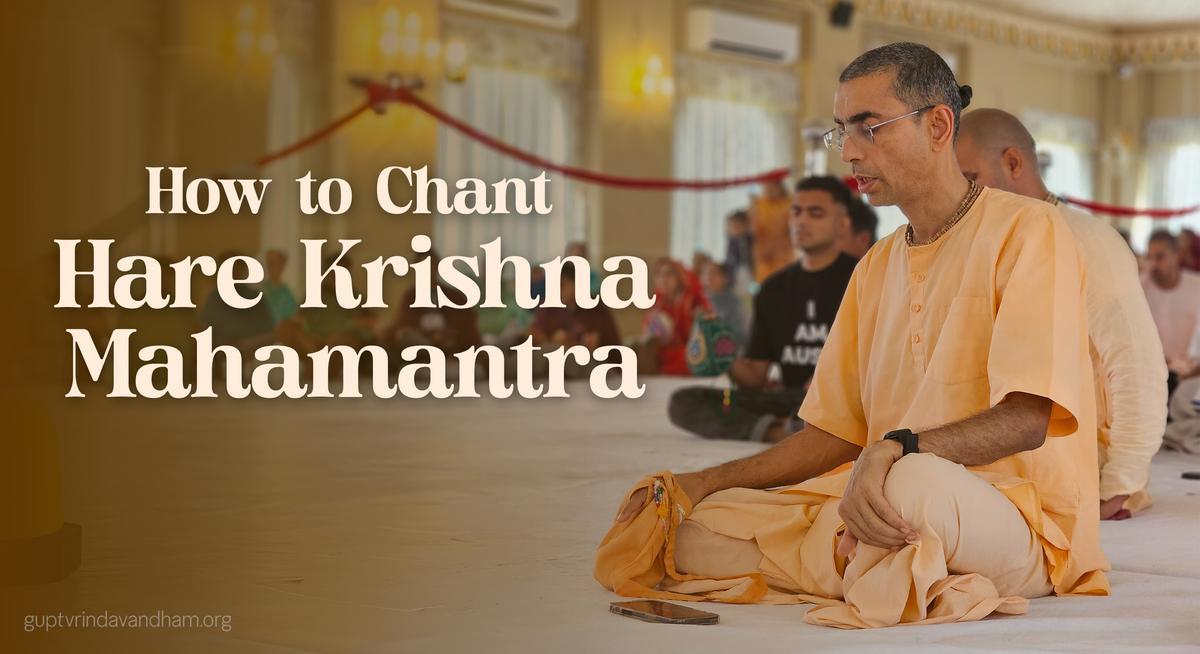
In the age of Kali, chanting the Hare Krishna Maha Mantra is the most effective method for self-realization. Chanting the Holy Name of the Lord is the prime requirement of the soul, without which one remains always unsatisfied. Lord Chaitanya Mahaprabhu inaugurated the congregational chanting of the Hare Krishna Mantra (Sankirtana).
ceto-darpana-marjanam bhava-maha-davagni-nirvapanam
(~Sikshastakam)
Glory to the Sri Krishna Sankirtana, which cleanses the heart of all the dust accumulated for years and extinguishes the fire of conditional life, of repeated birth and death. If one chants this mantra offenselessly, the dormant love is awakened in the heart of that person.
The Vedic Scriptures teach us that Krishna’s name is non-different from Him. The moment one chants Lord Krishna’s name, immediately he becomes associated with Him. As one chants Hare Krishna, Krishna is dancing on his tongue; one should be careful in that way.
What is Hare Krishna Mahamantra?
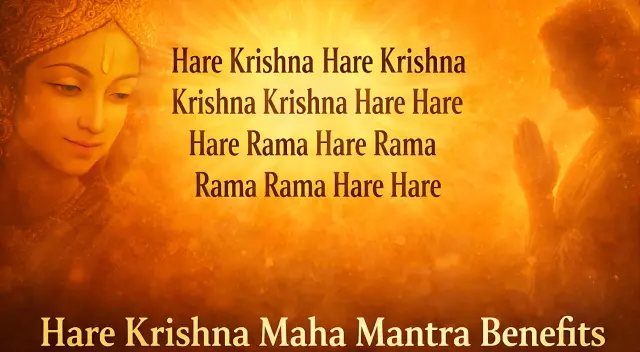
This mantra has been taken from the Kali-Santarana Upanishad, containing 16 words and each having a specific meaning. Srila Prabhupada explains that the Hare Krishna Maha Mantra is a prayer to the Lord and His spiritual energy. "Hare" refers to Srimati Radharani, the Lord's internal potency, while "Krishna" and "Rama" are names of the Supreme Lord. The essence of the mantra is: "O Lord Krishna, O energy of the Lord, please engage me in Your devotional service.”
This chanting is exactly like the genuine cry of a child for his mother's presence. Mother Hara helps the devotee achieve the Lord Father's grace, and the Lord reveals Himself to the devotee who chants this mantra sincerely.
How to Chant on Beads (Mala)
There is no restriction in chanting the Hare Krishna Mahamantra. Anyone can chant this mantra without worrying about the time, place and circumstance. Before starting the Hare Krishna Mantra, first chant the Pancha Tattva Mantra to get the complete benefit and mercy of this mantra.
jaya śrī-kṛṣṇa-caitanya prabhu nityānanda
śrī-advaita gadādhara śrīvāsādi-gaura-bhakta-vṛnda
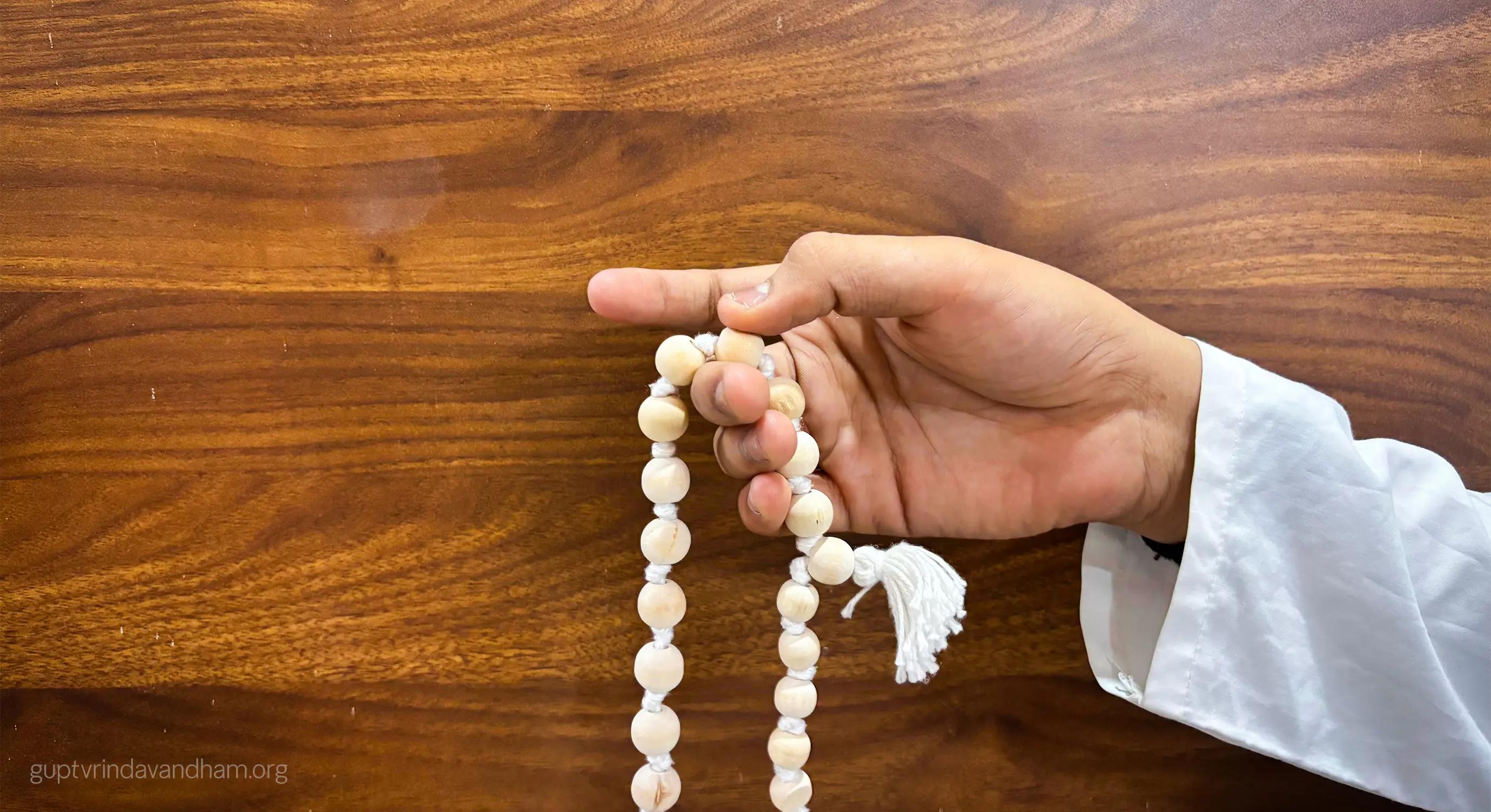
1. First, purchase a japa mala (string of beads); make sure it has a total of 109 beads.
2. Hold it in your right hand using your thumb and middle finger.
3. Avoid using the index finger; it represents the false ego and remains outside the bead bag.
4. Do not chant or cross the large head bead; start chanting on the bead just next to it.
5. Chant the complete Hare Krishna Mahamantra on every bead.
6. Once you have chanted on 108 beads, one mala is completed.
7. Now don’t chant on 109th bead (large bead/Sumeru); instead, turn the mala around and begin the next round in the opposite direction from the last bead.
8. Beginners can start with one or two rounds daily and gradually increase.
One should chant the Hare Krishna Mantra with full attention. Hearing the mantra is very important; if we only chant just for formality, it would take a very long time to transform our hearts.
Scriptural References for Chanting the Holy Name of the Lord
All Vedic scriptures conclude that chanting the Lord's Holy Name is the most effective process for attaining liberation. Sincere chanting not only helps us break the cycle of birth and death but also brings happiness in life.
1. Kali-santarana Upanishad
iti shodashakam namnam kali-kalmasha-nashanam
natah parataropayah sarva-vedeshu drishyate
Translation: These sixteen names (Hare Krishna Mahamantra) are capable of destroying the ill effects of Kali Yuga. No means of purification is superior to this in all the Vedas.
2. Brihan-naradiya Purana
harer nāma harer nāma harer nāmaiva kevalam
kalau nāsty eva nāsty eva nāsty eva gatir anyathā
Translation: In this age of quarrel and hypocrisy, the only means of deliverance is chanting the holy name of the Lord. There is no other way. There is no other way. There is no other way.
3. Śrīmad-Bhāgavatam 12.3.51
kaler doṣa-nidhe rājann asti hy eko mahān guṇaḥ
kīrtanād eva kṛṣṇasya mukta-saṅgaḥ paraṁ vrajet
Translation: My dear King, although Kali-yuga is an ocean of faults, there is still one good quality about this age: simply by chanting the Hare Kṛṣṇa maha-mantra, one can become free from material bondage and be promoted to the transcendental kingdom.
4. Śrīmad-Bhāgavatam 1.1.14
āpannaḥ saṁsṛtiṁ ghorāṁ yan-nāma vivaśo gṛṇan
tataḥ sadyo vimucyeta yad bibheti svayaṁ bhayam
Translation: Living beings who are entangled in the complicated meshes of birth and death can be freed immediately by even unconsciously chanting the holy name of Kṛṣṇa, which is feared by fear personified.
Benefits of Chanting Hare Krishna Mahamantra
1. By chanting the Lord's Holy Name, one becomes free from all sinful reactions and attains liberation. Ajāmila attained liberation by chanting “Nārāyaṇa” at the time of death, even though he was calling his son.
2. One never becomes tired while chanting the Hare Krishna Mantra because it is not a material sound; it is the sound coming from Goloka Vrindavan. “golokera prema-dhana, hari-nāma-saṅkīrtana.”
3. By chanting the Holy Name attentively, one's dormant love for Krishna is revived.
4. Regular chanting cleanses our heart and makes us eligible to enter the abode of Krishna.
5. Chanting enables us to come to the transcendental platform which is beyond the bodily conception of life.
6. The Holy Name of the Lord protects us from the effects of material modes of nature.
7. By offenseless chanting, one develops bhava (ecstasy), which is the point at which revelation begins.
8. Liberation and the destruction of sin are incidental results of chanting the holy name, not its ultimate aim. The ultimate goal is Love of Godhead or Prema.
Three Stages of Chanting
1. Nāma-aparādha (Chanting with Offenses)
A neophyte devotee begins the chanting with offenses; there are 10 offenses as mentioned above. The Holy Name is all-powerful, but its full power is not experienced due to offenses. But that does not mean that we shall not chant. Even though there are offenses, we shall go on chanting. With sincere effort to minimize offenses, we gradually advance to the next stage.
2. Nāmābhāsa (Stage Between nāma-aparādha & śuddha-nāma)
This is the transitional stage between offensive chanting and pure chanting. The Holy Name is not yet chanted in purity, but the offenses are fading. Reactions of sins are cleared and one becomes eligible for liberation. One finds taste in chanting and dormant love for Krishna begins to manifest.
3. Śuddha-nāma (Pure Chanting)
This stage is pure chanting of the Holy Name, in which one's dormant love for Lord Krishna is awakened. Reaching this stage is the ultimate goal of life: spontaneous love of Godhead. At this state, one directly associates with Lord Krishna and feels the ecstatic symptoms.
Srila Bhaktivinoda Thakura in his song says,
pūrna vikaśita hoiyā, braje more jāya loiyā,
dekhāy more swarūpa-vilās
more siddha-deha diyā, kṛṣṇa-pāśe rākhe giyā,
e dehera kore sarva-nāś
Being fully manifest, the holy name of Krishna takes me to Vraja and reveals to me His own love dalliance. He gives me my own divine, eternal body, keeps me near Lord Krishna and completely destroys this mortal frame of mine.
Conclusion
The Hare Krishna Mahamantra is the greatest gift to human society in this age of Kali. This sound vibration purifies the surroundings; plants, animals, insects, and birds all are benefited. By sincere effort and humble attitude, one advances from offensive to pure chanting and attains one’s final destination, which is Prema, Love of Godhead.