
 Donate Now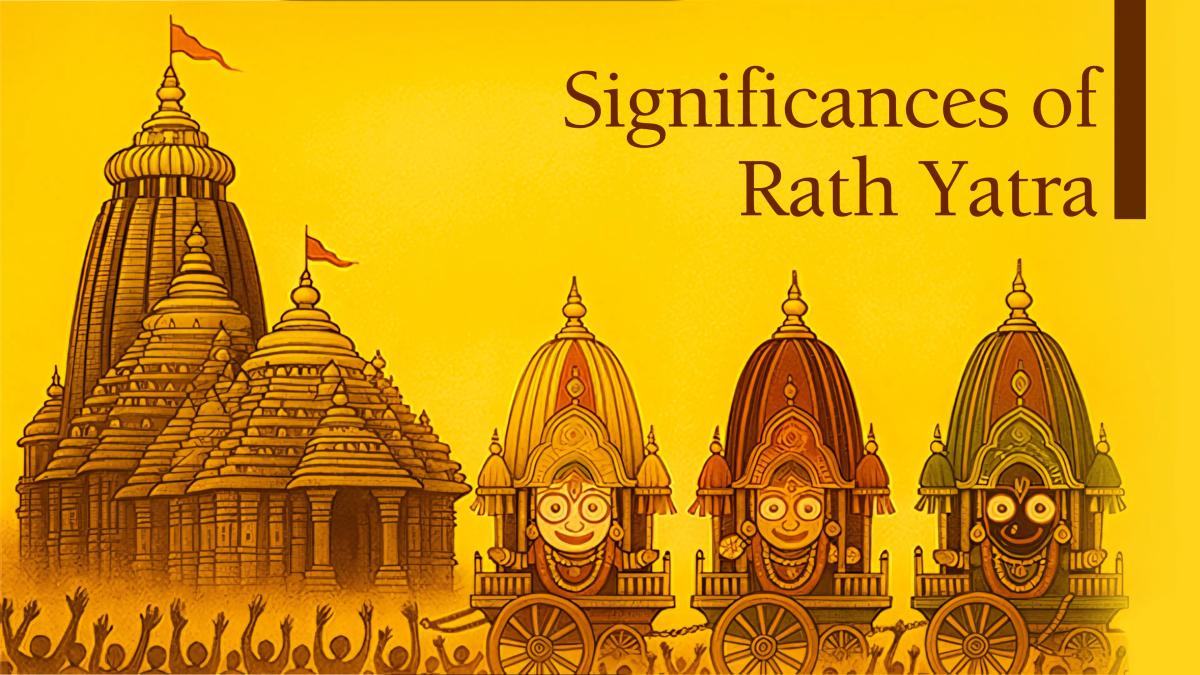
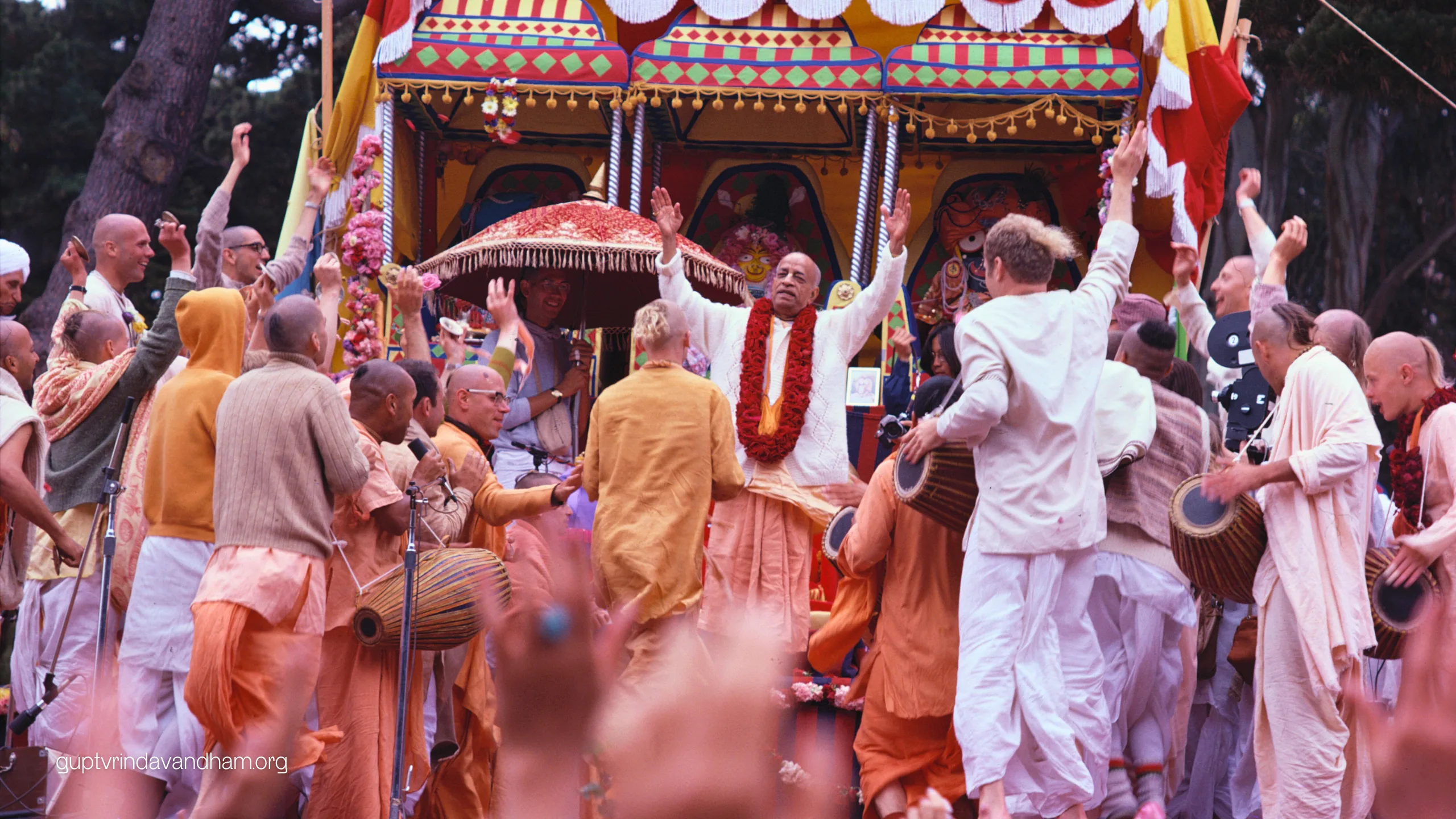
Every year, on the auspicious festival of Rath Yatra, Lord Jagannath steps down from his temple with his brother Lord Balabhadra and sister Goddess Subhadra. This divine trio rides on three huge and beautifully designed chariots. Devotees pull the respective chariots, using a front rope as an honor to the divine power. It is a rare moment when the Lord himself comes out of the temple, not to be worshipped but to meet the dear devotees.
Unlike other festivals, this festival symbolizes three different spiritual aspects of devotion in the form of Lord Jagannath, Lord Balabhadra, and Devi Subhadra.
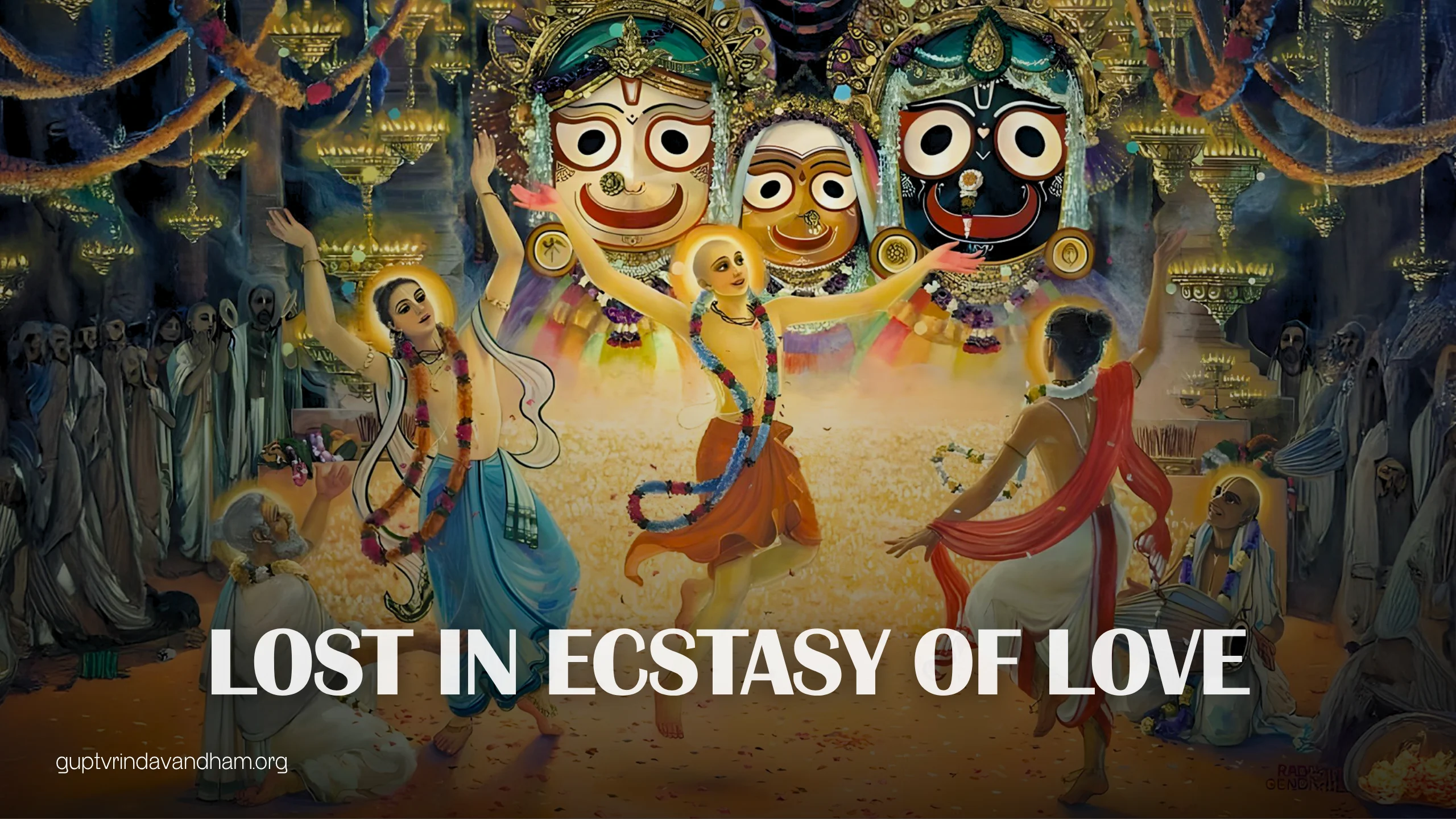
Lord Jagannath: Lost in Ecstasy of Love
Lord Jagannath is the central attraction of Rath Yatra; he is Lord Krishna in the ecstasy of Love. His wide eyes, big smile, and open arms reflect the eternal eagerness of waiting for the arrival of devotees. He always waits for the love of his dear devotees. His chariot’s name is Nandighosha; it only moves when the devotees pull with love and devotion. Without the intention of devotional service, one cannot pull the chariot of Lord Jagannath.
In Chaitanya Charitamrita, the ecstasy form of Lord Krishna as Lord Jagannath is well described as:
“avaśeṣe rādhā kṛṣṇe kare nivedana sei tumi, sei āmi, sei nava saṅgama”
Translation: Śrī Caitanya Mahāprabhu spoke thus to Lord Jagannātha: “You are the same Kṛṣṇa, and I am the same Rādhārāṇī. We are meeting again in the same way that we met in the beginning of Our lives.
Here, at Ratha Yatra, Chaitanaya Mahaprabhu in the mood of Radharani, experiencing the reunion with Lord Krishna, in the form of Lord Jagannath, after a long and painful separation. This reunion nectarized this festival even more. The entire journey of Rath Yatra is the leela of Lord Krishna to move back to Vrindavan, which is here represented as the Gundicha temple. It is a reunion of Lord Krishna with the gopis, who have been longing in the waiting for Lord Krishna’s arrival.
Lord Balabhadra: The Strength to Walk the Spiritual Path
Lord Balabhadra is the ideal figure of a spiritual master by the devotees of Lord Jagannath. As a divine form of Balaram and an elder brother of Lord Jagannath and Devi Subhadra, he leads this journey by riding ahead of the two other divine chariots. Lord Balabhadra is the elder brother of Lord Krishna and a divine form of Lord Balaram. His leading attitude signifies the role and the importance of a spiritual master in everyone’s life. The spiritual master is the one who leads your soul towards the path of Lord Krishna.
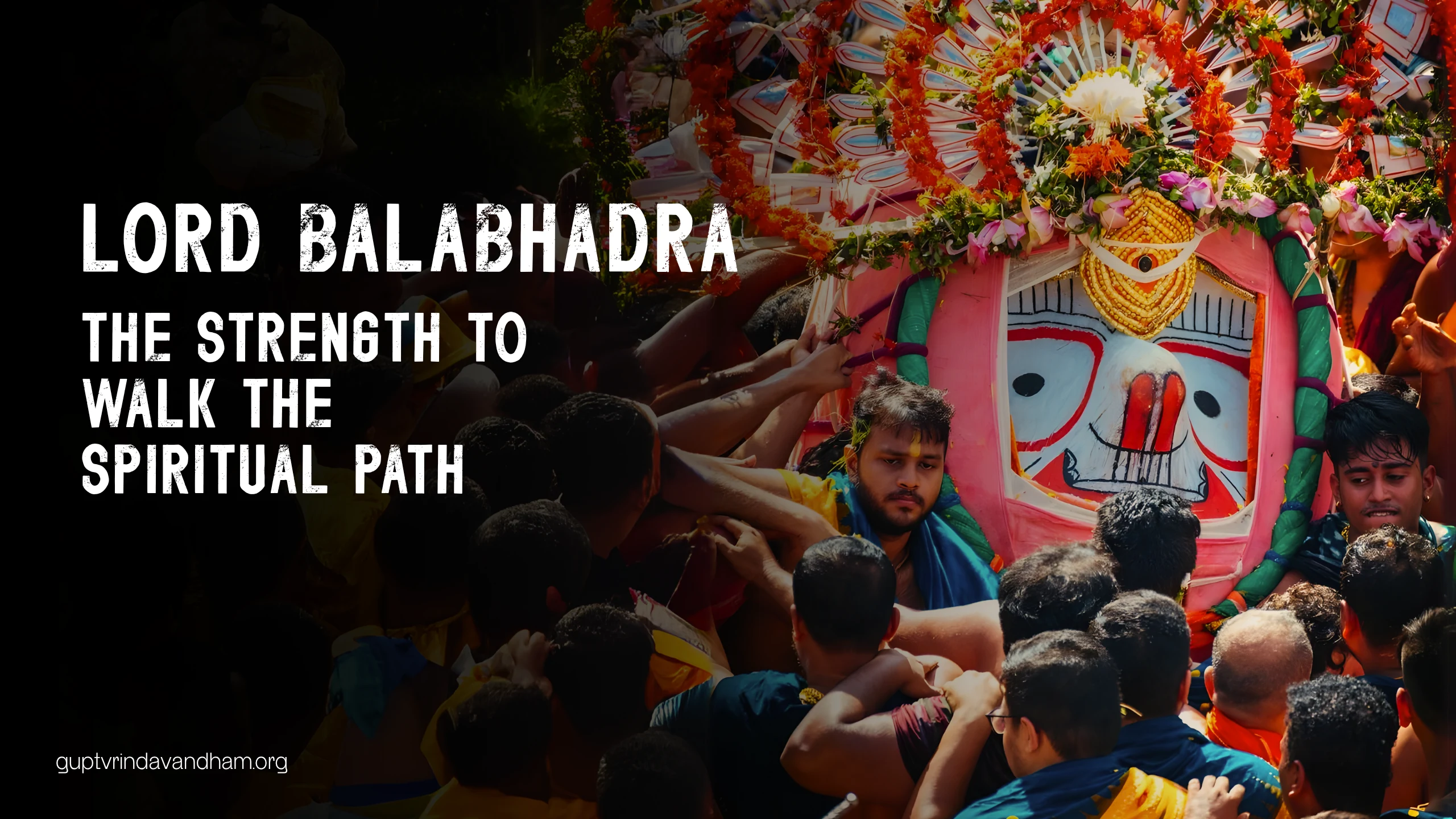
His divine chariot, named Taladhwaja, is the symbol of inner strength, truth, and discipline. One who wants to receive the blessings and love of the Lord Jagannath needs the blessings of Lord Balabhadra.
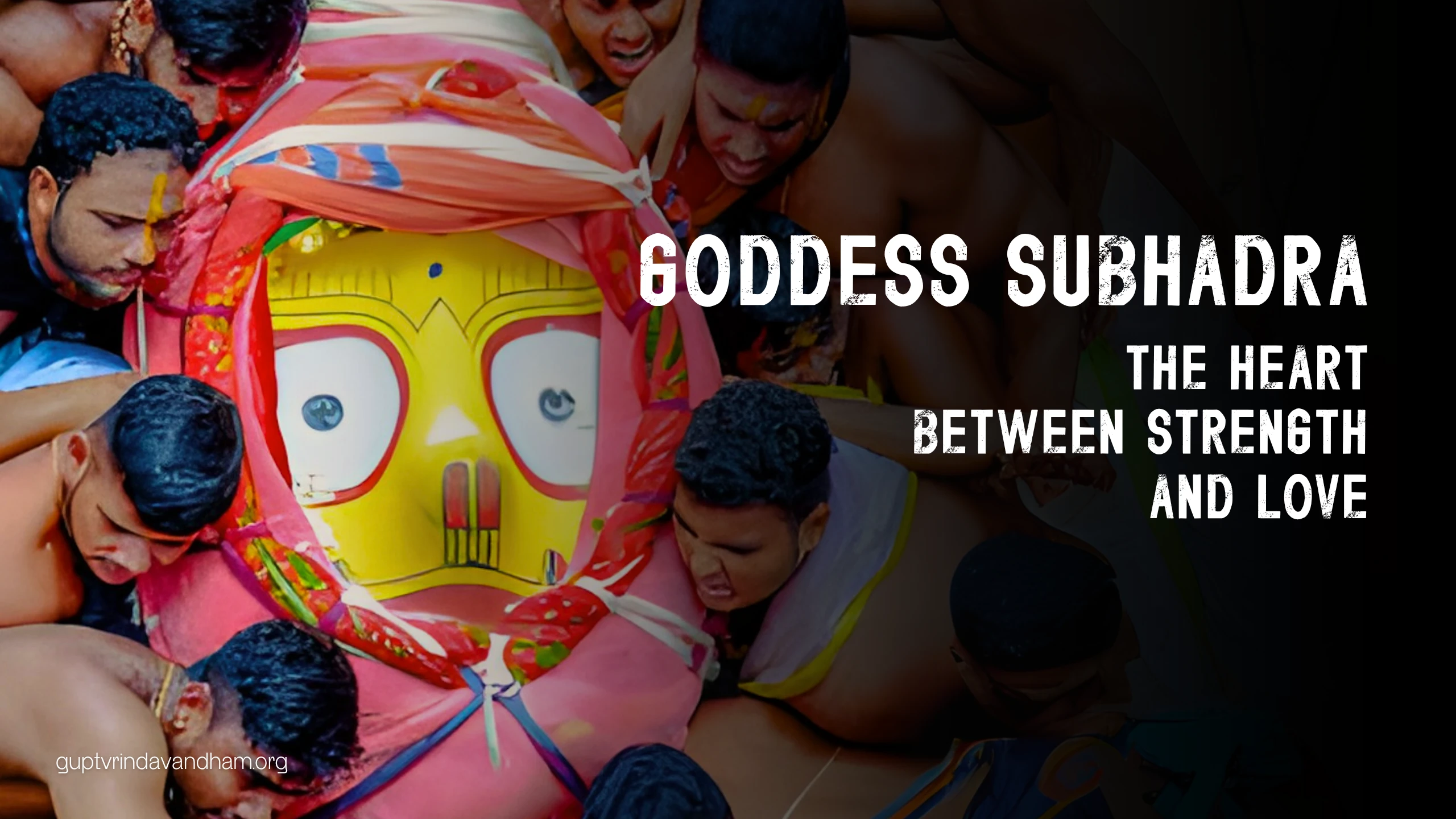
Goddess Subhadra: The Heart Between Strength and Love
In between the chariots of ecstasy and power, there is a divine chariot of Devi Subhadra, the younger sister of Lord Jagannath and Lord Balabhadra. She is the representation of Yoga Maya, the internal energy which connects the soul to the Supreme Personality of Godhead, Lord Krishna. Unlike the powerful personality of her elder brother or the ecstasy mood of Lord Jagannath, she is calm, silent and more motherly in nature.
Her chariot is Darpadalana, which reminds us that pride is the one barrier to reaching the end of the devotional path. If one wants to feel a higher level of devotional ecstasy, they must kill the unnecessary pride that resides in them. Taking the blessings of Devi Subhadra helps the viewers to balance the ecstasy of love for the Lord and the strength to overcome every obstacle on the way to get that ecstasy.
The Route from Dwaraka to Vrindavan
Rath Yatra is the festival of the three chariots, which are carried to the Gundicha temple. In the Gaudiya Vaishnava tradition, this divine journey is a representation of Lord Krishna’s return from Dwarika to Vrindavan. To understand this, you need to understand Dwarika and Vrindavan through the Leela's of Lord Krishna.
Dwarika is the Kingdom of Lord Krishna, who ruled as the King. The entire environment of this Kingdom is filled with devotion and respect for Lord Krishna. On the other hand, Vrindavan is the childhood place of Lord Krishna. He spent his entire childhood as a cowherd boy, a friend of Gokul's, lover of Gopi's and the dearest son of Mata Yashoda.
When Lord Krishna left Vrindavan to return to Dwarika, all the villagers, especially the Gopis, were longing for the separation from Lord Krishna. He himself felt the longing for the land and the people of Vrindavan. This exact ecstasy is enacted in the festival of Rath Yatra, where Lord Jagannath, Lord Balabhadra, and Devi Subhadra travel to the Gundicha temple. It is because the temple is the home of King Indradyumna’s wife, Queen Gundicha.
Thus, Ratha Yatra is the moment of Lord Krishna’s homecoming. And so, the devotees feels the devotional intimacy and feeling of hapiness upon Lord Jagannath journey towards his dearest place, Gundicha Temple, the place of his beloved aunt.
Final words
Rath Yatra is not just a festival; it is an environment to deliver the melodious chanting of the holy names of Lord Krishna. It symbolizes that the Supreme Lord is not confined to the boundaries of the beautiful walls of the Jagannath temple. Besides him, there is a divine chariot of Devi Subhadra, who plays the role of a bridge between the Supreme Lord and the souls, and the chariot of Lord Balabhadra, who protects the two chariots and leads the way towards the Gundicha temple.
When the devotees pull the rope of the three chariots, they must have the feeling of serving the Lord. It allows the Lord to enter the hearts of devotees and direct them on the way towards liberation. Thus, one must not attend it as a regular festival, but grab this opportunity to centralize their senses into the serving of the Supreme Lord.