
 Donate Now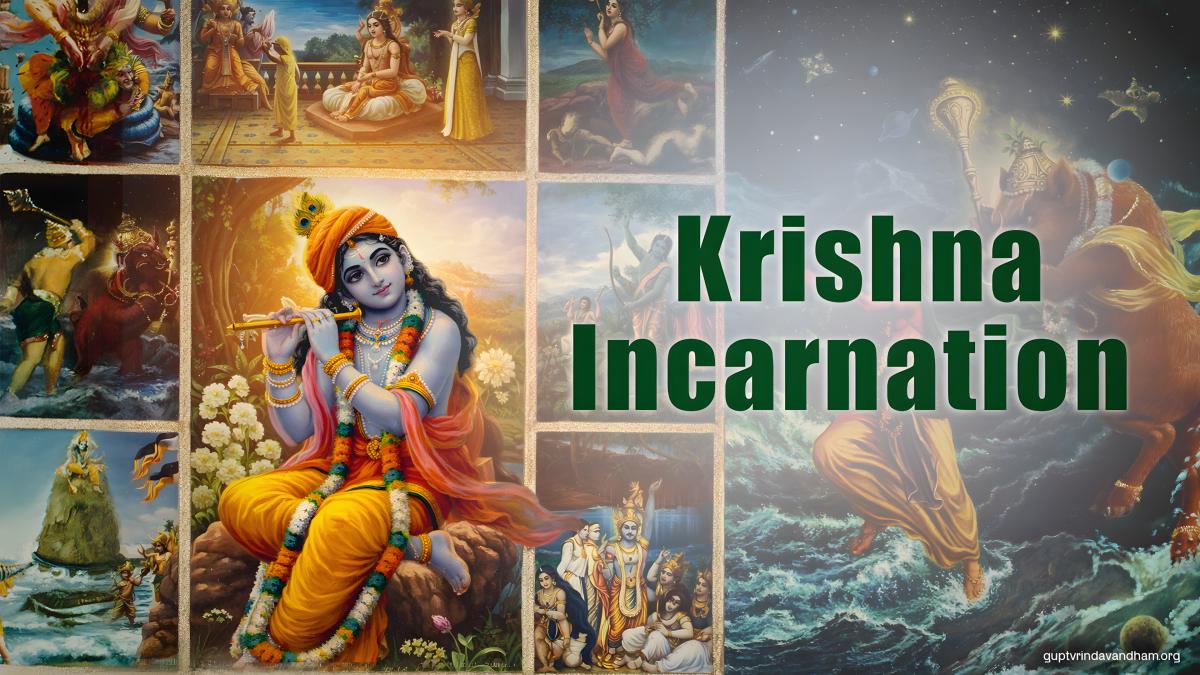
Have you ever wondered why God, the all-powerful creator, might choose to appear here on Earth? This concept of a divine descent is central to many spiritual traditions.
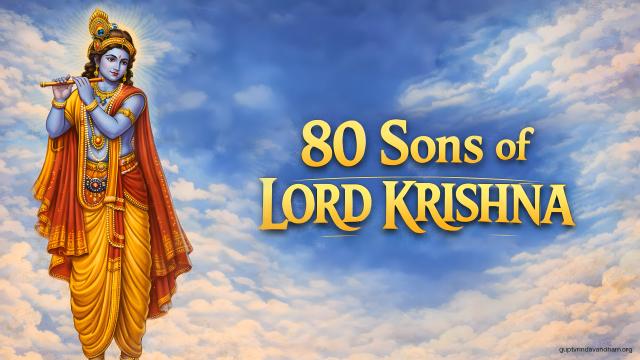
In the Vedic tradition of India, these divine appearances are known as avatars. The primary subject of this exploration is the “Incarnation of Krishna,” a profound topic that explains how and why the Supreme Lord makes Himself known to the world. Lord Krishna is described in sacred texts as the original source of all these divine appearances.
This article will explain the “Avatar of Lord Krishna” in simple, easy-to-understand terms for those new to the subject. We will explore who Krishna is, the reasons He appears in the material world, and the different categories of incarnations as described in the sacred scriptures.
Who is the Source of All Avatars?
According to Vedic texts, Lord Sri Krishna is the svayam-rupa, the original Supreme Personality of Godhead. He is the single fountainhead from which all other divine incarnations emanate. The foundational scripture Srimad-Bhagavatam states, kṛṣṇas tu bhagavān svayam, which translates to “Krishna is the Supreme Lord Himself.”
To explain how the Lord expands into countless forms without diminishing His own power, an analogy is given: one original lamp can kindle many other lamps, each with the same illuminating power as the first. The original lamp, however, remains complete and undiminished. In this way, Lord Krishna expands Himself into innumerable forms, yet He remains the complete whole.
These incarnations are so numerous that they cannot be counted. The Srimad-Bhagavatam compares the appearances of these avatars to “rivulets flowing from inexhaustible sources of water” or “the waves of the ocean.”
Why Do Incarnations of Krishna Appear?
The various incarnations of the Lord appear in the material world with a very specific and extraordinary mission. The core purposes for an avatar's descent are summarized in three main objectives:
1. To protect the devotees, paritrāṇāya sādhūnāṁ.
2. To annihilate miscreants or demons, vināśāya ca duṣkṛtām.
3. To re-establish the principles of religion, dharma-saṁsthāpanārthāya.
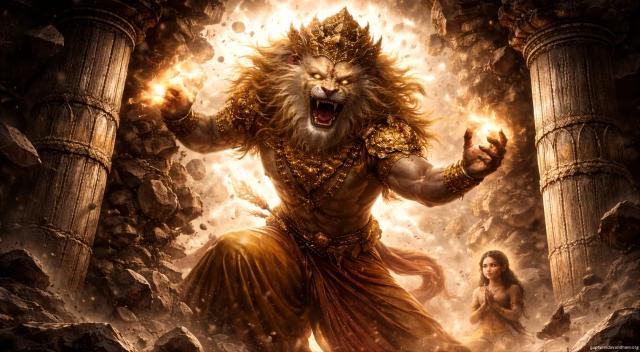
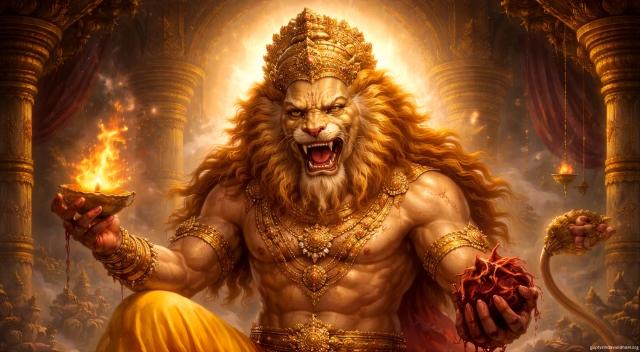
A clear example of this is the appearance of Lord Narasimha, the half-man, half-lion incarnation. He appeared specifically to protect His beloved devotee Prahlada from the persecution of his demonic father, Hiranyakashipu. Each incarnation of the Lord has a unique mission to accomplish, performing extraordinary feats that no ordinary living being could ever perform.
The Categories of Divine Descent: A Guide to Krishna's Avatars
The incarnations of Krishna are vast and diverse. To make them easier to understand, they are organized into several primary categories.
Purusha-Avatars: The Cosmic Creators
These are the first and primary expansions of the Lord who oversee the creation and maintenance of the material universes. This expansion is systematic: from the first expansion, Sankarshana, comes Maha-Vishnu. Garbhodakasayi Vishnu is an expansion of Pradyumna, and the third Purusha, Ksirodakasayi Vishnu, is an expansion of Aniruddha.
Maha-Vishnu: Also known as Karanodakasayi Vishnu, He is the creator of the aggregate material energy. As He exhales, innumerable universes emanate from the pores of His body, and when He inhales, they are all annihilated.
Garbhodakasayi Vishnu: This expansion enters into each individual universe. From a lotus flower that grows from His navel, the first created being, Brahma, is born. He maintains the entire universe and tends to its needs.
Ksirodakasayi Vishnu: This is the third Purusha-avatara, who resides on an ocean of milk within each universe. He is the Supersoul of all living entities, present in the heart of every being.
Lila-Avatars: The Divine Pastime Incarnations
These are the avatars who descend into the material world to perform specific pastimes, known as lila. The Srimad-Bhagavatam 1.3 lists twenty-five primary lila-avataras:
1. The Four Kumaras, Sanaka, Sanatana, Sanandana, and Sanat-kumara
2. Narada Muni
3. Varaha, the boar
4. Matsya, the fish
5. Yajna
6. Nara-Narayana Rishi
7. Kapila, son of Kardama
8. Dattatreya
9. Hayasirsa, Hayagriva
10. Hamsa, the swan
11. Prsnigarbha
12. Rsabha
13. Prthu
14. Narasimha, the half-man, half-lion
15. Kurma, the tortoise
16. Dhanvantari
17. Mohini
18. Vamana, the dwarf-brahmana
19. Parasurama
20. Raghavendra, Lord Ramachandra
21. Vyasa
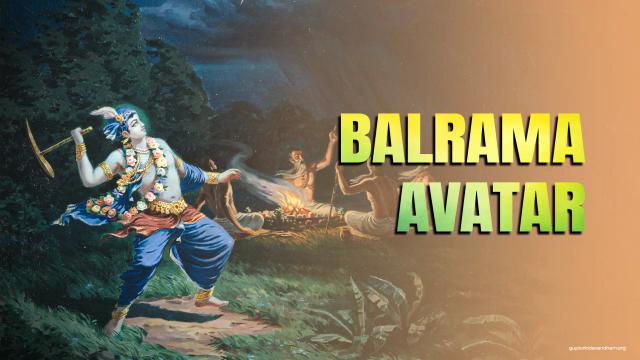
22. Balarama
23. Krishna
24. Buddha
25. Kalki
To illustrate their purpose, the Matsya avatar appeared when the whole world was deep within the water; He appeared in the form of a fish and protected King Satyavrata.
Guna-Avatars: Overseers of the Material Modes
These incarnations preside over the three modes of material nature, known as gunas, which influence everything in the material world.
Brahma: He is the incarnation for the mode of passion, rajo-guna, and is in charge of universal creation.
Vishnu, Ksirodakasayi Vishnu: As the third Purusha-avatara, He is the incarnation for the mode of goodness, sattva-guna, and is in charge of maintenance and preservation.
Shiva: He is the incarnation for the mode of ignorance, tamo-guna, and is in charge of annihilation.
It is noted that although Lord Vishnu assumes the role of overseeing the mode of goodness, He is deva-deva, the chief of all demigods, and is transcendentally situated, unlike Brahma and Shiva, who are deeply connected to the material modes.
Yuga-Avatars: Incarnations for the World Ages
A specific incarnation of the Lord appears in each of the four world ages, or yugas. The Srimad-Bhagavatam specifies a different color for the avatar in each age.
Satya-yuga: The incarnation's color is white.
Treta-yuga: The incarnation's color is red.
Dvapara-yuga: The incarnation's color is blackish.
Kali-yuga: The incarnation's color is also blackish, but in a special Kali-yuga, His color is yellowish. This is Lord Chaitanya Mahaprabhu, who appeared to establish the yuga-dharma for this age: the congregational chanting of the Holy Names of the Lord.
Shaktyavesha-Avatars: The Specially Empowered Beings
This category refers to a living entity who is specially empowered by the Lord with a specific potency, shakti, to carry out a particular mission. They are categorized into forms of divine absorption, bhagavad-avesa, like Kapiladeva, and divinely empowered forms, saktyavesa. Seven of the latter are foremost:
Sesa Naga: Empowered for the Lord’s personal service, sva-sevana-sakti.
Anantadeva: Empowered to bear the planets, bhu-dharana-sakti.
Brahma: Empowered with creative energy, srsti-sakti.
The Four Kumaras: Empowered to distribute transcendental knowledge, jnana-shakti.
Narada Muni: Empowered to distribute devotional service, bhakti-shakti.
Maharaja Prthu: Empowered to rule and maintain living beings, palana-sakti.
Parasurama: Empowered to cut down rogue demons, dusta-damana-sakti.
Another category, the Manvantara-Avatars, are rulers who appear during the reign of each Manu, presiding over cosmic ages.
Krishna's Most Merciful Incarnations
While many avatars appeared in ages past, certain incarnations are especially accessible for us to connect with in the current age.
The Archa-Vigraha: The Worshipable Deity Incarnation
You might wonder, how can we, with our limited material senses, perceive the Lord's spiritual form? To solve this very problem, the Lord mercifully appears as the archa-vigraha, a worshipable form made of material elements like stone, metal, or wood that we can see and serve directly.
The purpose is to give everyone an opportunity to engage in His service. Devotees can interact with the Deity in various ways:
Seeing Him, darshan
Offering sanctified food, naivedya
Bathing Him, abhisheka
Dressing Him, shringara
Through the archa-vigraha, the Lord personally accepts our service and reciprocates our devotion, allowing us to purify ourselves and advance spiritually.
The Nama-Avatara: The Holy Name Incarnation
In the current age of Kali, Krishna descends in His most merciful form: the Holy Name. It is stated, kali-kāle nāma-rūpe kṛṣṇa-avatāra, meaning “In the Age of Kali, Krishna descends in the form of His name.”
The sacred texts emphasize that Krishna and His name are absolutely identical, abhinnatvān nāma-nāminoḥ. This means that all of the Lord's divine potencies are fully present in His name.
The recommended process for connecting with this incarnation is the chanting of the Hare Krishna maha-mantra:
Hare Krishna, Hare Krishna, Krishna Krishna, Hare Hare
Hare Rama, Hare Rama, Rama Rama, Hare Hare
The lila, or divine pastimes, of the Holy Name are demonstrated through its powerful, purifying effects on the person who chants it:
It cleanses the mirror of the heart, ceto-darpaṇa-mārjanam.
It extinguishes the blazing fire of material existence, bhava-mahā-dāvāgni-nirvāpaṇaṁ.
It expands the ocean of transcendental bliss, ānandāmbudhi-vardhanaṁ.
Conclusion
As we have seen, Lord Krishna is the original source of all divine appearances. He descends with a clear purpose: to protect His devotees, vanquish evil, and re-establish righteousness for the benefit of all humanity.
His incarnations are wonderfully diverse, ranging from cosmic creators who manage universes to the very sound of His Holy Name.
The avatars of Lord Krishna are limitless, demonstrating His boundless compassion and His desire to connect with us. Through His most accessible forms, like the worshipable Deity and especially the Holy Name, anyone, anywhere, can begin their spiritual journey and establish a personal connection with the Supreme.