


Rudra-gita (Lord Siva's Prayers)
Bhajan | Lord Shiva
Verse 1
śrī-rudra uvāca
jitaṁ ta ātma-vid-varya-
svastaye svastir astu me
bhavatārādhasā rāddhaṁ
sarvasmā ātmane namaḥ
Verse 2
namaḥ paṅkaja-nābhāya
bhūta-sūkṣmendriyātmane
vāsudevāya śāntāya
kūṭa-sthāya sva-rociṣe
Verse 3
saṅkarṣaṇāya sūkṣmāya
durantāyāntakāya ca
namo viśva-prabodhāya
pradyumnāyāntar-ātmane
Verse 4
namo namo 'niruddhāya
hṛṣīkeśendriyātmane
namaḥ paramahaṁsāya
pūrṇāya nibhṛtātmane
Verse 5
svargāpavarga-dvārāya
nityaṁ śuci-ṣade namaḥ
namo hiraṇya-vīryāya
cātur-hotrāya tantave
Verse 6
nama ūrja iṣe trayyāḥ
pataye yajña-retase
tṛpti-dāya ca jīvānāṁ
namaḥ sarva-rasātmane
Verse 7
sarva-sattvātma-dehāya
viśeṣāya sthavīyase
namas trailokya-pālāya
saha ojo-balāya ca
Verse 8
artha-liṅgāya nabhase
namo 'ntar-bahir-ātmane
namaḥ puṇyāya lokāya
amuṣmai bhūri-varcase
Verse 9
pravṛttāya nivṛttāya
pitṛ-devāya karmaṇe
namo 'dharma-vipākāya
mṛtyave duḥkha-dāya ca
Verse 10
namas ta āśiṣām īśa
manave kāraṇātmane
namo dharmāya bṛhate
kṛṣṇāyākuṇṭha-medhase
puruṣāya purāṇāya
sāṅkhya-yogeśvarāya ca
Verse 11
śakti-traya-sametāya
mīḍhuṣe 'haṅkṛtātmane
ceta-ākūti-rūpāya
namo vāco vibhūtaye
Verse 12
darśanaṁ no didṛkṣūṇāṁ
dehi bhāgavatārcitam
rūpaṁ priyatamaṁ svānāṁ
sarvendriya-guṇāñjanam
Verse 13
snigdha-prāvṛḍ-ghana-śyāmaṁ
sarva-saundarya-saṅgraham
cārv-āyata-catur-bāhu
sujāta-rucirānanampadma-kośa-palāśākṣaṁ
sundara-bhru sunāsikam
sudvijaṁ sukapolāsyaṁ
sama-karṇa-vibhūṣaṇam
Verse 14
prīti-prahasitāpāṅgam
alakai rūpa-śobhitam
lasat-paṅkaja-kiñjalka-
dukūlaṁ mṛṣṭa-kuṇḍalamsphurat-kirīṭa-valaya-
hāra-nūpura-mekhalam
śaṅkha-cakra-gadā-padma-
mālā-maṇy-uttamarddhimat
Verse 15
siṁha-skandha-tviṣo bibhrat
saubhaga-grīva-kaustubham
śriyānapāyinyā kṣipta-
nikaṣāśmorasollasat
Verse 16
pūra-recaka-saṁvigna-
vali-valgu-dalodaram
pratisaṅkrāmayad viśvaṁ
nābhyāvarta-gabhīrayā
Verse 17
śyāma-śroṇy-adhi-rociṣṇu-
dukūla-svarṇa-mekhalam
sama-cārv-aṅghri-jaṅghoru-
nimna-jānu-sudarśanam
Verse 18
padā śarat-padma-palāśa-rociṣā
nakha-dyubhir no 'ntar-aghaṁ vidhunvatā
pradarśaya svīyam apāsta-sādhvasaṁ
padaṁ guro mārga-gurus tamo-juṣām
Verse 19
etad rūpam anudhyeyam
ātma-śuddhim abhīpsatām
yad-bhakti-yogo 'bhayadaḥ
sva-dharmam anutiṣṭhatām
Verse 20
bhavān bhaktimatā labhyo
durlabhaḥ sarva-dehinām
svārājyasyāpy abhimata
ekāntenātma-vid-gatiḥ
Verse 21
taṁ durārādhyam ārādhya
satām api durāpayā
ekānta-bhaktyā ko vāñchet
pāda-mūlaṁ vinā bahiḥ
Verse 22
yatra nirviṣṭam araṇaṁ
kṛtānto nābhimanyate
viśvaṁ vidhvaṁsayan vīrya-
śaurya-visphūrjita-bhruvā
Verse 23
kṣaṇārdhenāpi tulaye
na svargaṁ nāpunar-bhavam
bhagavat-saṅgi-saṅgasya
martyānāṁ kim utāśiṣaḥ
Verse 24
athānaghāṅghres tava kīrti-tīrthayor
antar-bahiḥ-snāna-vidhūta-pāpmanām
bhūteṣv anukrośa-susattva-śīlināṁ
syāt saṅgamo 'nugraha eṣa nas tava
Verse 25
na yasya cittaṁ bahir-artha-vibhramaṁ
tamo-guhāyāṁ ca viśuddham āviśat
yad-bhakti-yogānugṛhītam añjasā
munir vicaṣṭe nanu tatra te gatim
Verse 26
yatredaṁ vyajyate viśvaṁ
viśvasminn avabhāti yat
tat tvaṁ brahma paraṁ jyotir
ākāśam iva vistṛtam
Verse 27
yo māyayedaṁ puru-rūpayāsṛjad
bibharti bhūyaḥ kṣapayaty avikriyaḥ
yad-bheda-buddhiḥ sad ivātma-duḥsthayā
tvam ātma-tantraṁ bhagavan pratīmahi
Verse 28
kriyā-kalāpair idam eva yoginaḥ
śraddhānvitāḥ sādhu yajanti siddhaye
bhūtendriyāntaḥ-karaṇopalakṣitaṁ
vede ca tantre ca ta eva kovidāḥ
Verse 29
tvam eka ādyaḥ puruṣaḥ supta-śaktis
tayā rajaḥ-sattva-tamo vibhidyate
mahān ahaṁ khaṁ marud agni-vār-dharāḥ
surarṣayo bhūta-gaṇā idaṁ yataḥ
Verse 30
sṛṣṭaṁ sva-śaktyedam anupraviṣṭaś
catur-vidhaṁ puram ātmāṁśakena
atho vidus taṁ puruṣaṁ santam antar
bhuṅkte hṛṣīkair madhu sāra-ghaṁ yaḥ
Verse 31
sa eṣa lokān aticaṇḍa-vego
vikarṣasi tvaṁ khalu kāla-yānaḥ
bhūtāni bhūtair anumeya-tattvo
ghanāvalīr vāyur ivāviṣahyaḥ
Verse 32
pramattam uccair iti kṛtya-cintayā
pravṛddha-lobhaṁ viṣayeṣu lālasam
tvam apramattaḥ sahasābhipadyase
kṣul-lelihāno 'hir ivākhum antakaḥ
Verse 33
kas tvat-padābjaṁ vijahāti paṇḍito
yas te 'vamāna-vyayamāna-ketanaḥ
viśaṅkayāsmad-gurur arcati sma yad
vinopapattiṁ manavaś caturdaśa
Verse 34
atha tvam asi no brahman
paramātman vipaścitām
viśvaṁ rudra-bhaya-dhvastam
akutaścid-bhayā gatiḥ
Verse 1
Lord Śiva addressed the Supreme Personality of Godhead with the following prayer: O Supreme Personality of Godhead, all glories unto You. You are the most exalted of all self-realized souls. Since You are always auspicious for the self-realized, I wish that You be auspicious for me. You are worshipable by virtue of the all-perfect instructions You give. You are the Supersoul; therefore I offer my obeisances unto You as the supreme living being.
Verse 2
My Lord, You are the origin of the creation by virtue of the lotus flower which sprouts from Your navel. You are the supreme controller of the senses and the sense objects, and You are also the all-pervading Vāsudeva. You are most peaceful, and because of Your self-illuminated existence, You are not disturbed by the six kinds of transformations.
Verse 3
My dear Lord, You are the origin of the subtle material ingredients, the master of all integration as well as the master of all disintegration, the predominating Deity named Saṅkarṣaṇa, and the master of all intelligence, known as the predominating Deity Pradyumna. Therefore, I offer my respectful obeisances unto You.
Verse 4
My Lord, as the supreme directing Deity known as Aniruddha, You are the master of the senses and the mind. I therefore offer my obeisances unto You again and again. You are known as Ananta as well as Saṅkarṣaṇa because of Your ability to destroy the whole creation by the blazing fire from Your mouth.
Verse 5
My Lord, O Aniruddha, You are the authority by which the doors of the higher planetary systems and liberation are opened. You are always within the pure heart of the living entity. Therefore I offer my obeisances unto You. You are the possessor of semen which is like gold, and thus, in the form of fire, You help the Vedic sacrifices, beginning with cātur-hotra. Therefore I offer my obeisances unto You.
Verse 6
My Lord, You are the provider of the Pitṛlokas as well as all the demigods. You are the predominating deity of the moon and the master of all three Vedas. I offer my respectful obeisances unto You because You are the original source of satisfaction for all living entities.
Verse 7
My dear Lord, You are the gigantic universal form which contains all the individual bodies of the living entities. You are the maintainer of the three worlds, and as such You maintain the mind, senses, body, and air of life within them. I therefore offer my respectful obeisances unto You.
Verse 8
My dear Lord, by expanding Your transcendental vibrations, You reveal the actual meaning of everything. You are the all-pervading sky within and without, and You are the ultimate goal of pious activities executed both within this material world and beyond it. I therefore offer my respectful obeisances again and again unto You.
Verse 9
My dear Lord, You are the viewer of the results of pious activities. You are inclination, disinclination and their resultant activities. You are the cause of the miserable conditions of life caused by irreligion, and therefore You are death. I offer You my respectful obeisances.
Verse 10
My dear Lord, You are the topmost of all bestowers of all benediction, the oldest and supreme enjoyer amongst all enjoyers. You are the master of all the worlds’ metaphysical philosophy, for You are the supreme cause of all causes, Lord Kṛṣṇa. You are the greatest of all religious principles, the supreme mind, and You have a brain which is never checked by any condition. Therefore I repeatedly offer my obeisances unto You.
Verse 11
My dear Lord, You are the supreme controller of the worker, sense activities and results of sense activities [karma]. Therefore You are the controller of the body, mind and senses. You are also the supreme controller of egotism, known as Rudra. You are the source of knowledge and the activities of the Vedic injunctions.
Verse 12
My dear Lord, I wish to see You exactly in the form that Your very dear devotees worship. You have many other forms, but I wish to see Your form that is especially liked by the devotees. Please be merciful upon me and show me that form, for only that form worshiped by the devotees can perfectly satisfy all the demands of the senses.
Verse 13
The Lord’s beauty resembles a dark cloud during the rainy season. As the rainfall glistens, His bodily features also glisten. Indeed, He is the sum total of all beauty. The Lord has four arms and an exquisitely beautiful face with eyes like lotus petals, a beautiful highly raised nose, a mind-attracting smile, a beautiful forehead and equally beautiful and fully decorated ears.
Verse 14
The Lord is superexcellently beautiful on account of His open and merciful smile and His sidelong glance upon His devotees. His black hair is curly, and His garments, waving in the wind, appear like flying saffron pollen from lotus flowers. His glittering earrings, shining helmet, bangles, garland, ankle bells, waist belt and various other bodily ornaments combine with conchshell, disc, club and lotus flower to increase the natural beauty of the Kaustubha pearl on His chest.
Verse 15
The Lord has shoulders just like a lion’s. Upon these shoulders are garlands, necklaces and epaulets, and all of these are always glittering. Besides these, there is the beauty of the Kaustubha-maṇi pearl, and on the dark chest of the Lord there are streaks named Śrīvatsa, which are signs of the goddess of fortune. The glittering of these streaks excels the beauty of the golden streaks on a gold-testing stone. Indeed, such beauty defeats a gold-testing stone.
Verse 16
The Lord’s abdomen is beautiful due to three ripples in the flesh. Being so round, His abdomen resembles the leaf of a banyan tree, and when He exhales and inhales, the movement of the ripples appears very, very beautiful. The coils within the navel of the Lord are so deep that it appears that the entire universe sprouted out of it and yet again wishes to go back.
Verse 17
The lower part of the Lord’s waist is dark and covered with yellow garments and a belt bedecked with golden embroidery work. His symmetrical lotus feet and the calves, thighs and joints of His legs are extraordinarily beautiful. Indeed, the Lord’s entire body appears to be well built.
Verse 18
My dear Lord, Your two lotus feet are so beautiful that they appear like two blossoming petals of the lotus flower which grows during the autumn season. Indeed, the nails of Your lotus feet emanate such a great effulgence that they immediately dissipate all the darkness in the heart of a conditioned soul. My dear Lord, kindly show me that form of Yours which always dissipates all kinds of darkness in the heart of a devotee. My dear Lord, You are the supreme spiritual master of everyone; therefore all conditioned souls covered with the darkness of ignorance can be enlightened by You as the spiritual master.
Verse 19
My dear Lord, those who desire to purify their existence must always engage in meditation upon Your lotus feet, as described above. Those who are serious about executing their occupational duties and who want freedom from fear must take to this process of bhakti-yoga.
Verse 20
My dear Lord, the king in charge of the heavenly kingdom is also desirous of obtaining the ultimate goal of life — devotional service. Similarly, You are the ultimate destination of those who identify themselves with You [ahaṁ brahmāsmi]. However, it is very difficult for them to attain You, whereas a devotee can very easily attain Your Lordship.
Verse 21
My dear Lord, pure devotional service is even difficult for liberated persons to discharge, but devotional service alone can satisfy You. Who will take to other processes of self-realization if he is actually serious about the perfection of life?
Verse 22
Simply by expansion of His eyebrows, invincible time personified can immediately vanquish the entire universe. However, formidable time does not approach the devotee who has taken complete shelter at Your lotus feet.
Verse 23
If one by chance associates with a devotee, even for a fraction of a moment, he no longer is subject to attraction by the results of karma or jñāna. What interest then can he have in the benedictions of the demigods, who are subject to the laws of birth and death?
Verse 24
My dear Lord, Your lotus feet are the cause of all auspicious things and the destroyer of all the contamination of sin. I therefore beg Your Lordship to bless me by the association of Your devotees, who are completely purified by worshiping Your lotus feet and who are so merciful upon the conditioned souls. I think that Your real benediction will be to allow me to associate with such devotees.
Verse 25
The devotee whose heart has been completely cleansed by the process of devotional service and who is favored by Bhaktidevī does not become bewildered by the external energy, which is just like a dark well. Being completely cleansed of all material contamination in this way, a devotee is able to understand very happily Your name, fame, form, activities, etc.
Verse 26
My dear Lord, the impersonal Brahman spreads everywhere, like the sunshine or the sky. And that impersonal Brahman, which spreads throughout the universe and in which the entire universe is manifested, is You.
Verse 27
My dear Lord, You have manifold energies, and these energies are manifested in manifold forms. With such energies You have also created this cosmic manifestation, and although You maintain it as if it were permanent, You ultimately annihilate it. Although You are never disturbed by such changes and alterations, the living entities are disturbed by them, and therefore they find the cosmic manifestation to be different or separated from You. My Lord, You are always independent, and I can clearly see this fact.
Verse 28
My dear Lord, Your universal form consists of all five elements, the senses, mind, intelligence, false ego (which is material) and the Paramātmā, Your partial expansion, who is the director of everything. Yogīs other than the devotees — namely the karma-yogī and jñāna-yogī — worship You by their respective actions in their respective positions. It is stated both in the Vedas and in the śāstras that are corollaries of the Vedas, and indeed everywhere, that it is only You who are to be worshiped. That is the expert version of all the Vedas.
Verse 29
My dear Lord, You are the only Supreme Person, the cause of all causes. Before the creation of this material world, Your material energy remains in a dormant condition. When Your material energy is agitated, the three qualities — namely goodness, passion and ignorance — act, and as a result the total material energy — egotism, ether, air, fire, water, earth and all the various demigods and saintly persons — becomes manifest. Thus the material world is created.
Verse 30
My dear Lord, after creating by Your own potencies, You enter within the creation in four kinds of forms. Being within the hearts of the living entities, You know them and know how they are enjoying their senses. The so-called happiness of this material creation is exactly like the bees’ enjoyment of honey after it has been collected in the honeycomb.
Verse 31
My dear Lord, Your absolute authority cannot be directly experienced, but one can guess by seeing the activities of the world that everything is being destroyed in due course of time. The force of time is very strong, and everything is being destroyed by something else — just as one animal is being eaten by another animal. Time scatters everything, exactly as the wind scatters clouds in the sky.
Verse 32
My dear Lord, all living entities within this material world are mad after planning for things, and they are always busy with a desire to do this or that. This is due to uncontrollable greed. The greed for material enjoyment is always existing in the living entity, but Your Lordship is always alert, and in due course of time You strike him, just as a snake seizes a mouse and very easily swallows him.
Verse 33
My dear Lord, any learned person knows that unless he worships You, his entire life is spoiled. Knowing this, how could he give up worshiping Your lotus feet? Even our father and spiritual master, Lord Brahmā, unhesitatingly worshiped You, and the fourteen Manus followed in his footsteps.
Verse 34
My dear Lord, all actually learned persons know You as the Supreme Brahman and the Supersoul. Although the entire universe is afraid of Lord Rudra, who ultimately annihilates everything, for the learned devotees You are the fearless destination of all.
Verse 1
śrī-rudra uvāca
jitaṁ ta ātma-vid-varya-
svastaye svastir astu me
bhavatārādhasā rāddhaṁ
sarvasmā ātmane namaḥ
Verse 2
namaḥ paṅkaja-nābhāya
bhūta-sūkṣmendriyātmane
vāsudevāya śāntāya
kūṭa-sthāya sva-rociṣe
Verse 3
saṅkarṣaṇāya sūkṣmāya
durantāyāntakāya ca
namo viśva-prabodhāya
pradyumnāyāntar-ātmane
Verse 4
namo namo 'niruddhāya
hṛṣīkeśendriyātmane
namaḥ paramahaṁsāya
pūrṇāya nibhṛtātmane
Verse 5
svargāpavarga-dvārāya
nityaṁ śuci-ṣade namaḥ
namo hiraṇya-vīryāya
cātur-hotrāya tantave
Verse 6
nama ūrja iṣe trayyāḥ
pataye yajña-retase
tṛpti-dāya ca jīvānāṁ
namaḥ sarva-rasātmane
Verse 7
sarva-sattvātma-dehāya
viśeṣāya sthavīyase
namas trailokya-pālāya
saha ojo-balāya ca
Verse 8
artha-liṅgāya nabhase
namo 'ntar-bahir-ātmane
namaḥ puṇyāya lokāya
amuṣmai bhūri-varcase
Verse 9
pravṛttāya nivṛttāya
pitṛ-devāya karmaṇe
namo 'dharma-vipākāya
mṛtyave duḥkha-dāya ca
Verse 10
namas ta āśiṣām īśa
manave kāraṇātmane
namo dharmāya bṛhate
kṛṣṇāyākuṇṭha-medhase
puruṣāya purāṇāya
sāṅkhya-yogeśvarāya ca
Verse 11
śakti-traya-sametāya
mīḍhuṣe 'haṅkṛtātmane
ceta-ākūti-rūpāya
namo vāco vibhūtaye
Verse 12
darśanaṁ no didṛkṣūṇāṁ
dehi bhāgavatārcitam
rūpaṁ priyatamaṁ svānāṁ
sarvendriya-guṇāñjanam
Verse 13
snigdha-prāvṛḍ-ghana-śyāmaṁ
sarva-saundarya-saṅgraham
cārv-āyata-catur-bāhu
sujāta-rucirānanampadma-kośa-palāśākṣaṁ
sundara-bhru sunāsikam
sudvijaṁ sukapolāsyaṁ
sama-karṇa-vibhūṣaṇam
Verse 14
prīti-prahasitāpāṅgam
alakai rūpa-śobhitam
lasat-paṅkaja-kiñjalka-
dukūlaṁ mṛṣṭa-kuṇḍalamsphurat-kirīṭa-valaya-
hāra-nūpura-mekhalam
śaṅkha-cakra-gadā-padma-
mālā-maṇy-uttamarddhimat
Verse 15
siṁha-skandha-tviṣo bibhrat
saubhaga-grīva-kaustubham
śriyānapāyinyā kṣipta-
nikaṣāśmorasollasat
Verse 16
pūra-recaka-saṁvigna-
vali-valgu-dalodaram
pratisaṅkrāmayad viśvaṁ
nābhyāvarta-gabhīrayā
Verse 17
śyāma-śroṇy-adhi-rociṣṇu-
dukūla-svarṇa-mekhalam
sama-cārv-aṅghri-jaṅghoru-
nimna-jānu-sudarśanam
Verse 18
padā śarat-padma-palāśa-rociṣā
nakha-dyubhir no 'ntar-aghaṁ vidhunvatā
pradarśaya svīyam apāsta-sādhvasaṁ
padaṁ guro mārga-gurus tamo-juṣām
Verse 19
etad rūpam anudhyeyam
ātma-śuddhim abhīpsatām
yad-bhakti-yogo 'bhayadaḥ
sva-dharmam anutiṣṭhatām
Verse 20
bhavān bhaktimatā labhyo
durlabhaḥ sarva-dehinām
svārājyasyāpy abhimata
ekāntenātma-vid-gatiḥ
Verse 21
taṁ durārādhyam ārādhya
satām api durāpayā
ekānta-bhaktyā ko vāñchet
pāda-mūlaṁ vinā bahiḥ
Verse 22
yatra nirviṣṭam araṇaṁ
kṛtānto nābhimanyate
viśvaṁ vidhvaṁsayan vīrya-
śaurya-visphūrjita-bhruvā
Verse 23
kṣaṇārdhenāpi tulaye
na svargaṁ nāpunar-bhavam
bhagavat-saṅgi-saṅgasya
martyānāṁ kim utāśiṣaḥ
Verse 24
athānaghāṅghres tava kīrti-tīrthayor
antar-bahiḥ-snāna-vidhūta-pāpmanām
bhūteṣv anukrośa-susattva-śīlināṁ
syāt saṅgamo 'nugraha eṣa nas tava
Verse 25
na yasya cittaṁ bahir-artha-vibhramaṁ
tamo-guhāyāṁ ca viśuddham āviśat
yad-bhakti-yogānugṛhītam añjasā
munir vicaṣṭe nanu tatra te gatim
Verse 26
yatredaṁ vyajyate viśvaṁ
viśvasminn avabhāti yat
tat tvaṁ brahma paraṁ jyotir
ākāśam iva vistṛtam
Verse 27
yo māyayedaṁ puru-rūpayāsṛjad
bibharti bhūyaḥ kṣapayaty avikriyaḥ
yad-bheda-buddhiḥ sad ivātma-duḥsthayā
tvam ātma-tantraṁ bhagavan pratīmahi
Verse 28
kriyā-kalāpair idam eva yoginaḥ
śraddhānvitāḥ sādhu yajanti siddhaye
bhūtendriyāntaḥ-karaṇopalakṣitaṁ
vede ca tantre ca ta eva kovidāḥ
Verse 29
tvam eka ādyaḥ puruṣaḥ supta-śaktis
tayā rajaḥ-sattva-tamo vibhidyate
mahān ahaṁ khaṁ marud agni-vār-dharāḥ
surarṣayo bhūta-gaṇā idaṁ yataḥ
Verse 30
sṛṣṭaṁ sva-śaktyedam anupraviṣṭaś
catur-vidhaṁ puram ātmāṁśakena
atho vidus taṁ puruṣaṁ santam antar
bhuṅkte hṛṣīkair madhu sāra-ghaṁ yaḥ
Verse 31
sa eṣa lokān aticaṇḍa-vego
vikarṣasi tvaṁ khalu kāla-yānaḥ
bhūtāni bhūtair anumeya-tattvo
ghanāvalīr vāyur ivāviṣahyaḥ
Verse 32
pramattam uccair iti kṛtya-cintayā
pravṛddha-lobhaṁ viṣayeṣu lālasam
tvam apramattaḥ sahasābhipadyase
kṣul-lelihāno 'hir ivākhum antakaḥ
Verse 33
kas tvat-padābjaṁ vijahāti paṇḍito
yas te 'vamāna-vyayamāna-ketanaḥ
viśaṅkayāsmad-gurur arcati sma yad
vinopapattiṁ manavaś caturdaśa
Verse 34
atha tvam asi no brahman
paramātman vipaścitām
viśvaṁ rudra-bhaya-dhvastam
akutaścid-bhayā gatiḥ
Verse 1
Lord Śiva addressed the Supreme Personality of Godhead with the following prayer: O Supreme Personality of Godhead, all glories unto You. You are the most exalted of all self-realized souls. Since You are always auspicious for the self-realized, I wish that You be auspicious for me. You are worshipable by virtue of the all-perfect instructions You give. You are the Supersoul; therefore I offer my obeisances unto You as the supreme living being.
Verse 2
My Lord, You are the origin of the creation by virtue of the lotus flower which sprouts from Your navel. You are the supreme controller of the senses and the sense objects, and You are also the all-pervading Vāsudeva. You are most peaceful, and because of Your self-illuminated existence, You are not disturbed by the six kinds of transformations.
Verse 3
My dear Lord, You are the origin of the subtle material ingredients, the master of all integration as well as the master of all disintegration, the predominating Deity named Saṅkarṣaṇa, and the master of all intelligence, known as the predominating Deity Pradyumna. Therefore, I offer my respectful obeisances unto You.
Verse 4
My Lord, as the supreme directing Deity known as Aniruddha, You are the master of the senses and the mind. I therefore offer my obeisances unto You again and again. You are known as Ananta as well as Saṅkarṣaṇa because of Your ability to destroy the whole creation by the blazing fire from Your mouth.
Verse 5
My Lord, O Aniruddha, You are the authority by which the doors of the higher planetary systems and liberation are opened. You are always within the pure heart of the living entity. Therefore I offer my obeisances unto You. You are the possessor of semen which is like gold, and thus, in the form of fire, You help the Vedic sacrifices, beginning with cātur-hotra. Therefore I offer my obeisances unto You.
Verse 6
My Lord, You are the provider of the Pitṛlokas as well as all the demigods. You are the predominating deity of the moon and the master of all three Vedas. I offer my respectful obeisances unto You because You are the original source of satisfaction for all living entities.
Verse 7
My dear Lord, You are the gigantic universal form which contains all the individual bodies of the living entities. You are the maintainer of the three worlds, and as such You maintain the mind, senses, body, and air of life within them. I therefore offer my respectful obeisances unto You.
Verse 8
My dear Lord, by expanding Your transcendental vibrations, You reveal the actual meaning of everything. You are the all-pervading sky within and without, and You are the ultimate goal of pious activities executed both within this material world and beyond it. I therefore offer my respectful obeisances again and again unto You.
Verse 9
My dear Lord, You are the viewer of the results of pious activities. You are inclination, disinclination and their resultant activities. You are the cause of the miserable conditions of life caused by irreligion, and therefore You are death. I offer You my respectful obeisances.
Verse 10
My dear Lord, You are the topmost of all bestowers of all benediction, the oldest and supreme enjoyer amongst all enjoyers. You are the master of all the worlds’ metaphysical philosophy, for You are the supreme cause of all causes, Lord Kṛṣṇa. You are the greatest of all religious principles, the supreme mind, and You have a brain which is never checked by any condition. Therefore I repeatedly offer my obeisances unto You.
Verse 11
My dear Lord, You are the supreme controller of the worker, sense activities and results of sense activities [karma]. Therefore You are the controller of the body, mind and senses. You are also the supreme controller of egotism, known as Rudra. You are the source of knowledge and the activities of the Vedic injunctions.
Verse 12
My dear Lord, I wish to see You exactly in the form that Your very dear devotees worship. You have many other forms, but I wish to see Your form that is especially liked by the devotees. Please be merciful upon me and show me that form, for only that form worshiped by the devotees can perfectly satisfy all the demands of the senses.
Verse 13
The Lord’s beauty resembles a dark cloud during the rainy season. As the rainfall glistens, His bodily features also glisten. Indeed, He is the sum total of all beauty. The Lord has four arms and an exquisitely beautiful face with eyes like lotus petals, a beautiful highly raised nose, a mind-attracting smile, a beautiful forehead and equally beautiful and fully decorated ears.
Verse 14
The Lord is superexcellently beautiful on account of His open and merciful smile and His sidelong glance upon His devotees. His black hair is curly, and His garments, waving in the wind, appear like flying saffron pollen from lotus flowers. His glittering earrings, shining helmet, bangles, garland, ankle bells, waist belt and various other bodily ornaments combine with conchshell, disc, club and lotus flower to increase the natural beauty of the Kaustubha pearl on His chest.
Verse 15
The Lord has shoulders just like a lion’s. Upon these shoulders are garlands, necklaces and epaulets, and all of these are always glittering. Besides these, there is the beauty of the Kaustubha-maṇi pearl, and on the dark chest of the Lord there are streaks named Śrīvatsa, which are signs of the goddess of fortune. The glittering of these streaks excels the beauty of the golden streaks on a gold-testing stone. Indeed, such beauty defeats a gold-testing stone.
Verse 16
The Lord’s abdomen is beautiful due to three ripples in the flesh. Being so round, His abdomen resembles the leaf of a banyan tree, and when He exhales and inhales, the movement of the ripples appears very, very beautiful. The coils within the navel of the Lord are so deep that it appears that the entire universe sprouted out of it and yet again wishes to go back.
Verse 17
The lower part of the Lord’s waist is dark and covered with yellow garments and a belt bedecked with golden embroidery work. His symmetrical lotus feet and the calves, thighs and joints of His legs are extraordinarily beautiful. Indeed, the Lord’s entire body appears to be well built.
Verse 18
My dear Lord, Your two lotus feet are so beautiful that they appear like two blossoming petals of the lotus flower which grows during the autumn season. Indeed, the nails of Your lotus feet emanate such a great effulgence that they immediately dissipate all the darkness in the heart of a conditioned soul. My dear Lord, kindly show me that form of Yours which always dissipates all kinds of darkness in the heart of a devotee. My dear Lord, You are the supreme spiritual master of everyone; therefore all conditioned souls covered with the darkness of ignorance can be enlightened by You as the spiritual master.
Verse 19
My dear Lord, those who desire to purify their existence must always engage in meditation upon Your lotus feet, as described above. Those who are serious about executing their occupational duties and who want freedom from fear must take to this process of bhakti-yoga.
Verse 20
My dear Lord, the king in charge of the heavenly kingdom is also desirous of obtaining the ultimate goal of life — devotional service. Similarly, You are the ultimate destination of those who identify themselves with You [ahaṁ brahmāsmi]. However, it is very difficult for them to attain You, whereas a devotee can very easily attain Your Lordship.
Verse 21
My dear Lord, pure devotional service is even difficult for liberated persons to discharge, but devotional service alone can satisfy You. Who will take to other processes of self-realization if he is actually serious about the perfection of life?
Verse 22
Simply by expansion of His eyebrows, invincible time personified can immediately vanquish the entire universe. However, formidable time does not approach the devotee who has taken complete shelter at Your lotus feet.
Verse 23
If one by chance associates with a devotee, even for a fraction of a moment, he no longer is subject to attraction by the results of karma or jñāna. What interest then can he have in the benedictions of the demigods, who are subject to the laws of birth and death?
Verse 24
My dear Lord, Your lotus feet are the cause of all auspicious things and the destroyer of all the contamination of sin. I therefore beg Your Lordship to bless me by the association of Your devotees, who are completely purified by worshiping Your lotus feet and who are so merciful upon the conditioned souls. I think that Your real benediction will be to allow me to associate with such devotees.
Verse 25
The devotee whose heart has been completely cleansed by the process of devotional service and who is favored by Bhaktidevī does not become bewildered by the external energy, which is just like a dark well. Being completely cleansed of all material contamination in this way, a devotee is able to understand very happily Your name, fame, form, activities, etc.
Verse 26
My dear Lord, the impersonal Brahman spreads everywhere, like the sunshine or the sky. And that impersonal Brahman, which spreads throughout the universe and in which the entire universe is manifested, is You.
Verse 27
My dear Lord, You have manifold energies, and these energies are manifested in manifold forms. With such energies You have also created this cosmic manifestation, and although You maintain it as if it were permanent, You ultimately annihilate it. Although You are never disturbed by such changes and alterations, the living entities are disturbed by them, and therefore they find the cosmic manifestation to be different or separated from You. My Lord, You are always independent, and I can clearly see this fact.
Verse 28
My dear Lord, Your universal form consists of all five elements, the senses, mind, intelligence, false ego (which is material) and the Paramātmā, Your partial expansion, who is the director of everything. Yogīs other than the devotees — namely the karma-yogī and jñāna-yogī — worship You by their respective actions in their respective positions. It is stated both in the Vedas and in the śāstras that are corollaries of the Vedas, and indeed everywhere, that it is only You who are to be worshiped. That is the expert version of all the Vedas.
Verse 29
My dear Lord, You are the only Supreme Person, the cause of all causes. Before the creation of this material world, Your material energy remains in a dormant condition. When Your material energy is agitated, the three qualities — namely goodness, passion and ignorance — act, and as a result the total material energy — egotism, ether, air, fire, water, earth and all the various demigods and saintly persons — becomes manifest. Thus the material world is created.
Verse 30
My dear Lord, after creating by Your own potencies, You enter within the creation in four kinds of forms. Being within the hearts of the living entities, You know them and know how they are enjoying their senses. The so-called happiness of this material creation is exactly like the bees’ enjoyment of honey after it has been collected in the honeycomb.
Verse 31
My dear Lord, Your absolute authority cannot be directly experienced, but one can guess by seeing the activities of the world that everything is being destroyed in due course of time. The force of time is very strong, and everything is being destroyed by something else — just as one animal is being eaten by another animal. Time scatters everything, exactly as the wind scatters clouds in the sky.
Verse 32
My dear Lord, all living entities within this material world are mad after planning for things, and they are always busy with a desire to do this or that. This is due to uncontrollable greed. The greed for material enjoyment is always existing in the living entity, but Your Lordship is always alert, and in due course of time You strike him, just as a snake seizes a mouse and very easily swallows him.
Verse 33
My dear Lord, any learned person knows that unless he worships You, his entire life is spoiled. Knowing this, how could he give up worshiping Your lotus feet? Even our father and spiritual master, Lord Brahmā, unhesitatingly worshiped You, and the fourteen Manus followed in his footsteps.
Verse 34
My dear Lord, all actually learned persons know You as the Supreme Brahman and the Supersoul. Although the entire universe is afraid of Lord Rudra, who ultimately annihilates everything, for the learned devotees You are the fearless destination of all.
STAY CONNECTED
Subscribe to get updates on new songs, mantras, and devotional Content.
Explore More Categories
Find more bhajans grouped by devotional theme.
Dependency
253 Songs
Glories of the Holy Name
184 Songs
Prayer for Mercy
149 Songs
Other
366 Songs

Shri Chaitanya Mahaprabhu
323 Songs
Stotram & Ashtakam
216 Songs
Tulasi Songs
5 Songs
Pranam Mantras
54 Songs
Spiritual Master
61 Songs
Shri Nityananada Prabhu
34 Songs
Lord Shri Krishna
575 Songs
Shrimati Radharani
107 Songs
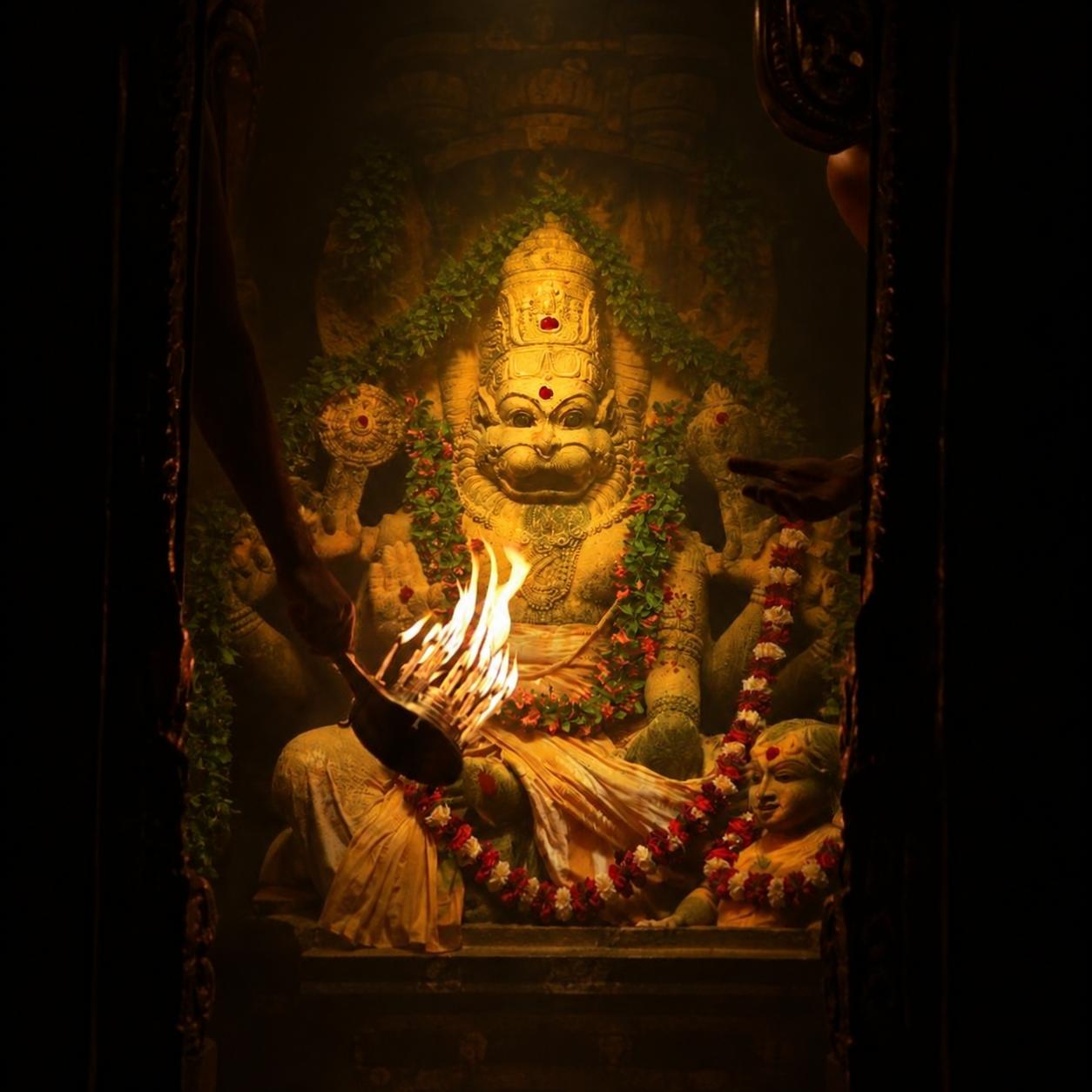
Narasimha Prayers
10 Songs

Be a Part of Building Gupt Vrindavan Dham
Your support helps strengthen temple construction, Gau Seva, Annadaan Seva, cultural education, and devotional programs. Participate in Square Feet Seva, Mandir Nirman Seva, Annadaan, Gau Seva, and other sacred initiatives.