
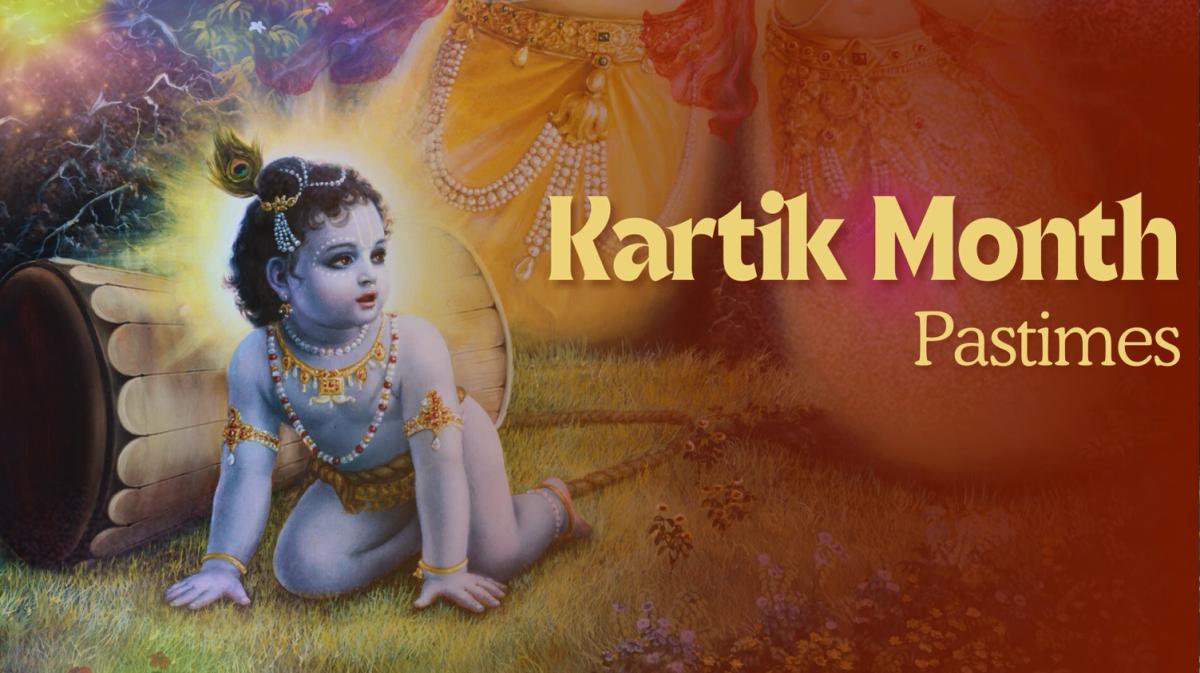
Kartik Month brings the residents and pastimes of Vrindavan into special focus, revealing Lord Krishna as a playful child, a loving protector and the supreme object of devotion. These accounts are not simply stories connected with an ancient festival calendar because each one shows how Krishna responds to the love, surrender and dependence of His devotees. By hearing these five divine pastimes of Lord Krishna during Kartik, readers can understand the devotional mood behind the month and develop a deeper desire to remember and serve Him.
Five Krishna Pastimes Remembered During Kartik
The following five pastimes are especially connected with the devotional mood and celebrations of Kartik Month.
1. Krishna Performs the Rasa Lila
On a beautiful autumn night, the full moon rose over the forests of Vrindavan and Krishna began playing His flute. The sound attracted the gopis, whose minds were fully absorbed in loving service to Him.
Leaving their household activities behind, the gopis approached Krishna in the forest. Krishna initially asked why they had come so late at night and advised them to return home. The gopis replied that Krishna was the eternal well-wisher and dearest beloved of every soul, and that their only desire was to serve Him.
Krishna then accepted their devotion and began the rasa dance. When pride entered the hearts of some gopis because of the special attention they were receiving, Krishna disappeared from their sight. His disappearance intensified their remembrance and revealed that divine love cannot be mixed with personal pride.
The Rasa Lila is described in Srimad Bhagavatam, Canto 10, Chapters 29 to 33. It should be heard through authorised Vaishnava explanations because it represents Krishna’s completely spiritual relationship with His most surrendered devotees and should never be interpreted as an ordinary worldly interaction.
What This Pastime Teaches
The Rasa Lila shows that devotion becomes complete when Krishna is served without selfish desire. The gopis did not approach Him for wealth, recognition or material comfort because their only aspiration was to please Krishna.
It also teaches that Krishna may sometimes appear distant in order to deepen a devotee’s remembrance and remove any trace of pride from devotional service.
2. Mother Yashoda Binds Krishna
When Krishna broke a yoghurt pot and distributed butter to the monkeys, Mother Yashoda decided to bind Him to a wooden grinding mortar. Although every rope remained two fingers too short, Krishna finally allowed Himself to be bound after seeing His mother’s loving effort.
Described in Srimad Bhagavatam 10.9, this pastime reveals that the unconquerable Supreme Lord willingly comes under the control of pure devotional love.
Read the complete story and its spiritual meaning in the detailed Damodara Lila.
3. Krishna Delivers Nalakuvara and Manigriva
After Mother Yashoda bound Krishna to the wooden grinding mortar, He saw two tall arjuna trees standing in the courtyard. These trees were Nalakuvara and Manigriva, the sons of Kuvera.
Because they had become proud of their wealth and position, Nalakuvara and Manigriva had behaved disrespectfully in the presence of Narada Muni. Narada recognised that their pride was preventing their spiritual progress, so he arranged for them to take the form of trees while also blessing them to eventually receive the direct association of Lord Krishna.
Still bound to the mortar, Krishna moved between the two trees. The mortar became caught between them, and when Krishna pulled it forward, both trees fell to the ground. Nalakuvara and Manigriva emerged from the trees in their divine forms, offered prayers to Krishna and received His mercy.
This continuation of the Damodara Lila is described in Srimad Bhagavatam, Canto 10, Chapter 10.
What This Pastime Teaches
The deliverance of Nalakuvara and Manigriva shows how spiritual correction can become an expression of mercy. Narada Muni did not act out of anger or revenge because his intention was to free them from the pride that had covered their understanding.
The pastime also demonstrates that Krishna honours the words of His pure devotee. Although many years had passed since Narada’s blessing, Krishna personally fulfilled it by delivering the two sons of Kuvera.
Their transformation teaches that wealth and position become harmful when they produce pride, but the same life can be redirected toward devotion through humility and saintly guidance.
4. Krishna Lifts Govardhan Hill
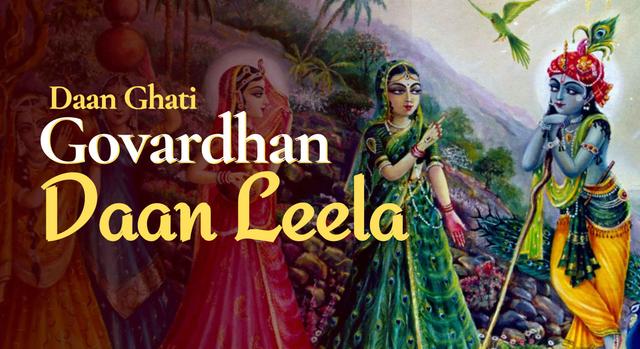
The residents of Vrindavan traditionally prepared an offering for Indra, the controller of rain. Krishna questioned the arrangement and encouraged them to worship Govardhan Hill, the cows and the land that supported their lives.
Following Krishna’s guidance, the residents prepared a great offering and celebrated Govardhan Puja. Indra became angry when his worship was stopped and sent powerful clouds, wind and heavy rain to punish the people of Vrindavan.
The residents and cows became distressed and approached Krishna for protection. Krishna lifted Govardhan Hill with the little finger of His left hand and invited everyone to take shelter beneath it.
For seven days, Krishna held the hill like a great umbrella while the residents of Vrindavan remained safely underneath with their families, cows and possessions. When Indra finally understood Krishna’s supreme position, he ordered the clouds to withdraw.
This pastime is described in Srimad Bhagavatam, Canto 10, Chapters 24 to 27 and is commemorated through Govardhan Puja and Annakuta during Kartik Month.
What This Pastime Teaches
Govardhan Lila shows that Krishna protects those who sincerely take shelter of Him. The residents of Vrindavan did not depend on their own strength when faced with the devastating storm because they approached Krishna together.
The pastime also teaches that power and responsibility should not become causes of pride. Indra’s authority was meant for service, but he temporarily forgot his dependence upon the Supreme Lord.
Krishna corrected Indra while protecting the residents of Vraja, showing that His actions can simultaneously remove pride and provide shelter to His devotees.
Read the date, story and celebration details in the Govardhan Puja 2026 guide.
5. Krishna Becomes a Cowherd
As Krishna and Balarama grew older, They began caring for the cows of Vrindavan. Surrounded by Their cowherd friends, They entered the forests, played beside the Yamuna, enjoyed the natural beauty of Vraja and protected the cows throughout the day.
Gopashtami commemorates Krishna’s transition from caring for young calves to herding cows. The occasion celebrates Krishna as Govinda and Gopala, the protector and well-wisher of the cows and the residents of Vrindavan.
Krishna’s cowherding pastimes are described throughout the Tenth Canto of Srimad Bhagavatam. They reveal the simplicity and intimacy of life in Vraja, where the Supreme Lord enjoyed personal relationships with His friends, parents, cows and other residents without demanding formal recognition of His divinity.
During Kartik, devotees remember these pastimes through cow worship, temple celebrations and gau seva.
What This Pastime Teaches
Krishna’s role as a cowherd shows that devotional life includes care, responsibility and protection. Although Krishna is the Supreme Lord, He personally tended the cows and shared joyful relationships with His cowherd friends.
The pastime also reveals the special position of the cows in Krishna’s Vrindavan pastimes. Respect for cows should therefore be expressed through responsible care and protection rather than being limited to ceremonial worship on a single festival day.
Read more about the temple observance in the Gopashtami 2026 guide.
Conclusion
The divine pastimes of Lord Krishna remembered during Kartik Month reveal the heart of Vrindavan devotion. Krishna dances with the gopis, accepts the loving discipline of Mother Yashoda, delivers Nalakuvara and Manigriva, protects Vraja beneath Govardhan Hill and personally cares for the cows.